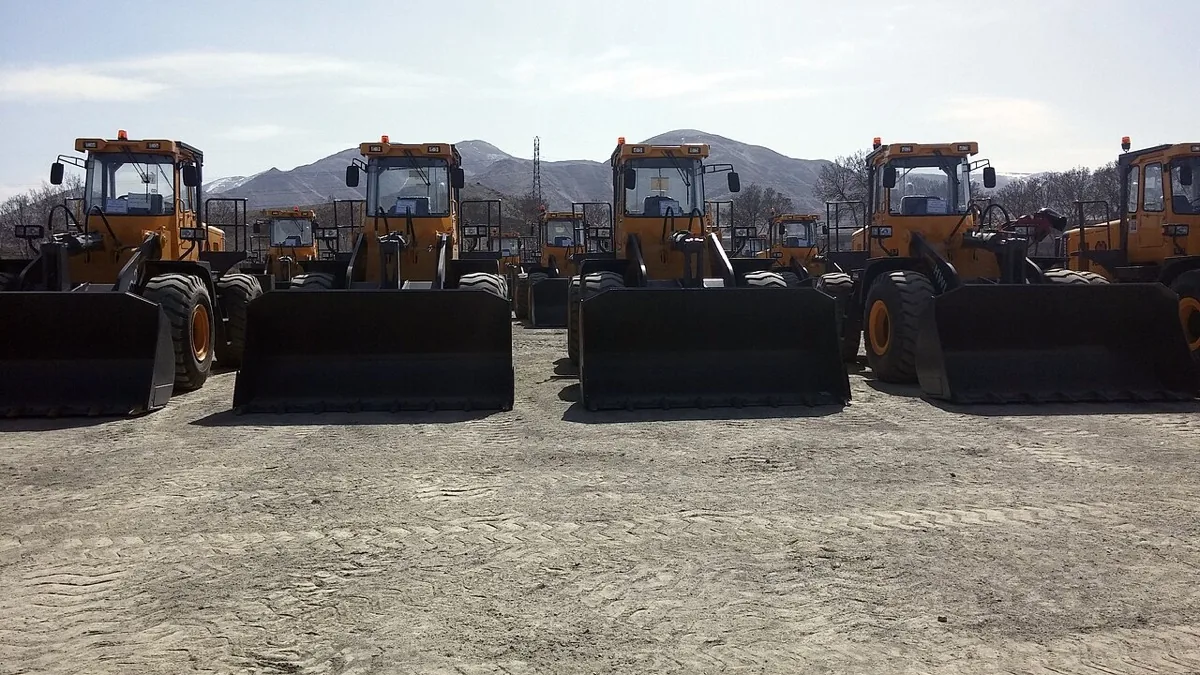
Heavy equipment is a category where profit or loss is decided before the ship sails. An excavator, loader or crane is not bought to sit on a shelf but to work thousands of hours at a site far from the factory, where the availability of a spare part, or of a technician who knows the engine, matters more than the price difference on the day of purchase. This page covers excavators, wheel loaders, bulldozers, cranes of all types, forklifts, road rollers and dump trucks — new and used.
It does not cover production lines and stationary industrial machinery, which have their own Machinery and Production Lines page, nor spare parts for equipment in detail, which have their own Spare Parts page. Power tools, scaffolding, mixers and small compactors used on site are on the Construction Tools page.
Where is heavy equipment made in China?
China's heavy equipment industry is concentrated in a small number of cities: Xuzhou in Jiangsu, Changsha in Hunan, Jining and Jinan in Shandong, and Xiamen in Fujian, with Hefei in Anhui and Hangzhou in Zhejiang for forklifts. Each of these cities is home to the headquarters of one or more large companies, surrounded by component factories, parts suppliers and workshops that refurbish used equipment — and those same workshops are a reason for closer scrutiny when you buy used.
| City | Known for | Note for importers |
|---|---|---|
| Xuzhou — Jiangsu | Headquarters of XCMG Group: excavators, loaders, cranes, rollers, mining equipment and heavy trucks | A wide range in one place; compare a model by its engine stage and specification, not by its brand name alone |
| Changsha — Hunan | A large cluster whose companies include SANY, Zoomlion, Sunward and others: excavators of all sizes, crawler cranes, rotary drilling rigs for foundations, and tunnel boring machines | One of the largest heavy equipment clusters in China; many of its companies have dealer networks outside China |
| Jining — Shandong | Headquarters of Shantui: bulldozers, road machinery, loaders and excavators | A known destination for buyers looking specifically for crawler bulldozers |
| Jinan — Shandong | Headquarters of Sinotruk Group: heavy trucks, including dump trucks | A road-going dump truck is a vehicle, so it is usually subject to the destination country's vehicle rules rather than its equipment rules |
| Xiamen — Fujian | Headquarters of XGMA: loaders, excavators, forklifts, rollers, bulldozers and road machinery | A port city, so inland transport before shipping is short |
| Hefei — Anhui, and Hangzhou — Zhejiang | Forklifts: Heli is headquartered in Hefei and Hangcha in Hangzhou | Specify the power source (diesel, gas or electric, and the battery type), lifting capacity and lift height before price |
Large companies often sell into the region's markets through authorised dealers, so ask first: does the factory sell directly to your country, or through its dealer there? The answer changes the warranty, the spare parts and the price all at once. Alongside these companies are medium-sized and small factories making compact equipment — mini excavators, skid steer loaders and small rollers — with wide variation in quality, and telling a genuine factory apart from a trader is essential here. See How to find a verified supplier or factory in China.
Should you buy the machine new or used?
A new machine buys you a warranty, technical support, spare parts and an engine of a known emission stage; a used one saves a large part of the price but passes on to you the risks of operating hours, cosmetic refurbishment and the destination country's restrictions. The right choice depends on the expected working hours per year, the availability of maintenance in your country and what its rules allow.
| Item | New machine | Used machine |
|---|---|---|
| Price | Higher, and negotiated on the specification and accompanying spare parts, not on the discount alone | Lower, and depends on hours, condition and the availability of the model |
| Warranty | Factory warranty on written terms: the period or number of hours, and what it excludes | Usually no warranty, or a limited seller's warranty that is hard to enforce from a distance |
| Engine and emissions | Emission stage stated on the engine plate and in its documents | Usually an older stage, which may not be known unless the engine plate is checked |
| Spare parts | Available for the current model | The model may be discontinued and some of its parts scarce |
| Hidden risks | Fewer: specification that does not match the contract, or missing items | A tampered hour meter, paint hiding cracks, chassis numbers that do not match, and an accident history |
| Destination country requirements | A certificate of conformity where required | An inspection certificate may be added, and some countries restrict age or condition |
Used equipment covers two categories that must not be confused: a used machine sold as is, inspected and priced on its current condition, and a refurbished machine in which parts have been replaced and which has been repainted. Refurbishment is not a defect if it comes with a written list of what was replaced, but it becomes fraud when a refurbished machine is sold as new or “nearly new” without disclosure.
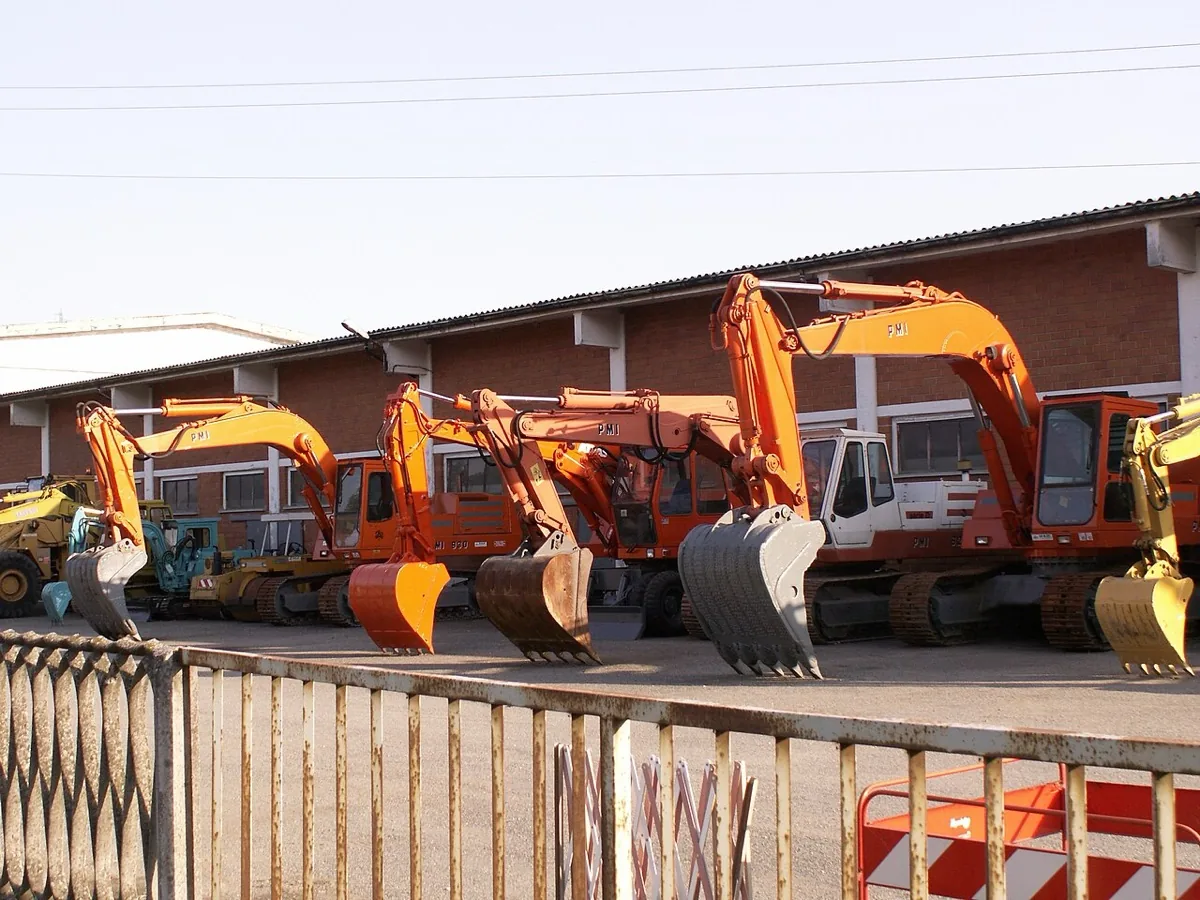
How do you spot the risks in a used machine: operating hours, repainting and chassis numbers?
By matching three things that are hard to dress up at the same time: actual wear against the hour meter, the paint against what lies beneath it, and the number plate against the numbers stamped on the frame and engine and against the documents. An hour meter can be replaced or altered, and paint can be renewed in days, but keeping all these signs consistent is hard to fake.
- Operating hours: do not rely on the meter reading alone. Compare it with the wear on the pins and bushings in the arm and bucket joints, the bucket teeth and cutting edge, the tracks and sprockets on crawler machines, and the travel pedals, operator's seat and control levers. On modern machines the electronic control unit may record engine hours separately from the visible meter, so ask for a reading with a diagnostic tool.
- Repainting: look for overspray on hoses, rubber, decals and cab glass, for new warning decals on an old frame, and for filler or welds under the paint on the arm, boom and cylinder mounting points. A crack in the arm that has been welded and painted over is the most dangerous thing paint can hide.
- Chassis and engine numbers: match the number on the identification plate with the number stamped on the frame itself, the engine number with its plate, and both with the invoice and any previous registration document. A plate fixed with new rivets, a stamped number that has been ground off, or a number that does not match the machine's model is reason enough to stop. Also check that the machine is not pledged to a finance company.
- Engine and hydraulics: a cold start recorded on video, the colour of the exhaust smoke, blow-by from the crankcase breather, arm speed and swing under load, cylinder drift under load, leaks at the pump and valves, and analysis of engine oil and hydraulic oil samples where possible.
- Accident history: signs of a rollover on the cab and protective structure, of fire on wiring and hoses, or of flooding on electrical connectors and seats.
None of this replaces an inspection at the machine's location by an independent inspector before payment, with a photo report that records the numbers as found, not as written in the advert. We explain how to read such a report in How to read an inspection report and decide: accept or reject?
Which engine emission standards matter for your country of sale?
Major markets impose staged emission limits on diesel engines in non-road machinery — Stage V in the European Union, Stage IV in China and Tier 4 in the United States — and the higher the stage, the more exhaust aftertreatment systems the engine carries, which need suitable fuel and maintenance familiar with them. That is why the engine stage is chosen according to the rules of the country of sale and the fuel available there, not according to the model shown in the catalogue.
| Market | Standard | What it means for importers | Source |
|---|---|---|---|
| European Union | Stage V under Regulation (EU) 2016/1628 | Has applied to engines placed on the market since 1 January 2019, and since 1 January 2020 for the 56 to under 130 kW category. Its limits for engines from 56 to 560 kW: 0.40 g/kWh for nitrogen oxides and 0.015 g/kWh for particulate matter, with a particle number limit of 1×10¹² per kWh | Regulation (EU) 2016/1628 Annex II, Table II-1 Annex III, Table III-1 |
| China | Stage IV for non-road diesel machinery (standard GB 20891-2014 and its amendment) | Since 1 December 2022, the production, import and sale of non-compliant machinery and diesel engines up to 560 kW has been prohibited. It relies on technologies such as selective catalytic reduction (SCR), diesel particulate filters (DPF) and remote monitoring of the emission system, and the manufacturer discloses emission information before the machine leaves the factory | Ministry of Ecology and Environment of China: implementation of Stage IV |
| United States | Tier 4 for non-road diesel engines (40 CFR Part 1039) | The EPA also regulates diesel fuel: ultra-low sulphur diesel has a sulphur limit of 15 parts per million | US Environmental Protection Agency: emission regulations for heavy equipment with diesel engines |
| Gulf and Arab markets | Varies | Do not assume that a particular stage is required or permitted; ask the competent authority in the country of sale, and ask the manufacturer to state the engine stage of the model offered to you | — |
The table is for guidance, not for contracts: the rules are amended and phased in by power category. Its figures were reviewed against their official sources in September 2026.
The practical result is three rules. First: a higher-stage engine is not always the right choice for your market. Its aftertreatment systems need fuel to the specification they were designed for, diesel exhaust fluid (DEF) in engines fitted with selective catalytic reduction, and technicians and diagnostic tools that know them; so ask the manufacturer to state in writing the fuel specification required in the engine manual, and compare it with what is available in your country. Second: the same model may be offered with engines of different stages depending on the market, so write the engine stage, make and model into the contract, and ask for a photo of the engine plate before shipping. Third: if you re-export to a market that requires a higher stage, a machine that suits your country may not be accepted there.
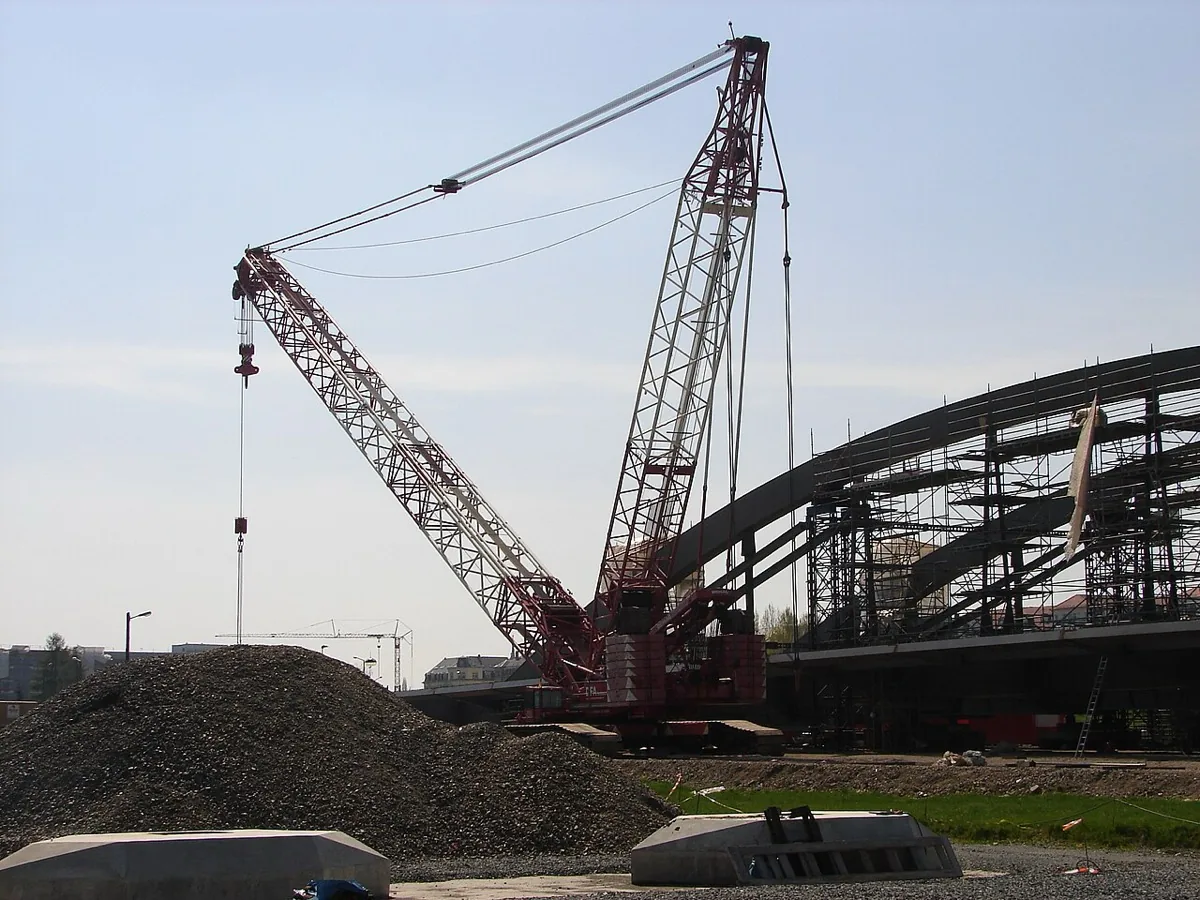
What are the requirements for importing heavy equipment into Saudi Arabia?
In Saudi Arabia, mobile machinery and heavy works equipment are subject to a dedicated technical regulation that requires a certificate of conformity from a body accepted by the Saudi Standards, Metrology and Quality Organization (SASO), and requires suppliers of used equipment to obtain an inspection certificate. Because Saudi Arabia is one of the largest markets in the region for this category and its rules are published in detail, we use it as an example of what to check in any market before buying.
| Item | What it states | Source |
|---|---|---|
| Applicable regulation | “Technical Regulation for Machinery Safety, Part Two: Mobile Machinery and Heavy Works Equipment”, approved on 8 April 2021 and published in the Official Gazette on 21 May 2021. It defines heavy equipment as machines intended for construction and earth-moving work, self-propelled or towed, on wheels, tracks or legs | Text of the regulation (Arabic), Article 1 |
| Certificate of conformity | The party responsible for placing the product on the market obtains a certificate of conformity from a body accepted by SASO, under conformity assessment scheme Type 1a of ISO/IEC 17067 | Article 6/1 |
| Used equipment | Suppliers of used mobile machinery and heavy works equipment obtain an inspection certificate issued by a body accepted by SASO | Article 6/3 |
| Shipping dismantled | If the machine cannot be imported as an assembled finished product because of transport requirements, it may be transported as separate parts, and the certificate of conformity is issued for the final model, with evidence that the parts belong to it | Article 6/8 |
| Customs headings covered | The regulation's annex lists headings including 8429 for bulldozers, loaders and rollers, 8430 for other excavating and tamping machinery, and 8431 for their parts; the up-to-date reference is the list on SABER, Saudi Arabia's product conformity platform | Annex 1-B |
| Used road-going dump trucks | SASO's vehicle import service states that heavy transport trucks (over 3.5 tonnes) must not be more than five years old from the model year — so check whether the dump truck you are buying is treated as a vehicle or as equipment | SASO: vehicle import service |
| Sector regulator | The Heavy Equipment Regulatory Center, part of SASO, established by Council of Ministers Resolution No. 488; its tasks include proposing rules on the service life of heavy equipment and on its disposal | Organisational arrangements of the Heavy Equipment Regulatory Center |
The Center has published a document setting out requirements for importing heavy equipment, so check its current version on the Center's platform before buying any used machine: if it contains a condition on the machine's age or condition, that condition decides whether the machine can enter at all, so do not rely on a figure copied from elsewhere. The table is for guidance, not for contracts; its figures were reviewed against their official sources in September 2026. For registering on SABER and the import steps in general, see Importing from China to Saudi Arabia.
Outside Saudi Arabia the rules differ. In Iraq, for example, many shipments need a pre-shipment certificate of conformity issued by an accredited inspection body in China, as we explain in Importing from China to Iraq, and other markets restrict imports of used equipment or set conditions for inspecting it. Check these with the competent authority or your customs broker before buying, not before shipping.
How do you assess after-sales service and spare parts in the country of sale?
With one question before price: who will repair this machine in your country, where will its parts come from, and how many days will that take? An excavator that stands idle for two weeks waiting for a part can lose more in hire income than the price difference that led you to choose it.
- A dealer or service centre in the country of sale: does the brand have an authorised dealer? Does the dealer service machines imported outside its network, or refuse to honour their warranty? Ask before buying, not after the first breakdown.
- Engine and hydraulic pump brands: an engine from a brand with a service network in your country avoids many maintenance problems. Write the engine make and model, and the make of the main pump and the hydraulic control valve, into the contract, and prohibit substitution without written approval.
- Wear parts with the first shipment: filters of all types, bucket teeth and cutting edges, belts, cylinder seals and the hoses most prone to damage — especially anything with no local substitute. For regular imports of spare parts after that, see the Spare Parts page.
- Technical documents: a parts catalogue with original part numbers, a service manual, an operator's manual in a language the operators read, and the diagnostic tool or software if engine faults can only be read with it.
- Telematics units: many modern machines carry a unit that transmits operating data, including machines designed for China's Stage IV, whose emission systems are monitored remotely. Ask who holds access rights to this unit after the sale, require those rights to be transferred to you, and require any remote shutdown function to be disabled before shipping.
How is heavy equipment shipped: RoRo, flat rack, break bulk or container?
Self-propelled machines usually ship on roll-on/roll-off (RoRo) vessels, driven on board; machines that exceed container dimensions go on flat rack containers; the largest go as break bulk, lifted onto the ship by crane; and compact machines go inside a container — sometimes after partial dismantling. In this category, weight and dimensions always reach their limit before volume: the question is not how many machines fit in a container, but whether a single machine fits and can be secured safely.
| Method | How it works | Suits | What to watch for |
|---|---|---|---|
| RoRo vessels | The machine is driven into the ship and secured on its internal deck, and unloaded the same way | Loaders, bulldozers, rollers, mobile cranes and dump trucks that can move under their own power | Needs a line serving both the port of loading and the port of discharge, and a machine that moves under its own power; non-running or tracked machines may be loaded on special trailers at extra cost |
| Flat rack container | A floor with two end walls, no sides and no roof, to which the machine is lashed | Medium and large excavators, and machines wider or taller than a standard container | Out-of-gauge charges, early booking because availability is limited, and engineered lashing at documented tie-down points |
| Break bulk | The machine is lifted into the ship's hold or onto its deck by crane, without a container | The largest machines: large cranes, mining trucks and their components | Fewer lines and less regular sailings, and coordinating the lift at both ports |
| Standard or open-top container | The machine goes in whole, or after removing the bucket, arm, counterweight or protective frame | Mini excavators, forklifts, small rollers and skid steer loaders | Dismantling means reassembly and adjustment on arrival, and dismantled parts are marked and listed on the packing list |
Preparing the machine for shipping is part of the inspection, not something that comes after it: washing off soil and mud, because some countries reject used equipment contaminated with soil and plant material; lowering the fuel level and disconnecting the battery; protecting polished cylinder rods from rust with grease or wrapping; sealing the exhaust outlet; securing moving parts; and photographing the machine from every side before loading to document any damage in transit. Marine insurance is not a detail here, because a single machine can be worth more than a full container of other goods. To determine who is responsible for loading and lifting at the port of loading, see Incoterms 2020 explained.
These machines are classified for customs under well-known international headings at Harmonized System level: self-propelled bulldozers, excavators, loaders and rollers under heading 8429, cranes under 8426, forklifts under 8427, and dump trucks designed for off-highway use under 8704.10. The exact national code and its duty are determined by your customs broker in the destination country. For documents in general, see Import documents and customs clearance.
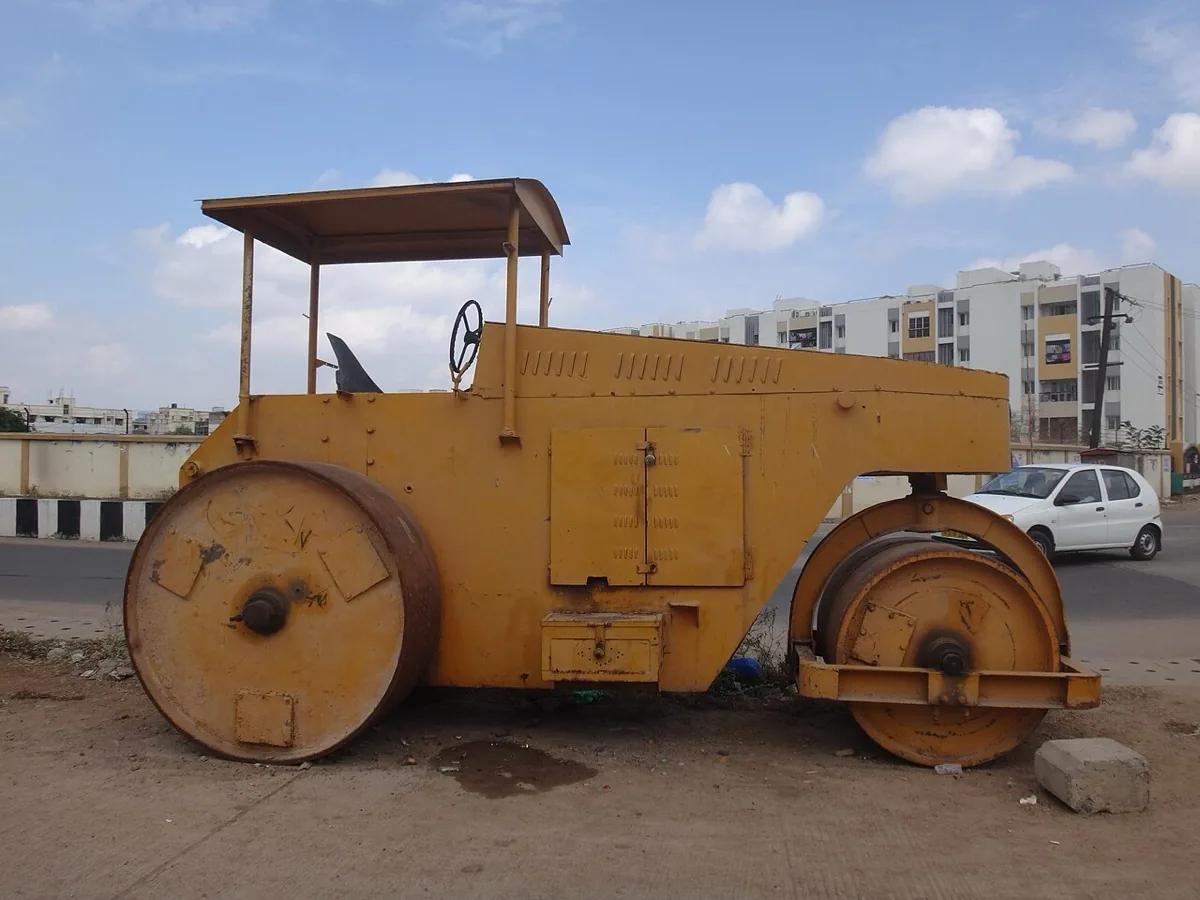
What inspection does a machine need before shipping?
A new machine needs a check against the contract: model, specification, engine stage, serial numbers, attachments and documents; a used machine also needs a technical condition inspection by an independent inspector at its location before payment. In this category every unit is inspected, not a random sample as with repeat-production goods.
- Conformity with the contract: model, bucket capacity, track or tyre type, the cab and its air conditioning, the protective structure, the display language, and the agreed optional equipment.
- Operation: a cold start, a full work cycle for every function, lights, warning devices and the reversing alarm, and no fault codes on the display.
- Numbers and documents: chassis number and engine number matching the invoice, packing list and certificate of origin, and a photo of the engine plate showing its emission stage.
- Attachments and spare parts: the extra bucket or hydraulic breaker if ordered, the maintenance toolkit, the agreed wear parts, and the manuals.
- Destination country certificates: the certificate of conformity or inspection certificate where required, with the accredited body's visit booked before loading, not after.
For the general basis of pre-shipment inspection and its limits, see Pre-shipment inspection and AQL standards, and to audit the factory or seller before contracting, see Factory audit: what it is and when you need one.
How do you import heavy equipment from China?
- Start with the rules of the country of sale: certificates of conformity, any conditions for used equipment, whether a dump truck is classed as a vehicle or as equipment, and the accepted engine stage.
- Define the operating specification: operating weight, bucket capacity or lifting capacity, type of work and soil, and expected annual working hours.
- Decide between new and used based on your budget, the maintenance available in your country and what its rules allow.
- Compare offers from factories, dealers or used-equipment sellers in the specialist hubs, and verify what the seller is: a factory, a dealer or a trader.
- Write a detailed contract: model, engine stage and make, specification, warranty, accompanying spare parts, delivery term, and a payment schedule tied to inspection. See Safe payment methods for Chinese factories.
- Inspect before the final payment: a check against the contract for new machines, and an independent condition inspection for used ones covering hours, paint and chassis numbers.
- Complete the destination country certificates — conformity or inspection — before loading.
- Choose the shipping method: RoRo, flat rack, break bulk or container, then prepare the machine and document its condition with photos before loading.
- Review the documents before sailing: the invoice, packing list, bill of lading, and chassis and engine numbers must match in each of them.
Alshumul's role in importing heavy equipment
Alshumul Commercial Services is an import and export company based in Guangzhou. The value of our presence in China for this category is that its most serious risks are found by inspecting the machine in person, not from photos: an hour meter that does not match the wear, fresh paint on a welded arm, and an engine plate showing a different stage from the one in the offer. What we handle:
- Finding and verifying factories and sellers, and telling the factory apart from the dealer and the trader.
- Auditing and visiting factories, and inspecting used machines on site before any payment.
- Negotiating directly in Chinese on specification, engine stage, equipment, accompanying spare parts and price.
- Following production of new machines built to order.
- Inspection before shipping: checking the model, specification, and chassis and engine numbers against the contract, running the machine and recording it on video, and booking the accredited inspection body when the destination country requires one.
- Arranging shipping through shipping lines and specialist carriers by the suitable method: RoRo, flat rack, break bulk or container.
- Reviewing documents before sailing, and following up until the port of discharge.
What we do not offer, we say clearly: we do not handle customs clearance inside the destination country; we do not give a legal opinion on a machine's classification or eligibility for import, which is for the competent authority or a legal adviser in your country to decide; and we do not provide after-sales maintenance or warranty, which are the responsibility of the manufacturer or its dealer. To calculate your full landed cost, see The real cost of importing from China.