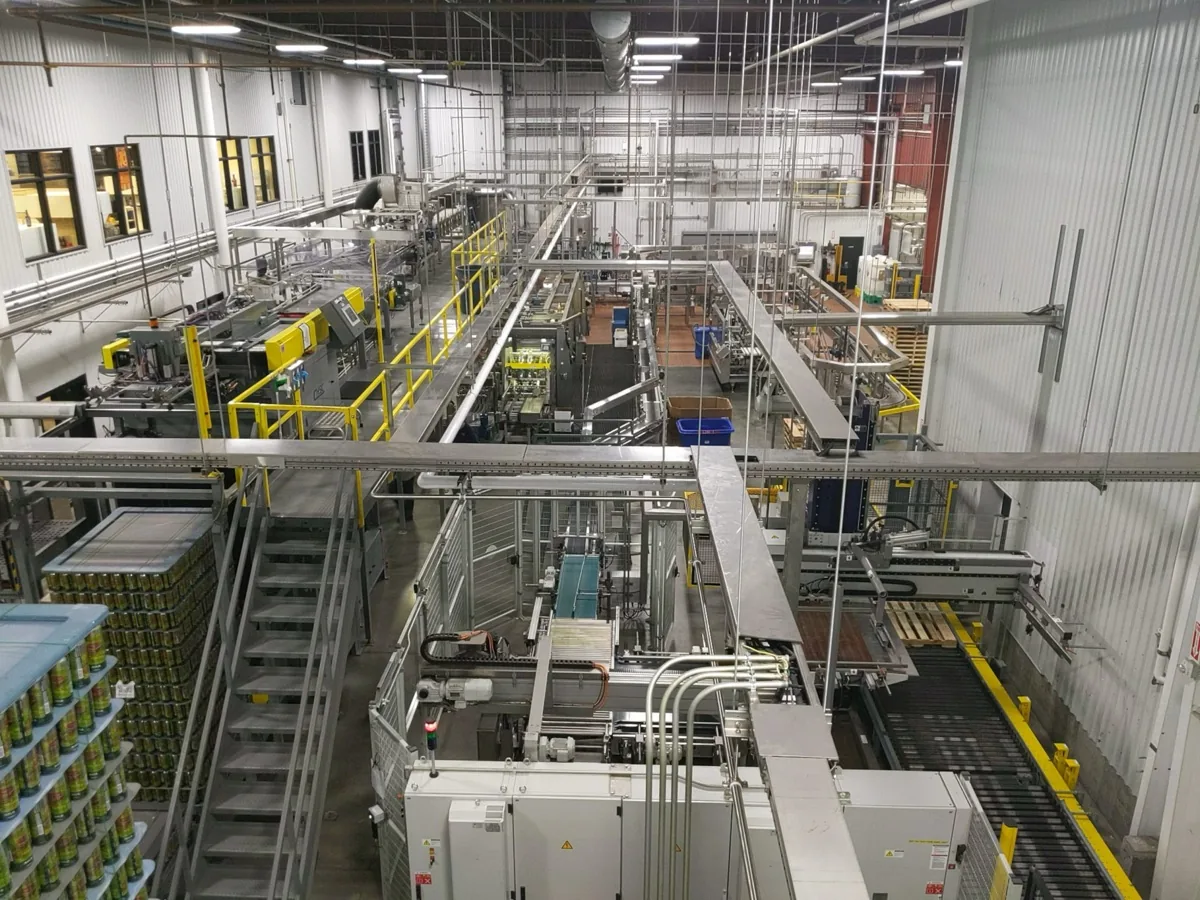
Importing a machine or a production line is a different decision from importing any other goods. You are not buying a product to sell, but production capacity that will run for years, and its value is measured not by how it looks on the day it arrives but by the number of good units it turns out per hour with your raw material, your electricity supply and your workers. That is why most losses in this category do not happen at sea, but at three moments: the day the specification was written incompletely, the day the machine was shipped without a real test, and the day it arrived and the site was not ready to install it.
This page covers single machines and complete production lines: packaging machines, plastics machinery, food machinery and building materials machinery, together with the installation, commissioning, training and spare parts that go with them.
Where are machinery and production lines made in China?
Each industry has its own hubs: Ningbo for plastic injection moulding machines, Zhangjiagang for beverage filling lines and extrusion machines, Wenzhou and Ruian for packaging and printing machines, Jinan for laser cutting machines, and Shandong and Henan for food machinery and building materials machinery. Buying from the specialist hub is not a detail: it has factories with accumulated experience in a particular machine, component suppliers close by, technicians who know the machines, and competition that shows you the real prices.
| Industry | Main hubs | Note for importers |
|---|---|---|
| Plastic injection moulding machines | Ningbo (Zhejiang) and Guangdong | One of the largest clusters of injection moulding machine makers in the world; specify the clamping force in tonnes and the shot weight |
| Water and beverage filling lines and bottle blowing | Zhangjiagang (Jiangsu) | Ask to visit a working line at a previous customer's site, or for a recent, dated video of it running |
| Extrusion machines and plastic pipe and sheet lines | Zhangjiagang, and Qingdao (Shandong) | Output in kilograms per hour for a specified diameter and material |
| Packaging, printing and bag-making machines | Wenzhou and Ruian (Zhejiang), and Guangdong | Wide variation in quality; component brands are what set one machine apart from another |
| Food machinery | Shandong (Zhucheng), Henan (Zhengzhou) and Shanghai | Stainless steel in food-contact parts, with its grade stated in writing |
| Building materials machinery: blocks, bricks, crushers and concrete batching plants | Fujian (Quanzhou), Henan (Zhengzhou), Shandong and Shanghai | Heavy machines; foundations and shipping are part of the decision, not details to sort out afterwards |
| Metal forming machines: laser cutting, bending and shearing | Jinan (Shandong) for lasers, and Ma'anshan (Anhui) for press brakes and shears | The laser source, cutting head and control system are specified by brand |
The industrial section in Phase 1 of the Canton Fair in Guangzhou is a useful way in for comparing factories before visiting them, and we explain its limits in Alibaba, 1688 and the Canton Fair. But a decision on machinery is not made at a trade fair stand; it is made by visiting the factory and seeing its machine running.
What specifications go into a contract for a machine or production line?
A performance specification, not an appearance specification: production capacity with your product and raw material, the acceptable scrap rate, voltage and frequency, the brands of the main components, and the scope of supply item by item. The catalogue states the most the machine can achieve under ideal conditions; the contract must state what it achieves under your conditions.
- Actual production capacity: in units or kilograms per hour for your specific product — container size, raw material type, film thickness, liquid viscosity — with the acceptable scrap or rejection rate.
- Brands and models of the main components: the programmable logic controller (PLC), operator screen, frequency inverters, servo motors, pneumatic components and sensors. A brand that is widespread in your country means spare parts are available locally, and a clause prohibiting substitution without written approval protects you from a cheaper “equivalent”.
- Scope of supply: a list of every machine and item of auxiliary equipment, stating what is included in the offer and what is not. The phrase “complete line” in a quotation may not include the air compressor, the chiller, water treatment, the conveyors between machines or the moulds.
- Utilities required at your site: total electrical load in kilowatts, compressed air pressure and consumption, water and cooling, steam if needed, floor space and ceiling height, and foundation loads.
- Documents to be handed over: the layout drawing, foundation drawing, electrical and pneumatic diagrams, operation and maintenance manual, spare parts list, a backup copy of the control program, and the language of the operator interface.
- Safety: guards on moving parts, emergency stop buttons, door interlocks, and the machinery safety requirements in force in the destination country.
- Warranty: its length, when it starts (from commissioning at your site or from the shipping date), and which consumable parts are excluded.
- Moulds: if they are made for your product, your ownership of them is written into the contract. See Protecting your brand and intellectual property when manufacturing in China.
One clause that many buyers overlook: a time lock in the control program. Some suppliers program the machine to stop after a certain period unless a password is entered, as a way of making sure the final payment is collected. Require in writing that the program contains no lock of this kind, or that the full unlock codes are handed over when the payment linked to them is made, and check this during the test.
Why is getting the voltage and frequency wrong one of the costliest mistakes?
Because a Chinese machine is designed by default for China's electricity supply — 380 V three-phase and 50 Hz for industrial machines, and 220 V single-phase for small machines — while your site's supply may differ in voltage, frequency or both, and correcting this after arrival is costly and sometimes impossible. It is a mistake that does not show up in photos or in the catalogue, but on the day the machine is connected to the power.
| Market | Typical three-phase voltage | Frequency |
|---|---|---|
| China | 380 V | 50 Hz |
| Saudi Arabia | 380 or 400 V, depending on the facility | 60 Hz |
| UAE, Bahrain, Iraq and Jordan | 400 V | 50 Hz |
| Kuwait, Qatar and Oman | 415 V | 50 Hz |
| Egypt and most of North Africa | 380 to 400 V | 50 Hz |
| United States, Venezuela and most of the Americas | Various voltages, such as 208, 460 and 480 V | 60 Hz |
The table is for guidance, not for contracts: what counts is the voltage at the supply panel on your actual site, measured or confirmed by the electricity company, because the voltage available in an industrial area may differ from the nominal figure. The effect of getting it wrong is tangible:
- Frequency changes speed: the speed of an induction motor is proportional to frequency, so a four-pole motor runs at about 1,500 rpm on 50 Hz and about 1,800 rpm on 60 Hz — roughly 20% faster. In pumps and fans, the load rises steeply with speed, so the motor overheats and fails; in synchronised machines, the timing between parts goes out of step.
- Voltage changes power: the power of resistance heaters is proportional to the square of the voltage, so a heater designed for 380 V delivers about 19% more power on 415 V, and its life is shortened. Control components designed for a specific voltage may burn out or fail to work.
- Single-phase and three-phase: a three-phase machine in a workshop with only a single-phase supply needs new wiring or a special converter before it will run.
The right solution is cheap if it comes in time: write your site's voltage and frequency, and the control circuit voltage, into the contract before manufacturing, so that the factory selects the motors and control panels accordingly. Ask for photos of the motor nameplates and the main control panel's nameplate before shipment. Bear in mind that China's grid runs at 50 Hz, so testing a machine designed for 60 Hz at the factory requires a power supply through a frequency converter; ask the factory about this before the test date, not on the day. Solutions after arrival — a frequency inverter for each motor, or a transformer for the whole plant — are costly, involve losses and do not fix every case. We cover the same issue for household appliances in Importing electrical home appliances.
What is a factory acceptance test (FAT), and how is it run?
A factory acceptance test (FAT) is a full run of the machine or line at the supplier's factory before it is dismantled and shipped, using your raw material and your product, to confirm that it achieves the performance written into the contract. It is the most important control point in the whole deal, because it is the last moment when a mistake is cheap to correct, and when the supplier is still keen to receive the rest of its payment.
- A protocol written into the contract in advance: what is tested, how long the machine runs continuously, the acceptance criteria in figures (output, scrap rate and permitted tolerances in product dimensions), who supplies the raw material, and who attends.
- With your own raw material: send your containers, raw materials or product samples to the factory, or agree on a raw material in China that matches the specification. A machine that runs well on the supplier's ideal material may struggle with yours.
- Full documentation: video of the run, measurements, a signed report, and a punch list with a closing date for each item before shipment, not after.
- Linking payment to the result: the common arrangement — negotiable, not a rule — is a deposit on signing the contract, most of the balance after the test is passed and before shipment, and a small percentage held back until acceptance at your site. See Safe payment methods for Chinese factories.
| Item | Factory acceptance (FAT) | Site acceptance (SAT) |
|---|---|---|
| Where | The supplier's factory in China | Your plant in the destination country |
| When | After manufacturing, before dismantling and shipment | After installation and commissioning |
| What it proves | That the machine achieves the agreed performance with your raw material | That it arrived undamaged, was installed correctly and achieves the performance under your actual conditions |
| What it is usually linked to | The main payment before shipment | The final retained payment, and the start of the warranty in many contracts |
How are installation, commissioning and training agreed?
With a written contract that sets out the number of engineers and the working days included; who pays for tickets, visas, accommodation, local transport and the daily allowance; and what must be ready at your site before they arrive. The common arrangement is for the supplier to send one or more engineers to supervise installation, commission the line and train your team, while the buyer pays for travel and accommodation plus a daily allowance for each engineer, often in the range of USD 100 to 200 — for guidance, not for contracts, because the amount varies by supplier and specialisation.
- Scope of work: supervision of installation carried out by your workers, or full installation? A trial run with real production? Who provides the cranes and auxiliary labour?
- Duration: the number of days included in the price, the cost of each additional day, and who bears the days lost if the site is not ready — usually the buyer.
- Training: for whom (operators, maintenance technicians or both), for how many days and in which language, with written training material that stays after the engineer leaves.
- Visas: start the process early, because some destinations take weeks; remote commissioning by video is a fallback, not the equivalent of being on site.
- Site readiness: foundations and anchor bolts according to the supplier's drawing, the power cable to the main panel at the required capacity, compressed air, water and drainage, and the raw materials needed for the trial run.
- Support after commissioning: the response time for remote support, and how parts are sent during the warranty.
The practical rule: prepare your site in parallel with manufacturing, not after the machine arrives. Foundation and utility drawings are requested from the supplier in the first weeks of the contract; a machine that arrives at a site that is not ready waits in the open or in rented storage, and the engineers' waiting time is charged to you.
Which spare parts should be ordered with the machine?
Consumable and wear parts for one to two years of operation, and the critical parts whose failure stops the whole line and which are not available in your country — ordered with the first shipment and priced in the same contract. A line that waits three weeks for a twenty-dollar part to arrive from China loses, while it stands idle, many times the cost of the entire spare parts stock.
- Consumable and wear parts: seals and O-rings, knives and blades, band heaters and thermocouples, belts and bearings, nozzles and filters, and heat-sealing jaws in packaging machines.
- Critical parts: proprietary control units, servo drives, non-standard sensors, and moulds and the mould parts prone to damage.
- A binding price list: for the recommended spare parts, with a written validity period, so that after purchase you are not charged the kind of price set by a supplier who knows you have no alternative.
- Standardisation: bearings, belts and components in standard international sizes and designations, so that replacements are easy to buy locally.
For regular imports of machinery spare parts later on — part numbers, cross-referencing, and the difference between genuine and replacement parts — see the Spare parts for vehicles and machinery page.
How are large machines and production lines shipped?
Machines that fit through a container door are shipped in standard containers; longer, taller, wider or heavier ones go in open-top or flat-rack containers; and anything beyond that is shipped as break bulk cargo on the vessel. With machinery, dimensions or weight usually reach their limit before total volume does: a single machine may take up less than a quarter of a container's volume, yet not fit through its door or exceed its floor load.
| Container type | Approximate dimensions and payload | When it suits |
|---|---|---|
| 20-foot standard | Internally about 5.9 × 2.35 × 2.39 m, door about 2.34 × 2.28 m, payload up to about 25 to 28 tonnes | Compact heavy machines that fit through the door |
| 40-foot high cube | Internally about 12 × 2.35 × 2.69 m, door about 2.34 × 2.58 m, payload about 26 tonnes | Sections of long lines and auxiliary equipment |
| Open top | Standard container dimensions without a fixed roof, loaded from above by crane | A machine taller than the door, or one that can only be loaded vertically |
| Flat rack | A floor with two end walls, no sides and no roof, and a higher payload than a standard container | A machine wider or taller than the container, or very heavy |
| Break bulk | No container; lifted directly onto the vessel | Equipment that exceeds even a flat rack |
These figures are approximate and for guidance only; they vary between shipping lines and containers, and road weight limits in the destination country may restrict the weight before the container's payload does. Out-of-gauge cargo in open-top and flat-rack containers pays surcharges and needs early booking, because these containers are less available and not every shipping line or port accepts them.
- Packaging: wooden crates or skids treated to ISPM 15 requirements, anti-rust film and grease on exposed metal surfaces, moisture absorbers, electrical panels wrapped and sealed, and sensitive parts such as screens removed and packed separately.
- Securing and marking: lashing and bracing to prevent movement, with the lifting points and centre of gravity marked on the crate.
- A line split across several containers: a number on each crate that matches the packing list and the installation drawing, and a packing list for each container. A line that arrives one crate short cannot be installed.
- Customs classification: under some systems, a production line may be classified as a single functional unit, and splitting it across separate shipments complicates this. Discuss the classification with your customs broker in the destination country before shipment. For the general basics, see Import documents and customs clearance.
What are the most common risks in importing machinery, and how do you avoid them?
The most serious is discovering after arrival what could have been discovered at the factory: exaggerated capacity, substituted components, an electrical supply that does not match, and a supplier with no technical support. These are the main ones:
- A trader presenting itself as a factory: with machinery in particular, the difference shows after the sale, in technical support and spare parts. Audit the factory before signing, and see Factory audit: what it is and when you need one.
- Exaggerated production capacity: this can only be settled by a real run with your raw material in the acceptance test.
- A used, refurbished machine sold as new: check the dates on the nameplates and the components' serial numbers. If you are deliberately buying used, first check the destination country's restrictions, because some markets limit the age of used machinery or require inspection certificates for it.
- Drawings and a manual that do not match the machine: check them during the test, because a wrong electrical diagram doubles the time it takes to deal with every fault.
- A vague delivery term: define exactly where the supplier's responsibility ends, especially when loading open-top and flat-rack containers. See Incoterms 2020 explained.
How do you import machinery and production lines from China?
- Define your needs precisely: the product and raw material, the required production capacity, your site's electricity supply in voltage and frequency, and the floor space and utilities.
- Request technical offers from several factories in the specialist hub, and compare them on scope of supply and component brands, not on price alone.
- Audit the factory and watch its machine running, preferably at a previous customer's site.
- Finalise the technical contract: performance, components, voltage and frequency, scope of supply, test protocol, installation and training, spare parts, warranty, and a payment schedule linked to milestones.
- Prepare your site in parallel, following the foundation and utility drawings the supplier provides.
- Monitor manufacturing and send your raw material for the test on time.
- Carry out the factory acceptance test and close the punch list before shipment.
- Dismantling, packaging, marking and booking the right containers — standard, open-top or flat-rack.
- Review the documents before sailing: the invoice, the packing list for each container and the goods description.
- Installation, commissioning and training by the supplier's engineers, followed by site acceptance.
Alshumul's role in importing machinery and production lines
Alshumul Commercial Services is an import and export company based in Guangzhou. Being in China counts for most in this category, because what matters most happens at the supplier's factory: the specification that gets written, the components that get fitted, and the test that is run before dismantling. What we handle:
- Sourcing and verifying factories in the hub that specialises in your industry, and telling a real factory apart from a trader.
- Factory audits and visits, including watching its machines running.
- Negotiating directly with the factory in Chinese on the technical specification, scope of supply, component brands, voltage and frequency, spare parts and price.
- Monitoring manufacturing and keeping you informed of progress and deviations as they happen.
- Pre-shipment inspection: attending the factory acceptance test and documenting it with video, measurements and the punch list, checking the motor nameplates and component brands against the contract, and reviewing packaging and marking before loading.
- Arranging shipping through shipping lines in the right containers — standard, open-top or flat-rack.
- Reviewing documents before sailing, and following up until the port of discharge.
We are clear about what we do not offer: installation, commissioning and training are carried out by the supplier's engineers under the supplier's contract, not by Alshumul; we do not handle customs clearance inside the destination country; and we do not give legal advice on drafting contracts or banking advice on payment arrangements. To calculate the full landed cost of your project, see The real cost of importing from China.