Iron and steel are not imported from a catalogue photo, or on the strength of a phrase like “first-grade steel”. Steel is a commodity priced by the tonne, its prices move week by week with futures contracts on the Shanghai Futures Exchange, and it is accepted or rejected on the project site on two counts: the standard and grade written into the contract, and the mill test certificate that proves what arrived is what was written. Between the two sits a third item that can overturn the whole calculation: the safeguard and anti-dumping duties that many markets impose on Chinese steel.
This page is a general reference for iron and steel products, whatever your destination: the product families, the standards that go into the contract, matching the mill test certificate to the shipment, zinc coating thickness, production regions, and break bulk versus container shipping. The details specific to the Saudi market — theoretical versus actual weight, Saudi Arabia's SABER conformity platform, and choosing between the ports of Jeddah, Dammam and Jubail — are covered in Importing steel and steel products from China to Saudi Arabia, and we will not repeat them here.
Which iron and steel products are imported from China?
They fall into five families, each with its own standards, packaging and shipping method: rebar, coils and sheets, pipes and sections, galvanised and coated steel, and stainless steel. Mixing them up in a request for quotation is the first source of offers that cannot be compared.
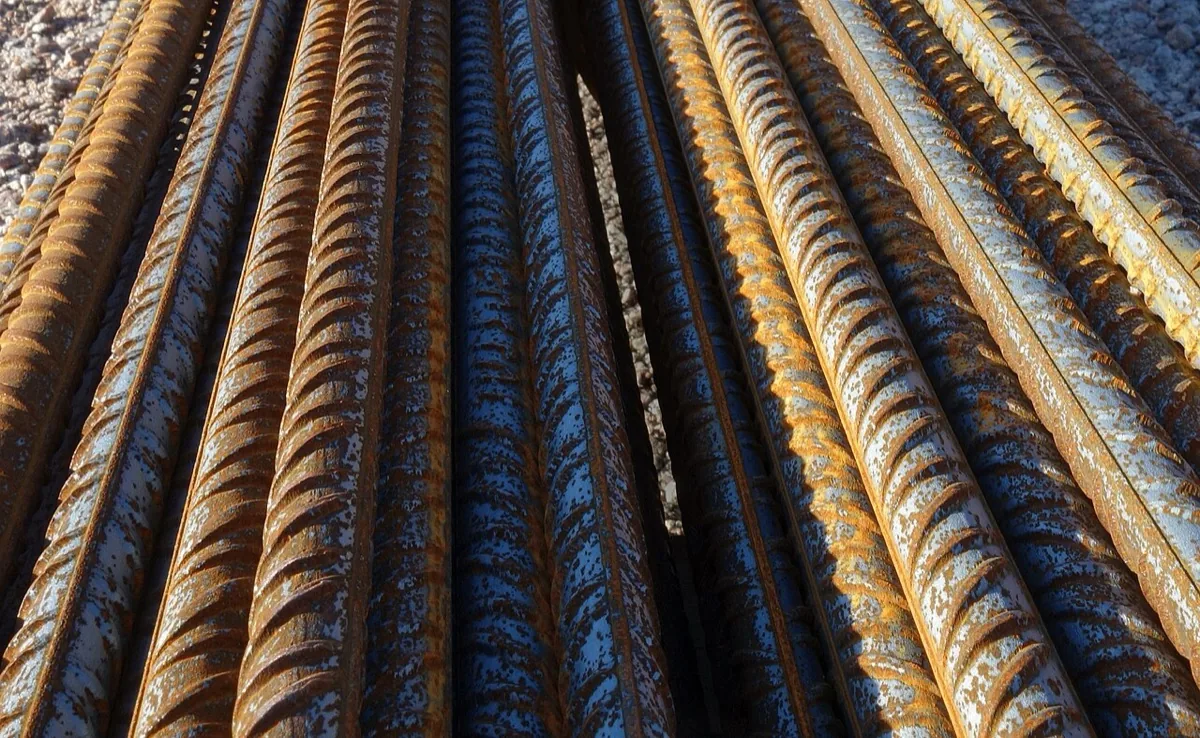
- Rebar: ribbed bars, usually 8 to 32 mm in diameter, in lengths of 6, 9 or 12 metres, bundled and tied with tags that show the heat number.
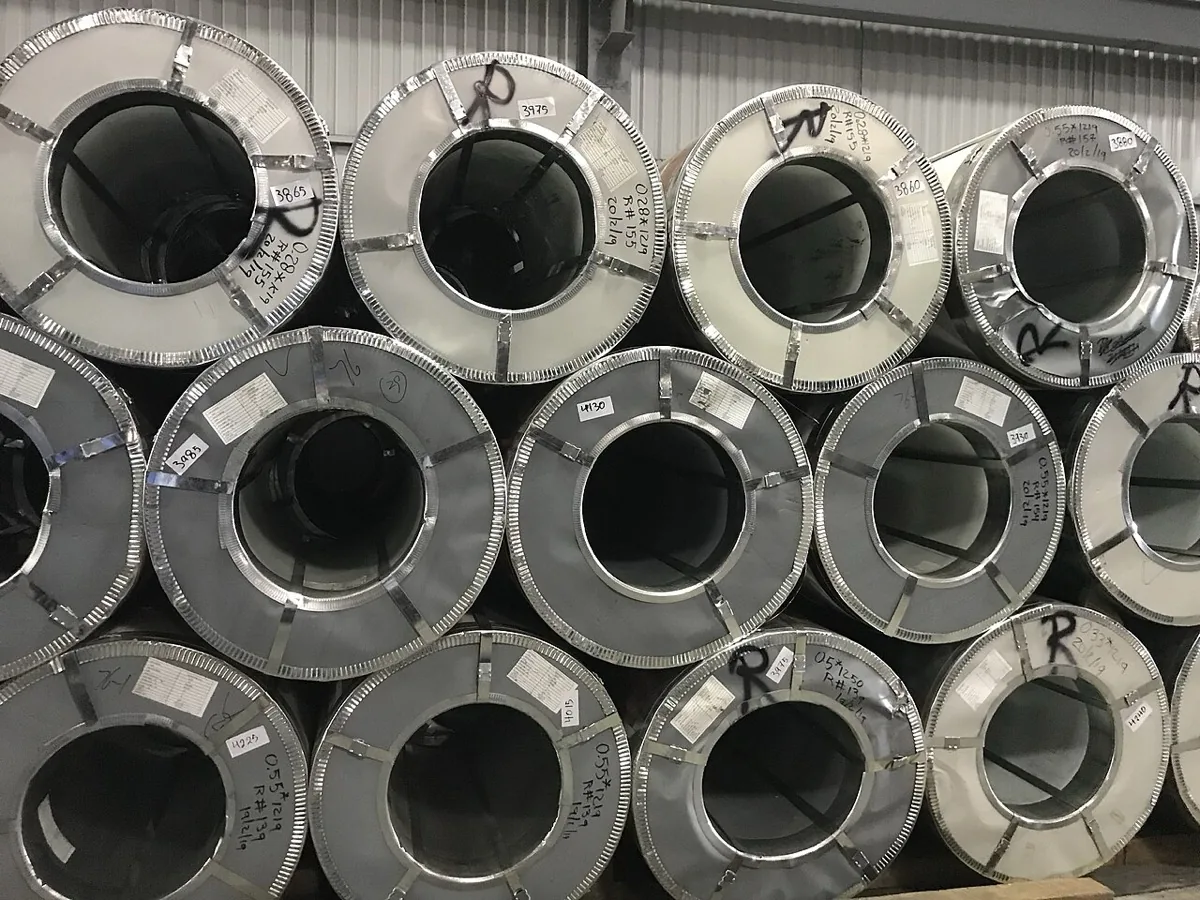
- Coils and sheets: hot-rolled coil (HRC) for construction and heavy fabrication, cold-rolled coil (CRC) for a smoother surface and tighter tolerances in appliances and metal furniture, and heavy plate for tanks and structures.
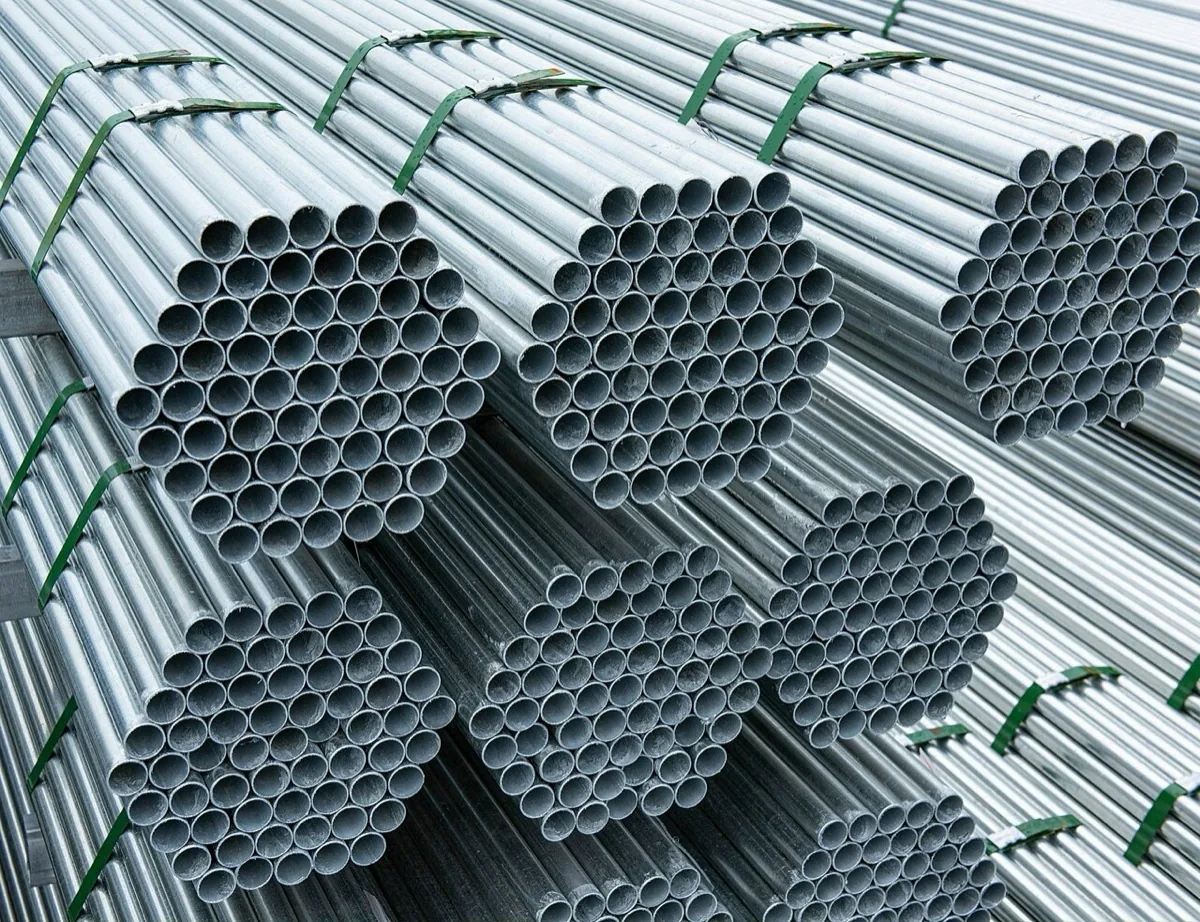
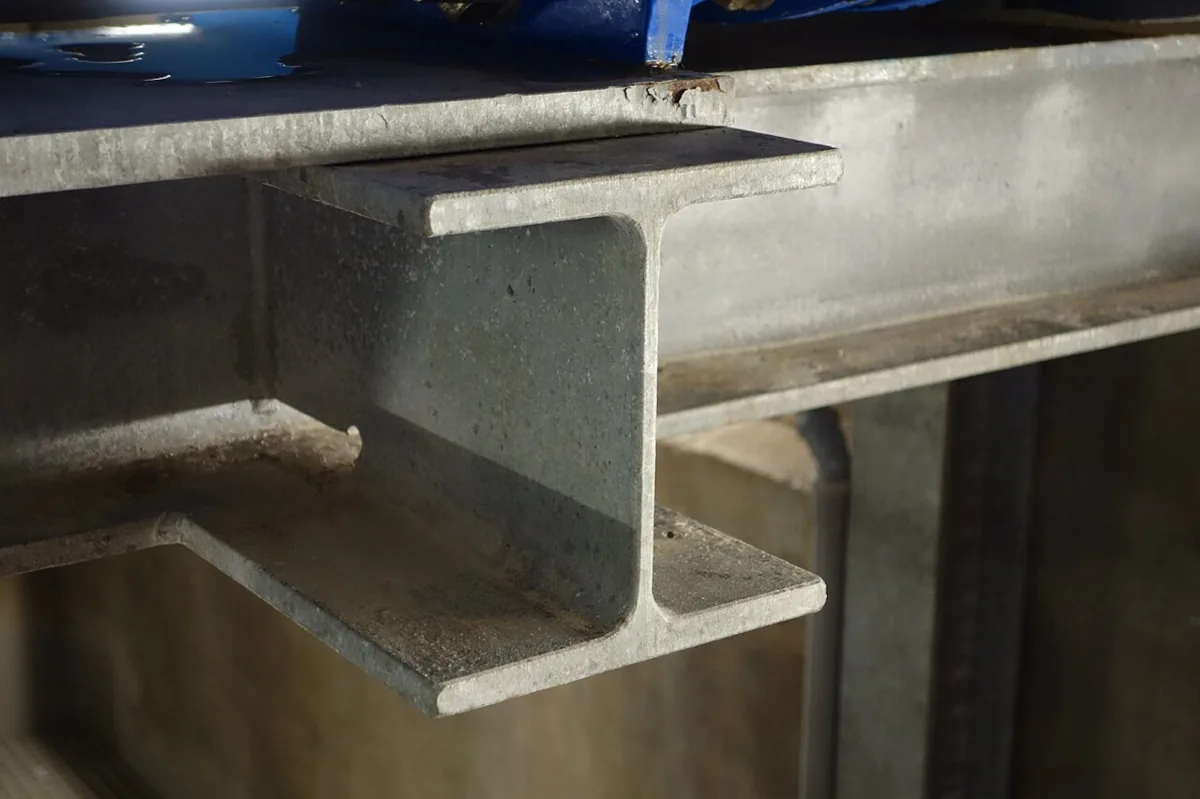
- Pipes and sections: welded and seamless pipes, square and rectangular hollow sections, and angles, channels, and H- and I-beams.
- Galvanised and coated steel: hot-dip galvanised sheet (GI), pre-painted galvanised sheet (PPGI) for roofing and cladding, and aluminium-zinc coated sheet (Galvalume).
- Stainless steel: coils, sheets and pipes in grades 304, 316L, 430 and 201. The difference between 201 and 304 in particular is a common area of fraud, which we explain on the Household Tools page.
Which standards and grades must be stated in an iron and steel contract?
State the standard and the grade number together for each product — for example ASTM A615 Grade 60, not “American rebar” — because a single standard covers several grades with different strengths and different prices. The standard you choose is set by your project specification or the destination country's requirements, not by what the supplier offers. Here is a table of the most common standards in the trade in Chinese export steel:
| Product | Common standards | Commonly traded grades | What else goes into the contract |
|---|---|---|---|
| Rebar | ASTM A615 · BS 4449 · GB/T 1499.2 | Grade 60 (420) · B500B and B500C · HRB400, HRB400E and HRB500E | Diameter, length, tolerance and weight basis, plus the tensile-to-yield ratio and elongation if the project requires them |
| Hot-rolled coils and sheets | ASTM A36 · EN 10025-2 · GB/T 700 and GB/T 1591 | A36 · S235JR, S275JR and S355JR · Q235B and Q355B | Thickness and width with their tolerances, coil weight, and edge condition |
| Cold-rolled coils | JIS G3141 · EN 10130 | SPCC · DC01 | Surface finish, oiling, and moisture-proof packaging |
| Galvanised sheet | ASTM A653 · EN 10346 · JIS G3302 | G60 and G90 · DX51D+Z from Z80 to Z275 · SGCC | Zinc coating weight in grams per square metre, spangle type, and surface treatment |
| Pipes and hollow sections | ASTM A53 · API 5L · EN 10255 · EN 10219 · ASTM A500 | Grade B · X42 to X70 · S235 and S355 | Outside diameter and wall thickness, welded or seamless, end type, and galvanising |
| Stainless steel | ASTM A240 · ASTM A312 | 304 · 304L · 316L · 430 · 201 | Finish (2B, BA or No.4), minimum nickel content, and verification with an XRF analyser |
A Chinese grade is not necessarily inferior, but it is not automatically equivalent either. HRB400 rebar has a minimum yield strength of 400 MPa, while ASTM A615 Grade 60 has 420 MPa and British B500B has 500 MPa. So if your project requires a particular standard, ask for production to that standard and a certificate in its name, and do not accept an “equivalent” without written approval from the project consultant. These standards and figures are for guidance, not for contracts; the reference is your project specification and the destination country's requirements.
What is a mill test certificate (MTC), and how do you match it to the shipment?
A mill test certificate (MTC) is a document issued by the producing mill for each heat, stating the chemical composition and the results of the yield, tensile, elongation and bend tests — and its entire value lies in the heat number on it matching what is actually on your goods. It is also known as a mill test report. A certificate that cannot be linked to the bundles that arrive is an elegant piece of paper with no value.
Four points separate a useful certificate from a mere formality:
- The certificate type under EN 10204. Type 2.2 is a general test report that does not necessarily relate to your batch; type 3.1 is an inspection certificate for your specific batch, signed by an inspection representative who is independent of the production department; and type 3.2 adds the signature of a third party or the buyer's representative. Require 3.1 as a minimum, and 3.2 for critical projects.
- The heat number on the goods. The heat number (Heat No.) must appear on the bundle tags or be printed on the coil or pipe, and it must match the certificate exactly. When a shipment includes several heats, each heat has its own certificate or its own line.
- The quantity covered. The total tonnage on the certificates must cover what was shipped; a certificate for a 50-tonne heat does not cover a 300-tonne shipment.
- The mill's name, not the trader's. Most Chinese export steel is sold through trading companies rather than directly by the mills, and this is acceptable as long as the certificate is an original issued by the mill. But altered certificates, and certificates copied from other shipments, do circulate in the market, so verify by contacting the mill with the certificate number, and use the verification code where some large mills put one on their certificates.
Because anti-dumping duties in some markets are imposed at different rates depending on the producing mill, the mill's name on the certificate is not merely a technical detail: it may determine the amount of the duty itself.
How thick should the zinc coating be?
Galvanising is specified by a figure, not by the word “galvanised”: for sheet, by the zinc weight in grams per square metre for both sides together, such as Z275; for parts and pipes galvanised after fabrication, in microns under ISO 1461 or ASTM A123. The word “galvanised” on its own covers coatings whose service life varies many times over.
- Galvanised sheet: Z275 means 275 grams of zinc per square metre spread over both sides, about 20 microns per side, which is roughly equivalent to G90 in the US standard. Z80 and Z100 are cheaper and suit dry indoor use, while in hot, humid coastal climates, such as the Gulf and Red Sea coasts, heavier coatings are usually specified.
- Hot-dip galvanising after fabrication: ISO 1461 sets a minimum average thickness according to the thickness of the steel itself, for example 85 microns for steel thicker than 6 mm, and 70 microns for steel between 3 and 6 mm. This is several times thicker than the coating on pre-galvanised sheet.
- The common trap: a pipe made from pre-galvanised strip sold as hot-dip galvanised. The first is clearly cheaper, its coating is several times thinner, and the weld seam is a weak point where zinc is simply sprayed on. A magnetic coating thickness gauge reveals the difference in minutes, so make it an explicit item in pre-shipment inspection.
- Pre-painted sheet (PPGI): specify the top coat and back coat thickness in microns, the paint type (polyester or PVDF) and the zinc weight underneath — because glossy paint over thin zinc rusts first at the edges and cuts.
The figures above are examples from the standards, for guidance only; the binding figure is whatever your project specification requires and the contract states.
Are Chinese steel imports subject to safeguard or anti-dumping duties?
Yes, in many markets, and checking the duty in force on your HS code and your mill must come before any pricing — a single anti-dumping duty can exceed the entire margin on the deal. The European Union applies quota-based safeguard measures to many steel products, the United States imposes additional duties and anti-dumping duties on a wide range of Chinese steel, and many Arab and Gulf countries have adopted measures on specific steel products in various years.
Four things make this item especially risky:
- A measure applies to a specific HS code, so galvanised sheet may be subject to it while rebar is not, or the other way round.
- The rate may vary by producing mill, because individual rates are set for mills that took part in the investigation, with a higher rate for all other producers.
- Measures are imposed, renewed, amended and expire, so last year's figure is no good for pricing today.
- Changing the origin via a third country is not a solution; customs authorities pursue origin circumvention, and extending duties to products that are only nominally reprocessed is an established practice.
In practice: send the proposed HS code, the mill's name and the country of origin to your customs broker in the destination country, or check that country's official trade remedies database, before you give your customer a figure. China's own policy also affects the price: in 2021 it abolished the export tax rebate on many steel products. This is a general note for guidance, not a legal or customs opinion on your case.
Where is China's iron and steel industry concentrated?
Mainly in the north and east: Hebei province, led by Tangshan, followed by Jiangsu, Shandong, Tianjin and Liaoning, with processing and distribution centres in the south. China produces more than half of the world's steel, so the question is not whether the product exists, but which supplier matches your specification and is closest to a suitable port.
- Hebei — Tangshan: China's largest steel-producing city, with a concentration of mills making hot-rolled coil, sections and strip, which export through the ports of Jingtang, Caofeidian and Tianjin.
- Jiangsu: major mills for rebar, wire rod and plate in Zhangjiagang and elsewhere, while Wuxi is a leading centre for stainless steel trading and processing.
- Tianjin: a large cluster of factories making welded and galvanised pipes and hollow sections.
- Shandong: plate and galvanised and coated sheet, exported through the ports of Rizhao and Qingdao.
- Liaoning, Shanghai and Hubei: major groups producing plate, high-quality sheet and automotive sheet.
- Guangdong — Foshan: a centre for processing, cutting and distributing coil in the south, close to the region's ports.
Distance from the port is a real cost with a heavy commodity: moving a thousand tonnes hundreds of kilometres by road shows up in the price per tonne, so ask about the port of loading with every offer.
Is iron and steel shipped in containers or as break bulk?
Large quantities — usually thousands of tonnes — are shipped as break bulk directly in the vessel's holds, and smaller quantities in 20-foot containers, because steel reaches the weight limit before it fills any meaningful part of the container's volume. The choice between the two is decided by the quantity, the port of discharge and the type of product:
| Criterion | Break bulk | 20-foot containers |
|---|---|---|
| Suitable quantity | Usually a few thousand tonnes, although general cargo lines may accept smaller parcels | From a single container, at about 25 to 27 tonnes per container depending on the shipping line and road limits |
| Cost per tonne | Lower for large quantities | Higher, but with no large minimum |
| Port of discharge | Needs a port that handles general cargo with suitable equipment | Any container port |
| Exposure to moisture | Higher, during open-air loading and discharge | Lower, but with a risk of condensation inside the container |
| 12-metre bars | No problem | They do not fit, as the internal length is about 5.9 m |
These figures are estimates for guidance, not for contracts. With containers, there are three technical points:
- Lengths: 12-metre bars need a 40-foot or open-top container, and a forty-footer's weight payload is not much greater than a twenty-footer's, so you pay for volume you do not use. The common alternative is to order 6-metre lengths or to have the bars bent — but not every project accepts bending, so ask the consultant before ordering.
- Coils: a 20-tonne coil concentrates its load on a small area of the container floor, so it is secured on wooden cradles and lashed with steel strapping according to the shipping line's rules. An unsecured coil moves at sea and can punch through the container wall.
- Rust and condensation: cold-rolled and galvanised sheet is sensitive to moisture, so require oiling or wrapping in anti-corrosion (VCI) paper with an outer metal cover, and desiccants inside the container. In break bulk shipping, the ship's officer may note “atmospheric rust” on the mate's receipt, and a claused bill of lading may not be accepted where a clean bill of lading is required, so document the condition of the goods with photos before loading.
Do not forget the verified gross mass (VGM) declaration, which is mandatory for every container. For a general comparison of container options, see the guide to full container load (FCL) vs groupage (LCL).
What are the common risks in importing iron and steel, and how do you avoid them?
The most common are a price offer that expires before the contract is signed, a lower grade than the one ordered, a mill certificate that does not match the goods, thickness or galvanising thinner than agreed, and short weight. All of them are avoided by putting things in writing before payment and by inspecting before loading.
- Price validity: steel offers are valid for days, not weeks, because they follow the market daily. Ask for the offer's expiry date in writing, and do not base your calculations on an offer issued two weeks ago.
- A substituted grade: Q235B instead of Q355B, or HRB400 instead of HRB400E, and the difference cannot be seen with the naked eye. The solution is a matching 3.1 certificate, plus a tensile test on a sample at an independent laboratory for critical projects.
- Exploited tolerance: sheet sold as 1.0 mm arrives at 0.92 mm, “within tolerance”. Write the minimum acceptable thickness as a figure, not just the nominal thickness.
- Weight basis: theoretical versus actual weight is a trap we cover in detail in our article on importing steel to Saudi Arabia, and it applies to every destination.
- Stainless steel: 201 sold as 304. An XRF analyser reveals the nickel and manganese content in seconds, whereas a magnet is not enough to tell them apart.
- The unknown trader: a company with no stock and no stable relationship with a mill. Ask for the mill's name and verify the certificate with the mill, and see How to find a reliable Chinese supplier.
How do you import iron and steel from China?
In eight steps whose order is part of their value — above all, checking duties comes before pricing, and inspection comes before loading.
- Write the full specification: product, standard, grade, dimensions and tolerance, galvanising or finish, packaging, quantity in tonnes, and weight basis.
- Check the duties and requirements in the destination country: the HS code, safeguard and anti-dumping duties, and the conformity certificates required, such as SABER in Saudi Arabia. Certificates are covered in detail in Product certifications for import.
- Request comparable offers: to the same specification, on a single delivery term, with the mill's name, the port of loading and the offer's expiry date. For delivery terms, see Incoterms 2020.
- Verify the supplier and the mill: business licence, whether it is a mill or a trader, samples of past certificates, and its export record.
- Finalise the contract: specification, type of mill certificate, weight basis, acceptable quantity tolerance, production date, and pre-shipment inspection as a condition of the final payment.
- Monitor production: steel is produced in scheduled batches, and the rolling date is what determines the shipping date.
- Inspect before loading: dimensions, thickness and galvanising, bundle tags checked against the mill certificates, weight, and surface condition. See Pre-shipment inspection and acceptance levels.
- Arrange shipping and review the documents: the invoice, packing list, mill certificates, certificate of origin and bill of lading — matching word for word before sailing.
Alshumul's role in importing iron and steel
Alshumul Commercial Services is an import and export company based in Guangzhou that works on the Chinese side of a steel deal: where the mill is chosen, the specification is written and the goods are inspected before they leave. What is controlled there is cheap to correct; what is discovered on your project site is expensive, or comes too late.
- Sourcing and verifying suppliers: identifying the mills and trading companies suited to your product, telling a mill apart from a trader, and checking the business licence and scope of business.
- Factory audits and visits when the size of the deal justifies them. This is covered in detail in Factory audit: what it is and why.
- Negotiating directly in Chinese on specification, price, type of mill certificate, weight basis and offer validity.
- Monitoring production and the rolling schedule until the shipment is ready.
- Pre-shipment inspection: measuring dimensions and zinc coating thickness, matching the heat numbers on the bundles against the mill certificates, attending the weighing, and documenting the surface condition with photos.
- Arranging shipping in containers or as break bulk through specialist shipping lines, depending on the quantity and the port of discharge.
- Reviewing documents before sailing and following up until the port of discharge.
We are clear about what we do not offer: we do not give legal opinions on customs duties or anti-dumping, and we do not handle customs clearance in the destination country. What we provide is a verified mill name and accurate product and origin data, on which your customs broker can base the correct calculation. To calculate your full landed cost, see The real cost of importing from China.