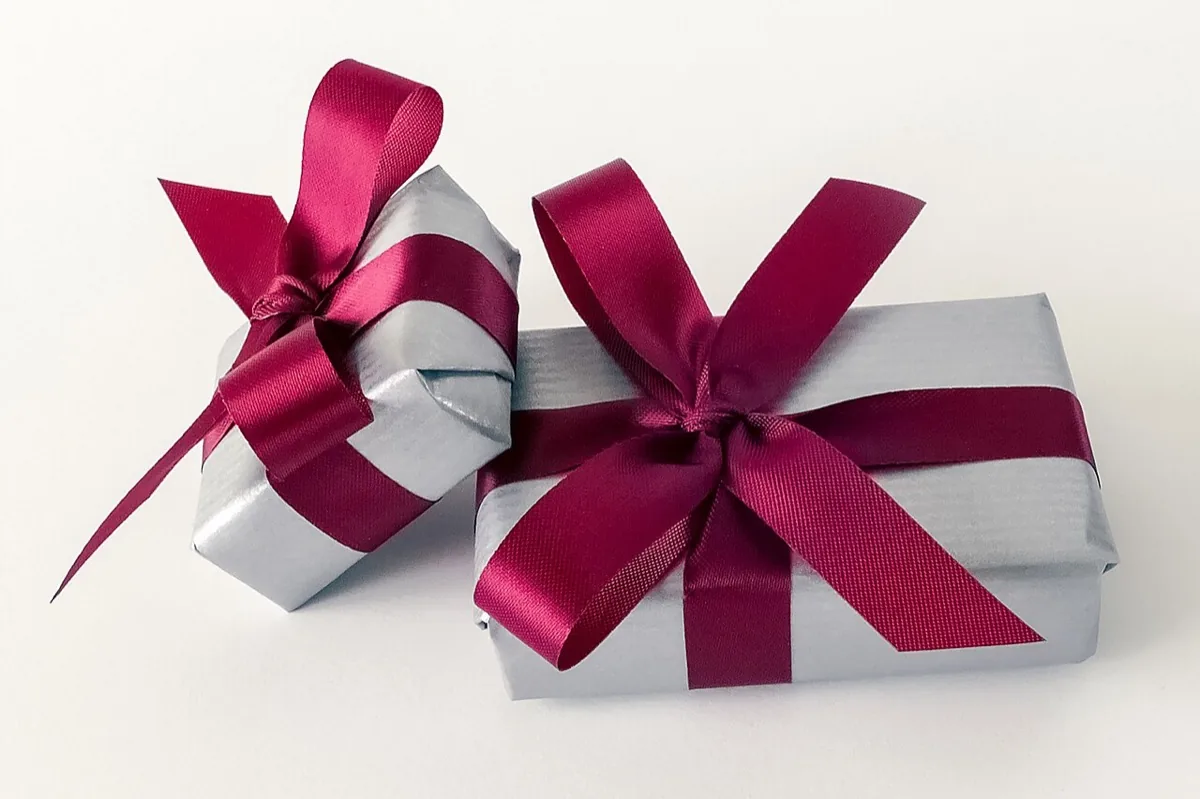
Gifts are a category bought by date before price. A mug carrying a company's logo is worthless if it arrives after the company's conference, and a Ramadan gift set that arrives at Eid is dead stock until the following year. This page covers promotional and corporate gifts with the client's logo — pens, mugs, notebooks, tote bags, insulated bottles and power banks — seasonal gifts for Ramadan, Eid, New Year and national days, gift sets and their packaging, and souvenirs.
It does not cover children's toys, which have their own Toys page with their own safety standards, nor accessories sold as ordinary retail goods, which have their own Accessories page. Three things set gifts apart: the logo, printed by a method that suits the material; the season, which allows no delay; and the range, which often comes from several suppliers in a single shipment.
What types of gifts are imported from China?
The most requested are stationery, mugs, bottles, tote bags and small electronics with the client's logo, followed by seasonal gift sets and souvenirs; each category has a material that determines the logo printing method and what needs checking.
| Category | Examples | Common logo methods | What to watch for |
|---|---|---|---|
| Stationery | Pens, notebooks, planners, desk organisers | Pad printing on pens, hot stamping and embossing on notebook covers, and laser on metal pens | Whether the pen actually writes and its ink dries, and the paper quality and binding of the notebook |
| Mugs and insulated bottles | Ceramic mugs, stainless steel mugs and bottles, plastic bottles | Screen printing, laser on metal, and sublimation on coated ceramic | Food contact materials, steel grade, heat retention of the bottle, and print durability in washing |
| Tote bags and textiles | Cotton and non-woven bags, caps, towels | Screen printing, embroidery and heat transfer | Fabric weight in grams per square metre, handle strength and colour fastness |
| Small electronics | Power banks, earphones, USB flash drives, chargers | UV printing and laser engraving | Batteries are dangerous goods, real capacity, and safety certificates |
| Gift sets | Desk sets, coffee sets, Ramadan and Eid boxes | Printing on the box, gold foil stamping and stickers | Multiple suppliers, set assembly, and box volume in shipping |
| Souvenirs | Keyrings, fridge magnets, figurines, plaques and medals | Die-cast metal with enamel, UV printing and engraving | Mould cost, accuracy of colours and details, and national and religious symbols in the design |
Souvenirs carrying religious or national symbols need careful design review before production; we explain the reasoning behind this review in Importing prayer rugs and misbaha. Make-up brush sets, nail tools and skincare devices in gift boxes have their specifications and restrictions on the Skincare Tools page.
Where are gifts made in China?
Gifts have no single hub, because they combine items from different industries, but Yiwu in Zhejiang is the usual starting point for small gifts, crafts and seasonal products, and buyers move to each item's own factory as quantities grow.
- Yiwu (Zhejiang): the Yiwu government describes District 1 of its international commodities market as China's largest specialist market for crafts and toys, with floors for flowers, toys, jewellery, crafts and accessories, according to its official market profile. The layout changes as the market expands, and most sellers are traders showing other factories' goods, so the market suits choosing items and buying small quantities, not building a line of gifts with your logo without reaching the factory.
- Mugs and insulated bottles: these overlap with the housewares industry; their hubs and steel grades are covered in detail on the Housewares page.
- Power banks and small electronics: these overlap with the electronics industry in Guangdong, covered in detail on the Electronics page.
- Canton Fair in Guangzhou: usually held in spring and autumn, with gifts and decorative products shown in one of its phases. To compare it with online platforms, see Alibaba, 1688 and the Canton Fair.
The rule in this category: an item you order with your logo in a commercial quantity is bought from its factory, and an item you buy ready-made in a small quantity is bought from the market. Mixing the two up means paying the trader's margin without controlling the printing. To verify a supplier, see How to find a verified supplier in China.
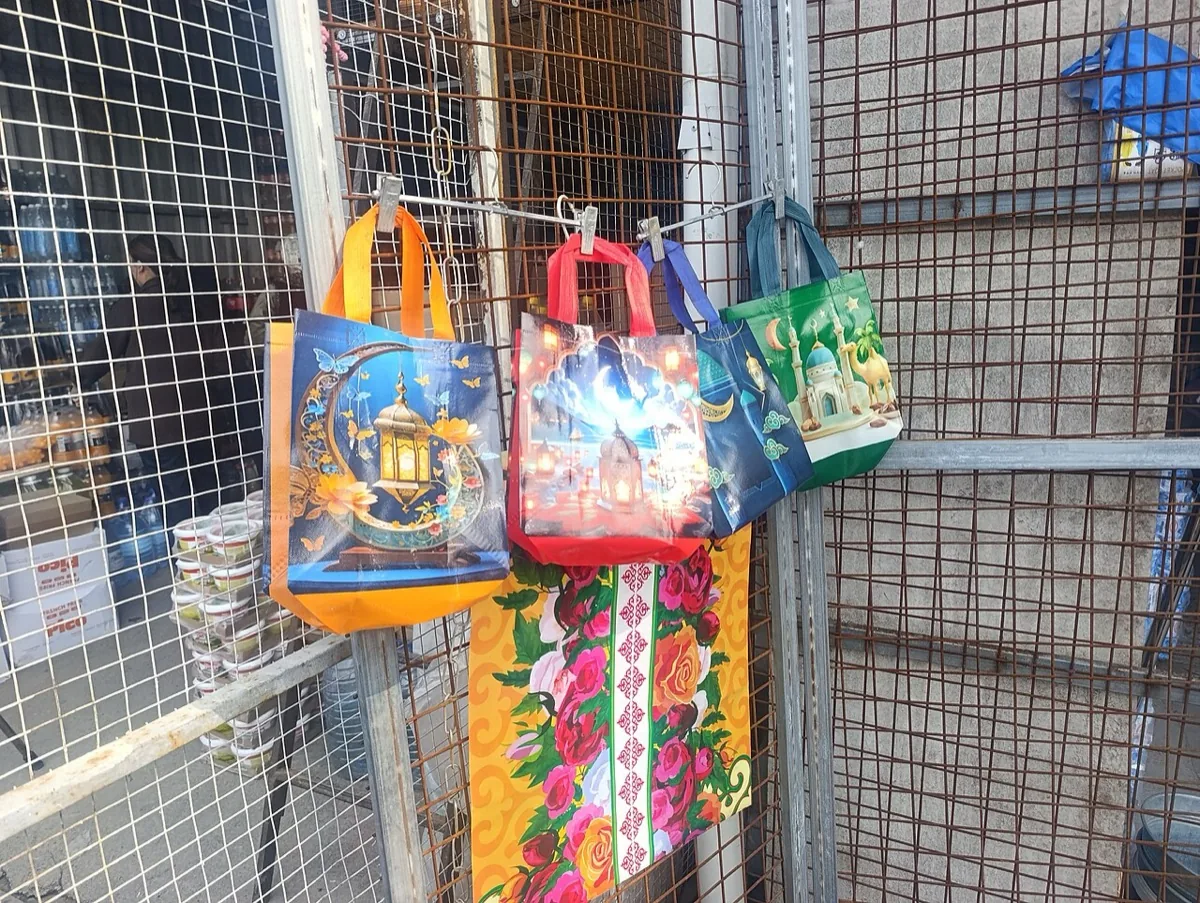
What are the logo printing methods for gifts, and which suits your product?
The method is determined by the material, the shape of the surface and the number of colours in the logo: screen printing for flat and cylindrical surfaces with few colours, pad printing for small curved surfaces, laser for metal, wood and leather, UV for full-colour logos on hard surfaces, and embroidery for fabric. Each method has a fixed set-up cost that makes the minimum order quantity part of the price:
| Method | Suits | Limitations | Effect on cost and minimum |
|---|---|---|---|
| Screen printing | Tote bags, mugs, bottles and flat surfaces | Each colour needs its own screen, and gradients and fine images are difficult | A set-up cost per colour, so a one-colour logo is much cheaper |
| Pad printing | Pens, keyrings and small curved surfaces | Small print area and limited colours | A small plate cost per design and colour |
| Laser engraving | Steel and aluminium, wood, leather and metal pens | A single colour, which is the mark the engraving leaves in the material | No inks or screens, so it suits small quantities and a different name on each piece |
| UV printing | Power banks, boxes and flat hard surfaces | Less durable on flexible surfaces and surfaces subject to heavy rubbing | No screen per colour, so it suits full-colour logos in medium quantities |
| Sublimation | Coated ceramic mugs and polyester fabrics | Not suitable for cotton or uncoated ceramic | Full colour with a low set-up cost |
| Embroidery | Caps, bags and clothing | Fine details and small text get lost | Priced by stitch count, and the design is digitised once |
| Hot stamping and embossing | Notebook covers, boxes and synthetic leather | One colour or one effect | A metal die for each design |
Three things are settled before printing: the colour code in an agreed colour system, not an image on a screen; a printed sample from the production line itself before the bulk quantity; and the logo position and size in millimetres. The minimum order quantity is often calculated per colour, per print position and per design, so ask for it in detail before comparing prices. The table is for guidance, not for contracts, because capabilities and prices vary between factories. See Minimum order quantity and how to negotiate it.
When should Ramadan, Eid and seasonal gifts be ordered from China?
Work backwards from the sale date, not forwards from the order date: the date the gifts go on display in the market, minus the shipping and clearance time, minus inspection, minus production and printing, minus samples and logo approval — and the result is usually that seasonal gift orders are settled three to five months before the season. Logo printing and custom boxes lengthen every stage, because the printed box is produced by another supplier and the goods wait for it.
The 2027 season deserves a special warning: Chinese New Year falls on 6 February 2027, according to the Hong Kong Observatory's calendar conversion table, and Ramadan 1448 AH begins roughly a few days later, because both months are tied to the same new moon, and the start of Ramadan is officially announced by moon sighting. This means that gifts for Ramadan 2027 must leave the factories before the slowdown ahead of the Chinese holiday in January. Anyone who puts off the decision until December is ordering from full factories just before a holiday during which they stop for weeks, as we explain in Chinese New Year and peak seasons.
| Season | Date | Sample and print approval (approx.) | Last sea shipment from China (approx.) | Source for the date |
|---|---|---|---|---|
| Ramadan and Eid al-Fitr 1448 AH | Shortly after 6 February 2027, approximately, announced by moon sighting; Eid about a month later | September and October 2026 | December 2026, and before mid-January 2027 at the latest | Hong Kong Observatory for the new moon; UAE official portal: Islamic occasions are set by moon sighting |
| Chinese New Year holiday | 6 February 2027, with factories stopping for weeks around it | Do not count on production in the weeks around it | — | Hong Kong Observatory |
| Saudi Founding Day | 22 February every year; in 2027 it falls during Ramadan | With Ramadan gifts | With the Ramadan shipment | Saudi Press Agency: royal order on Founding Day |
| Saudi National Day | 23 September every year | May and June | July | Saudi Press Agency (SPA) |
| UAE Eid Al Etihad (Union Day) | 2 December every year | August and September | October | UAE Government official portal |
| New Year and corporate gifts | 1 January | September and October | November, competing with the rush before the Chinese holiday | — |
The timings in the table are for guidance, not for contracts: they depend on the item, the printing, the shipping line, the port of discharge and clearance, and sea freight from South China ports to the Gulf alone takes weeks. Do not order the whole range in large quantities if some items sell slowly, because the season ends and the stock stays for a full year. The table's dates were reviewed against their official sources in September 2026.
Can famous characters or brands be printed on gifts?
Not without a documented licence from the rights holder; and the risk does not start at the port of discharge, because China itself prohibits the export of goods that infringe intellectual property rights. Articles 2 and 3 of the Regulations of the People's Republic of China on Customs Protection of Intellectual Property Rights state that customs protection covers trademarks, copyrights and patents related to imported and exported goods, and that the state prohibits the import and export of infringing goods.
- Cartoon characters, club crests and luxury brands on mugs, bags and keyrings are among the goods most often detained, and a factory that agrees to print them “no problem” carries none of the liability for you.
- Your company's or your client's logo: the factory may ask for proof of your right to use it, so prepare a letter of authorisation from the brand owner if you are printing gifts for a client.
- Ready-made seasonal designs in suppliers' catalogues may have been copied from other designers; ask where they come from, or design your own.
For more on protecting your design and brand when manufacturing, see protecting your brand and intellectual property.

What do you need to know about power banks as promotional gifts?
Under transport rules a power bank is not a “device” but a battery, so it is classified as a lithium-ion battery shipped on its own (UN 3480), even when it is placed in a gift box with a pen and a notebook. This is what the International Air Transport Association's 2026 Lithium Battery Guidance Document states, and in air freight it means:
- A state of charge not exceeding 30% of rated capacity for batteries shipped on their own (Packing Instruction PI 965); anything above that can only be shipped with the approval of the state of origin and the state of the operator.
- No carriage on passenger aircraft without the approval of the competent authorities, which leaves cargo aircraft or sea freight.
- UN38.3 test summary: the manufacturer and distributors must make it available, so ask for it in the name of the battery itself before booking.
By sea, power banks are declared as dangerous goods at booking. The biggest practical consequence for gifts: do not put power banks in a mixed groupage shipment without disclosing them, because some consolidators refuse them, and hiding them inside “gift sets” exposes the whole shipment to rejection and the importer to liability. For the real capacity of batteries and their certificates, see the Electronics page and Importing phone accessories to Saudi Arabia.
What are the requirements for mugs and insulated bottles that come into contact with food?
A mug or a bottle is a food contact material before it is a gift, so it needs what kitchenware needs: a test report on the finished product to your market's requirements, not the words “Food Grade” on the box. In the European Union, for example, Regulation (EC) 1935/2004 sets the general framework: the material must not transfer its constituents to food at levels that endanger health or change the food's taste and smell, it must be labelled as suitable for food with wording or the dedicated symbol, and it needs conformity and traceability documents. For plastic materials, Regulation (EU) 10/2011 adds a list of authorised substances and a “declaration of compliance” that accompanies the product, according to the European Commission's food contact materials legislation page.
- Printing near the drinking rim: ink and decoration in the lip contact area need testing, and coloured ceramic decorations are tested for lead and cadmium release.
- Insulated bottles: the steel grade of the inner wall, a heat retention test with an agreed duration and temperature, and the tightness of the lid and the material of its seal.
- Plastic bottles: the polymer type and declaration of compliance, and resistance to hot water if that is claimed.
We cover food contact certificates and how to detect fake steel grades in detail on the Housewares page. In the Gulf states, check the requirements of the competent authorities in each country; the requirement depends on the product's classification and the destination country.
How do you consolidate gifts from several suppliers into one shipment?
Each supplier delivers its goods to a specialist consolidator's warehouse with standardised shipping marks and its own packing list, then all the goods are loaded into one container or one groupage shipment in your name — on condition that each supplier's goods are inspected at its factory before delivery. A typical gift range — pens from one supplier, mugs from a second, bags from a third and boxes from a fourth — means four production schedules, four deposits and four chances of delay.
- Shipping marks: the importer's name, the order number, the carton number out of the total number of cartons, and the weight and dimensions, in a single format that every supplier follows.
- Documents: an invoice and packing list from each supplier, combined into a single invoice and packing list for the shipment, with an accurate description of each item.
- Timing: one delivery date for all suppliers, a few days before the shipment closes, because a single late supplier delays the whole shipment or forces you into a second one.
- Special goods: power banks, perfumes and oud oil blended with alcohol may be classified as dangerous goods, so disclose them to the consolidator before delivery, not after.
If the sets need assembling — a mug, notebook and pen in one box — agree this with the box factory, with one of the suppliers who receives the other components and assembles them, or with a consolidator that offers an assembly service, then inspect the assembled set before shipping. To weigh a full container against groupage, see full container load (FCL) vs groupage (LCL) and groupage shipping (LCL): advantages and drawbacks.
How do you design gift sets and boxes so they arrive intact without eating up the container?
A luxury rigid box makes a gift look good but multiplies its volume in shipping, so rigid and collapsible boxes are weighed against each other before the design is approved, because gifts reach the volume limit well before the weight limit.
- Box type: a rigid box is ready for display but ships as mostly air; a collapsible box ships flat and is assembled in the destination country; and a magnetic collapsible box is a middle ground.
- Inserts: cardboard, foam or velvet, cut to the actual dimensions of the items rather than approximate sizes, with a drop test on the packed set.
- Arabic text: checked on the final print file, because design software that does not support Arabic breaks the letters apart or reverses their direction, and a single mistake in a religious phrase or a greeting ruins a whole batch.
- Labelling and barcode: importer details, country of origin and the contents of the set. See packaging, labelling and barcode requirements.
- Food contents: for Ramadan boxes filled with dates, coffee or sweets, the boxes are usually imported empty and filled in the destination country, because food falls under an entirely different regulatory regime.
What are the common risks in importing gifts, and how do you avoid them?
The costliest are missing the season, a logo colour that does not match, mistakes in the Arabic text, one late supplier in a mixed range, and goods detained for carrying unlicensed brands.
- Missing the season: work the schedule backwards, and leave a margin of at least two weeks for any shipment tied to a date.
- Logo colour: blue on a screen is not the same blue on a ceramic mug or a cotton bag; approve the colour code and a printed sample on the actual material.
- Print durability: a logo that comes off with washing or rubbing; require a rub and wash test on the production sample.
- Power bank capacity: in the cheap segment, the printed capacity is not the real capacity; test samples from the batch.
- Excess quantity: occasion gifts do not sell after their season, so split the order between proven items and items you are testing.
- Paying many suppliers: deposits to several parties need arrangements that protect you; see Safe payment methods for Chinese factories.
For a longer list of first-shipment mistakes, see 12 common first-import mistakes from China.
How do you import gifts from China?
- Define the occasion and the sale or distribution date, and work the schedule backwards from it.
- Choose the items and quantities, and decide which are ordered with your logo and which are bought ready-made.
- Prepare the logo file in a print-ready format with its colour codes, and a letter of authorisation if the logo belongs to a client.
- Find and verify each item's factory, and ask for detailed quotations covering the printing method, its minimum quantity and the set-up cost.
- Ask for printed samples, and approve the colour, position, size and box.
- Ask for test reports for anything that touches food, and a UN38.3 summary for power banks.
- Fix a single delivery date for all suppliers, with shipping marks and packing lists in one format.
- Inspect each item at its factory before it is delivered to the consolidator. See Pre-shipment inspection and AQL standards.
- Arrange consolidation and shipping with a consolidator that accepts every item in the range, and disclose any dangerous goods.
- Review the combined documents before sailing, and follow the shipment until the port of discharge.
Alshumul's role in importing gifts
Alshumul Commercial Services is an import and export company based in Guangzhou, the city where the Canton Fair is held, and it works with gift suppliers in Yiwu and with product factories in Guangdong and Zhejiang. In this category our work is built on the season's calendar, not on the order date. What we handle:
- Finding and verifying factories and suppliers for every item in the range, telling the factory apart from the trader, and auditing and visiting factories when needed.
- Requesting and following up printed samples, and negotiating directly with each factory in Chinese on the printing method, its minimum quantity, the set-up cost, the box and the price.
- Following production at each supplier against a single delivery schedule, and giving early warning when one of them falls behind.
- Inspection before shipping at each item's factory: logo colour, position and durability, Arabic text, quantities and packaging.
- Arranging consolidation and shipping of the range through specialist consolidators and shipping lines, by full container or groupage, with batteries and special goods disclosed; reviewing documents before sailing; and following up until the port of discharge.
We say it clearly: we have no warehouse and do not consolidate goods ourselves; we arrange consolidation with a specialist consolidator. We do not give legal advice on brands and licences, and we do not handle customs clearance in the destination country. What we work towards is a range that leaves China complete, with the correct logo, and in time for its season.