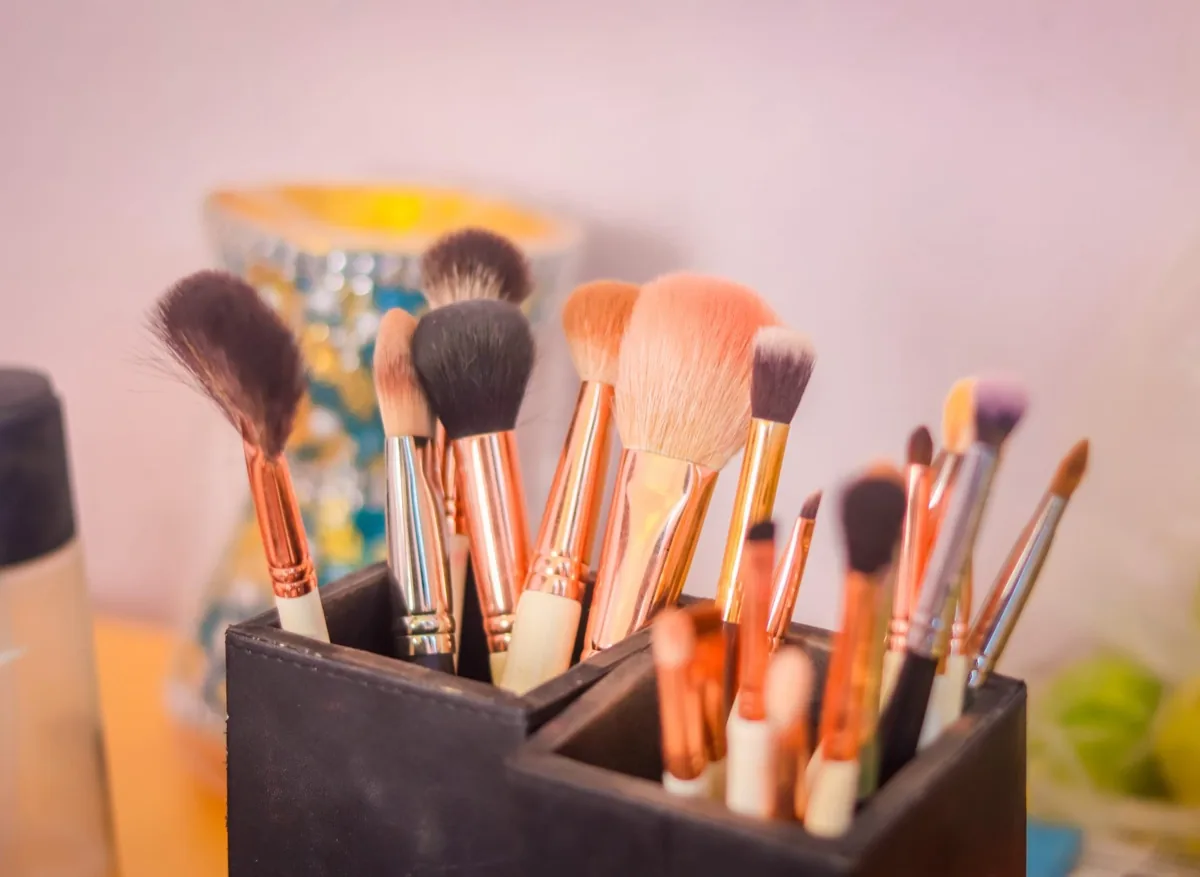
Skincare tools are a category that brings together things that do not normally belong together: simple hand tools such as make-up brushes and sponges, gua sha stones and nail tools; small electrical devices such as facial cleansing brushes and facial steamers; and devices on the edge of medicine such as intense pulsed light (IPL) hair removal devices and LED masks. The most common mistake is to treat the whole category the same way: a brush is bought on its bristle material and how firmly the bristles are fixed, an electrical device on its safety standard and battery, and an IPL device may be treated as a medical device in your market whatever its box says.
This page is about tools and devices only. Creams, serums and sunscreens have their own Skincare page, and devices with an explicit medical purpose have their own Medical Equipment page. For the regulatory route for beauty tools and cosmetics in the Saudi market, see Importing cosmetics and beauty tools from China to Saudi Arabia.
What counts as a skincare tool, and what should be checked for each?
The category divides into three layers by degree of regulation: hand tools governed by their materials, electrical devices governed by their electrical safety and batteries, and light-based devices that may be classified as medical devices. The following table is a quick map of what to ask about each item:
| Item | Nature | Main points to check and write into the contract |
|---|---|---|
| Make-up brushes and sponges | Hand tool that touches the skin | Bristle type (synthetic or natural), shedding, how firmly the metal ferrule is fixed, and the sponge material and whether it is latex-free if that is claimed |
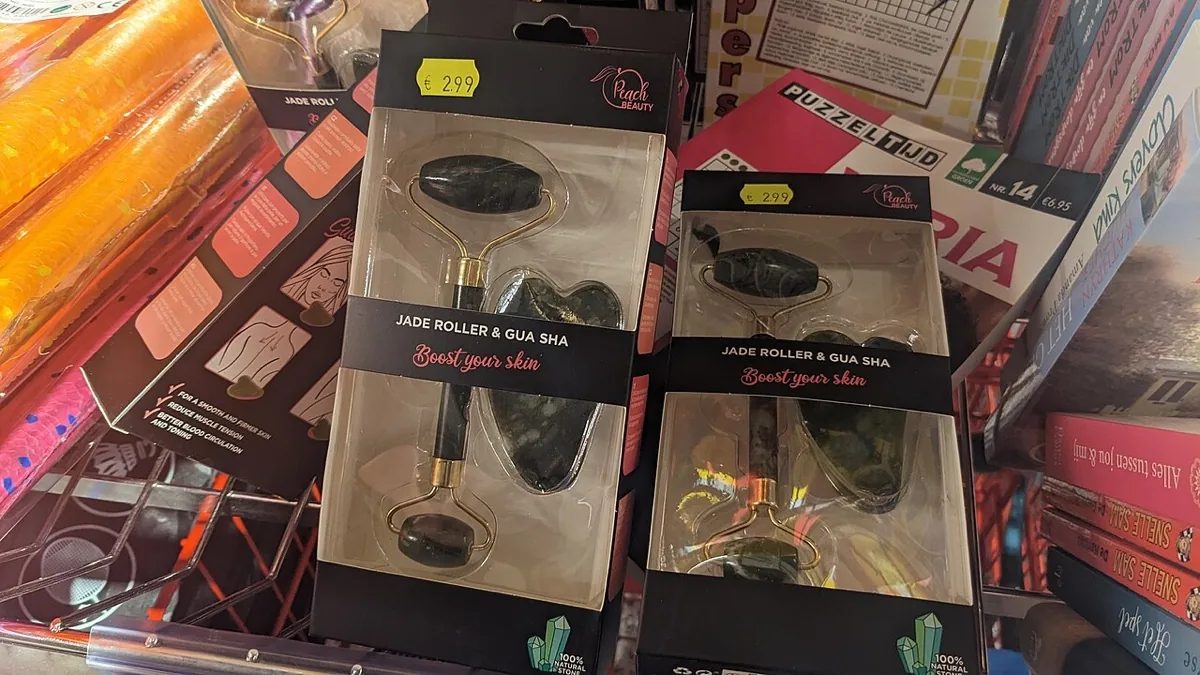
| Gua sha stones and massage rollers | Hand tool | Whether the declared material is genuine (natural stone, or glass or resin), edge polishing, and how secure the roller's metal frame is |
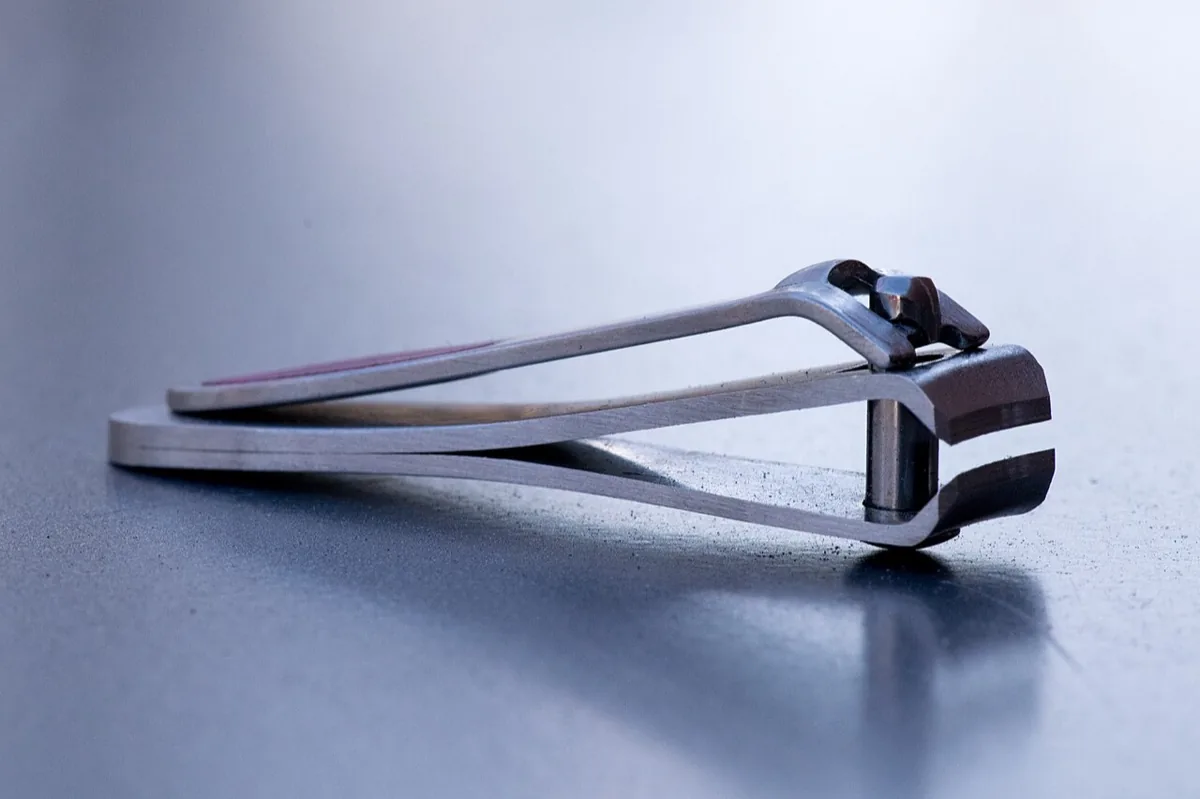
| Nail care tools | Hand-held metal tool, or an electrical device such as an electric nail file | Steel grade and rust resistance, cutting sharpness and blade alignment, and the safety of any electrical device |
| Electric facial cleansing brushes | Small device, usually with a rechargeable battery | Electrical safety standard, water resistance rating, battery cells and their test summary, and brush head material |
| Facial steamers | Device with an electric heating element | Protection against spills and against running without water, and voltage and plug matching the destination country |
| LED masks | Light-based device | Wavelengths and their intensity, the written claims, and whether it counts as a medical device in your market |
| Home hair removal devices (IPL) | Intense pulsed light device | Regulatory classification in the destination country before anything else, then the safety standard and protective features such as a skin tone sensor and an operating lock |
The third layer is the one that sinks deals: an attractively priced IPL device is worthless if your market requires a medical registration for it and the factory does not have the file.
Where are skincare tools made in China?
Each item has its hub: make-up brushes in Luyi County in Henan Province, metal cutting tools in Yangjiang in Guangdong, and small electrical devices mostly in Guangdong, where the electronics and battery supply chain is. Choosing the right hub shortens the search and raises the chance of reaching the factory itself rather than a middleman:
- Make-up brushes — Luyi (Henan): Luyi County is known as “China's make-up brush city”. Its industry began with goat tail hair and expanded into synthetic fibres, and it exports to more than forty countries and regions, according to a Xinhua report (March 2025). Many of its businesses are small workshops, so telling a factory apart from a workshop and a trader is essential.
- Nail tools and scissors — Yangjiang (Guangdong): China's largest production and export base for knives and scissors, according to the Yangjiang Municipal Bureau of Commerce, and the place to look for nail clippers and beauty scissors within the same metalworking industry. We cover Yangjiang from the kitchenware angle on the Housewares page.
- Electrical devices — Shenzhen, Dongguan and the surrounding area: cleansing brushes, facial steamers, LED masks and IPL devices overlap with the electronics and battery industry, which is why their manufacturers are concentrated in Guangdong. This supply chain is covered in detail on the Electronics page.
- Stones and massage materials: crystal and quartz are traded heavily in Donghai in Jiangsu, known as the “crystal capital” according to People's Daily (February 2024), but gua sha stones and rollers are offered by suppliers in many cities, so what counts is testing the material, not the name of the city.
- Yiwu: a wholesale market for ready-made items in small quantities, suited to testing the market rather than building a brand; most sellers there are traders, not factories.
When does a beauty device become a medical device?
When a regulator lists it among medical devices because of its technology — as with intense pulsed light and laser hair removal devices in the European Union and Saudi Arabia — or when it carries a therapeutic claim that changes its classification in any market. The test is not whether the factory calls it a “beauty device”, but the technology used and the purpose written on the box and in the advertising. The following table gives examples from markets with published rules, for guidance, not for contracts:
| Market | What the rule states | What it means for importers | Source |
|---|---|---|---|
| European Union | The Medical Device Regulation (EU) 2017/745 covers in Section 5 of its Annex XVI — even without a medical purpose — high-intensity electromagnetic radiation equipment (infrared, visible light and ultraviolet), such as lasers and intense pulsed light, for hair removal, tattoo removal, skin resurfacing or other skin treatments. It is Class IIa if intended for hair removal only, and Class IIb for skin treatment, with LED masks for skin rejuvenation among the examples of the latter | A home IPL device is subject to the requirements of the Medical Device Regulation and to the common specifications in Implementing Regulation (EU) 2022/2346. An LED mask falls within the list if its light is capable of producing the intended effect in the target tissue | Regulation (EU) 2017/745, Annex XVI, Section 5 Implementing Regulation (EU) 2022/2346 MDCG 2023-5 guidance (December 2023) |
| Saudi Arabia | The product classification guidance of the Saudi Food and Drug Authority (SFDA) lists high-intensity radiation equipment for hair removal and skin treatment among “devices registered as medical devices without a medical purpose”, giving IPL devices for body hair removal as its example. By contrast, it treats “electrical devices without a medical claim” as outside the SFDA's remit, and a manual massager without a medical purpose is not a medical device | An IPL device goes through the SFDA's medical device route. For a cleansing brush or facial steamer without a medical claim, check the requirement with the authority responsible for electrical products | SFDA product classification guidance, version 8.0 (November 2024) |
| United States | Home IPL hair removal devices are placed on the market through a 510(k) premarket notification to the Food and Drug Administration, under 21 CFR 878.4810 in Class II, with product code OHT and for over-the-counter use | Ask for the notification number in the name of the device itself and verify it in the FDA's database; do not rely on the words “FDA approved” on the box | Example: FDA letter for notification K252234 (October 2025) |
| China | Radio-frequency skin treatment devices are regulated as Class III medical devices, and since 1 April 2026 they may not be produced, imported or sold without a medical device registration certificate, after an earlier deadline of 1 April 2024 was extended | A factory offering a radio-frequency “tightening” device as an ordinary beauty product is breaking its own country's rules; ask it in writing about the device's regulatory status | Quanzhou Administration for Market Regulation: National Medical Products Administration Announcement No. 30 of 2022 Explanation of Announcement No. 84 of 2024 (July 2024) |
The practical rule: determine the device's classification in the destination country before you ask for a sample. If it is a medical device there, its whole file moves over to the logic of Medical Equipment: a factory with a medical device quality system, a technical file, and registration before the device is placed on the market. Remember that the claim can also change the classification: a cleansing brush marketed “to treat acne” may no longer count as an ordinary electrical device. The table's figures were reviewed against their official sources in September 2026.
What are the electrical safety standards for skincare devices?
Household electrical care devices are usually tested to the IEC 60335 series, using its general part and a part specific to the device type, and the parts for this category have recently been reorganised, so the name of the standard is not enough without its edition.
| Standard | Current edition | What it covers | Source |
|---|---|---|---|
| IEC 60335-2-23 | 2026 (edition 7.0, February 2026) | Hair care appliances such as dryers, curling irons and straighteners. This edition moved skin care appliances, such as facial saunas and foot care appliances, out of its scope and into IEC 60335-2-115 | IEC Webstore |
| IEC 60335-2-115 | 2021 (edition 1.0) | Skin beauty appliances: facial cleansers, ultrasonic and suction appliances, micro-needling appliances, wax melters, appliances with electrical outputs for skin stimulation, and battery-operated appliances | IEC Webstore |
| IEC 60335-2-113 | 2025 (edition 2.0, October 2025) | Cosmetic appliances using lasers and intense light sources, including hair growth control appliances, where the emission surface is less than 25 cm² | IEC Webstore |
| IEC 60335-2-27 | 2024 (edition 7.0) | Appliances for exposing the skin to optical radiation, including intense light appliances with an emission surface of 25 cm² or more | IEC Webstore |
This reorganisation has a practical effect: facial steamers are in a transitional phase. The 2026 edition of IEC 60335-2-23 refers them to IEC 60335-2-115, while the 2021 edition of the latter refers them back to the former. So ask the laboratory in writing which edition it will test to, and check that your market accepts it, because markets adopt international standards as national versions with their own transition dates. Ask for the test report with the model name, report number and laboratory name, and make sure the voltage, plug and user manual match the destination country. For Gulf conformity schemes, see Import conformity certificates: SASO/SABER, ECAS and CE. The table's figures were reviewed against their official sources in September 2026.
Which claims are prohibited on skincare tool packaging?
Any claim to treat a disease or skin condition, to have a permanent effect on the body, or to be medical may take the tool out of the consumer products category and bring it under medical device regulation, or get it rejected. Factories print on boxes and leaflets whatever sells in online stores, not what your market allows. The most problematic phrases:
- “Treats acne”, “treats pigmentation” or “treats eczema” on a cleansing brush or LED mask.
- “Permanent hair removal” on an IPL device, and promises of a specific result after a set number of sessions.
- “Skin tightening”, “collagen stimulation” and “wrinkle removal” on heat, radio-frequency or light devices.
- “Medical”, “doctor approved” and “FDA approved” without a document proving them in the name of the device itself.
- “Natural jade” or “genuine rose quartz” on tools whose material has not been tested — here a matter of commercial fraud rather than medical classification.
So write the box, leaflet and advertising text yourself after checking the classification, and approve a proof of the printed packaging before the full print run. The same logic applies to cosmetic products, which we cover in detail on the Skincare page.
What goes into the contract for make-up brushes, sponges and nail tools?
Materials are named, not described: the bristle type and origin, the ferrule, handle and glue materials, the sponge composition and the steel grade of the tool — then a simple test for each, agreed before production.
- Brush bristles: synthetic fibres are easier to clean and more consistent in quality from batch to batch, while natural hair such as goat hair holds powder well but varies. Write the bristle type explicitly: describing a natural-hair brush as “vegan” or “free from animal ingredients” is misleading, and some markets require documents for products of animal origin, so check this before shipping.
- Shedding and fixing: agree on a pull and wash test on a sample from the batch, and on how firmly the metal ferrule is fixed and the type of glue, because a brush that sheds after its first wash comes back as a return.
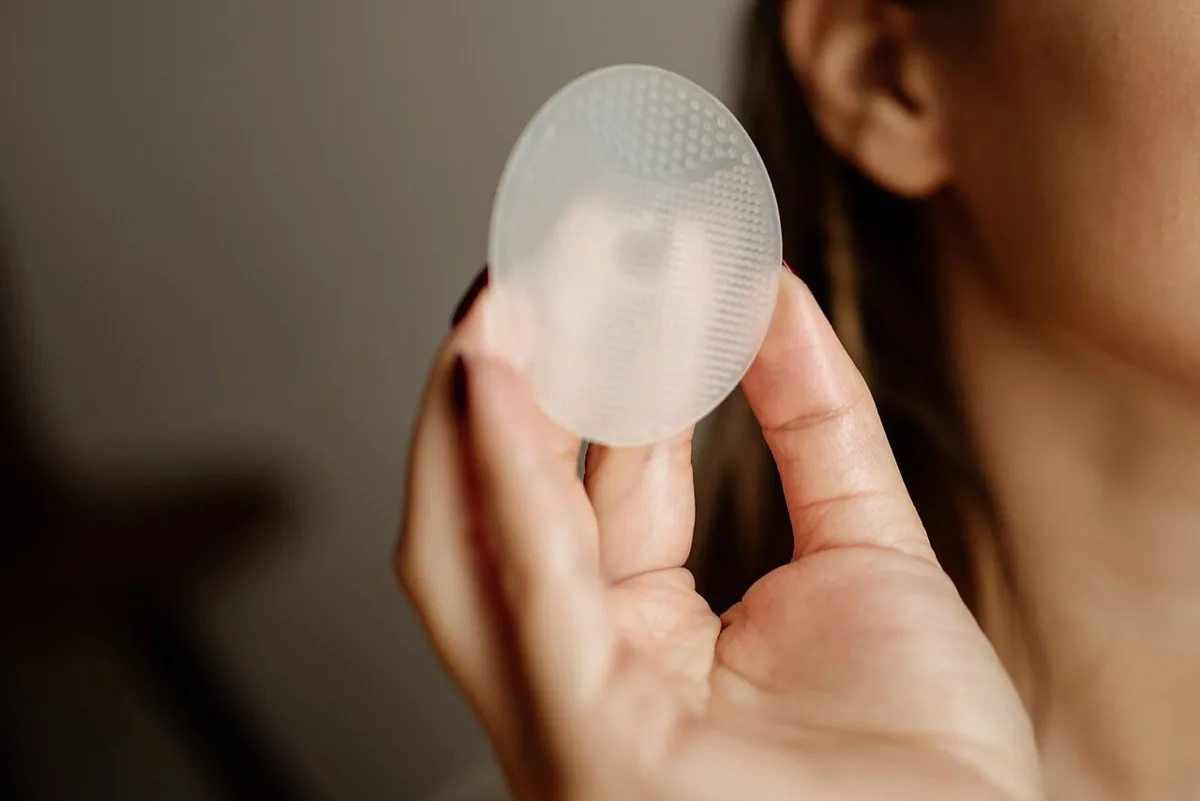
- Sponges: material, density, change in size when wet, and colour fastness. A “latex-free” claim needs a written declaration of the material, because latex allergy is a health matter, not a marketing one.
- Nail tools: the stainless steel grade and an agreed rust test, cutting sharpness, and the coating. To understand steel grades and how they are faked, see the Housewares page. Electric nail files and polish dryers follow the logic of electrical devices instead.
- Materials in contact with the skin: ask for a materials declaration and the restricted substances reports your market requires, especially for coatings, dyes and coloured plastic handles.
- Gua sha stones and rollers: require the material to be named precisely, and test a sample if in doubt, because dyed glass and resin are sold as natural stone.
How are skincare devices with rechargeable batteries shipped?
Most electric cleansing brushes, cordless LED masks and small massagers contain a lithium-ion battery, so in shipping they fall under dangerous goods rules according to how the battery travels: installed in the device, packed with it, or shipped on its own. The main changes in air freight, according to the International Air Transport Association's 2026 Lithium Battery Guidance Document:
- Battery packed with the device (Packing Instruction PI 966): since 1 January 2026 it must be shipped at a state of charge not exceeding 30% of its rated capacity, and in Section II this applies to batteries above 2.7 Wh.
- Battery installed in the device (PI 967): a state of charge not exceeding 30%, or a displayed charge indicator not exceeding 25%, is recommended — a recommendation, not a requirement.
- UN38.3 test summary: manufacturers of cells, batteries and battery-powered devices, and their subsequent distributors, must make it available, so ask for it in the name of the battery used in your model.
In practice it is simpler than the rules: require the factory to charge the batteries only partially before packing, ask for the test summary and the safety data sheet before booking, and declare the battery to the carrier. By sea, batteries are declared under the rules for carrying dangerous goods by sea, and some groupage consolidators refuse them, as we explain in the guide to LCL groupage shipping; for lithium battery basics in general, see the Electronics page. These figures were reviewed against their official sources in September 2026.
On volume: this category is light but comes in bulky packaging, so it reaches the volume limit well before the weight limit, and the rigid gift box that makes a device look good on the shelf can double the cubic metres. That is why first orders usually ship as groupage, and a full container becomes worthwhile as the range grows. To compare the two, see full container load (FCL) vs groupage (LCL).
How do you put your brand on tools, devices and their packaging?
The brand is applied to the tool itself by laser engraving, pad printing or hot stamping depending on the material, and to the box and leaflet by ordinary printing; each print position has a minimum quantity and a set-up cost to agree in advance.
- On handles and devices: laser engraving for metal and wood, pad printing for curved plastic surfaces, and hot stamping with gold or silver foil for glossy handles. Ask for a printed sample and test how well the logo resists rubbing before production.
- Custom colours: a device in your brand colour, or brushes with custom-dyed handles, usually means a higher minimum per colour, because dyeing is set up for a full batch. See Minimum order quantity and how to negotiate it.
- Box and leaflet: reviewed Arabic text, warnings, importer details and country of origin, and the barcode. The Arabic text is checked on the final print file, because design software that does not support Arabic breaks the letters apart or reverses their direction. See packaging, labelling and barcode requirements.
- Design ownership: if the factory develops the shape of the device at your request, agree in writing on who owns the mould and the design, and do not ask for a copy of a well-known brand's device shape. See Private label, OEM and ODM.
Brush and tool sets in gift boxes overlap with the Gifts page, where we cover logo printing methods and set packaging in detail.
What are the common risks in importing skincare tools?
The most frequent are a certificate that does not belong to the model, a regulatory claim printed without basis, a material other than the one declared, a poor battery, and a plug that does not match the market.
- Generic certificates: an electrical safety report for another model or another factory, or a certificate from an unknown body. Ask for the report number and laboratory name, and verify it with the laboratory.
- Exaggerated performance figures: the number of flashes of an IPL device, or the vibration speed of a cleansing brush, with no datasheet or test. Test the sample, and do not put the figure in your advertising until it is verified.
- Batteries that swell or lose capacity: ask for the cell manufacturer's name, and test samples from the batch after several weeks in storage.
- Water and electricity: a brush used under water without a tested protection rating, or a steamer with no protection against running without water.
- Copies of well-known designs: a device that matches the shape of a famous brand may be detained on design or trademark grounds. See protecting your brand and intellectual property.
- Shipping before classification: IPL devices or LED masks that arrive before their classification in the destination country has been settled, and stay in port.
How do you import skincare tools from China?
- Define the item and its classification in the destination country: a hand tool, an electrical device, or a device that may count as medical.
- Search in the right hub and tell the factory apart from the trader. See How to find a verified supplier in China.
- Ask for documents before the sample: electrical safety reports with the standard edition, the UN38.3 summary for the battery, and registration documents if the device is medical in your market.
- Audit the factory when the device is electrical or the order is large. See factory audit.
- Request and test samples: bristle shedding, rust, charging and discharging, heat and water resistance.
- Write the specification and the claims into the contract: materials, battery, plug, and the box text as you approved it.
- Complete the destination country's requirements before full production.
- Approve a proof of the printed packaging, then follow production.
- Inspect before shipping for operation, charging and appearance, and check the batteries' state of charge. See Pre-shipment inspection and AQL standards.
- Arrange shipping with a correct battery declaration, and review the documents before sailing.
Alshumul's role in importing skincare tools
Alshumul Commercial Services is an import and export company based in Guangzhou, Guangdong, close to the small-device factories of Shenzhen and Dongguan, and it works with brush and tool suppliers in their hubs outside the province. In this category we start with the classification question before the price question. What we handle:
- Finding and verifying factories in the right hub for each item, telling the factory apart from the trader, and auditing and visiting factories.
- Requesting documents from the factory and checking that they match the model: electrical safety reports and the standard edition, the battery test summary, and device documents when the device is medical in your market — then passing them to you to review with the competent authority in your country.
- Requesting and following up samples, and negotiating directly with the factory in Chinese on materials, battery, packaging, box text and price.
- Following production and inspecting before shipping: operation and charging, bristle shedding, rust, packaging text and the batteries' state of charge.
- Arranging shipping by full container or groupage through shipping lines and consolidators that accept batteries with a correct declaration, reviewing documents before sailing, and following up until the port of discharge.
We say it clearly: we do not register devices with regulators or give legal opinions on their classification, we do not handle customs clearance in the destination country, and we have no warehouse and do not consolidate goods ourselves; we arrange consolidation with specialist consolidators. What we work towards is devices that leave China matching their documents, and documents that match their devices.