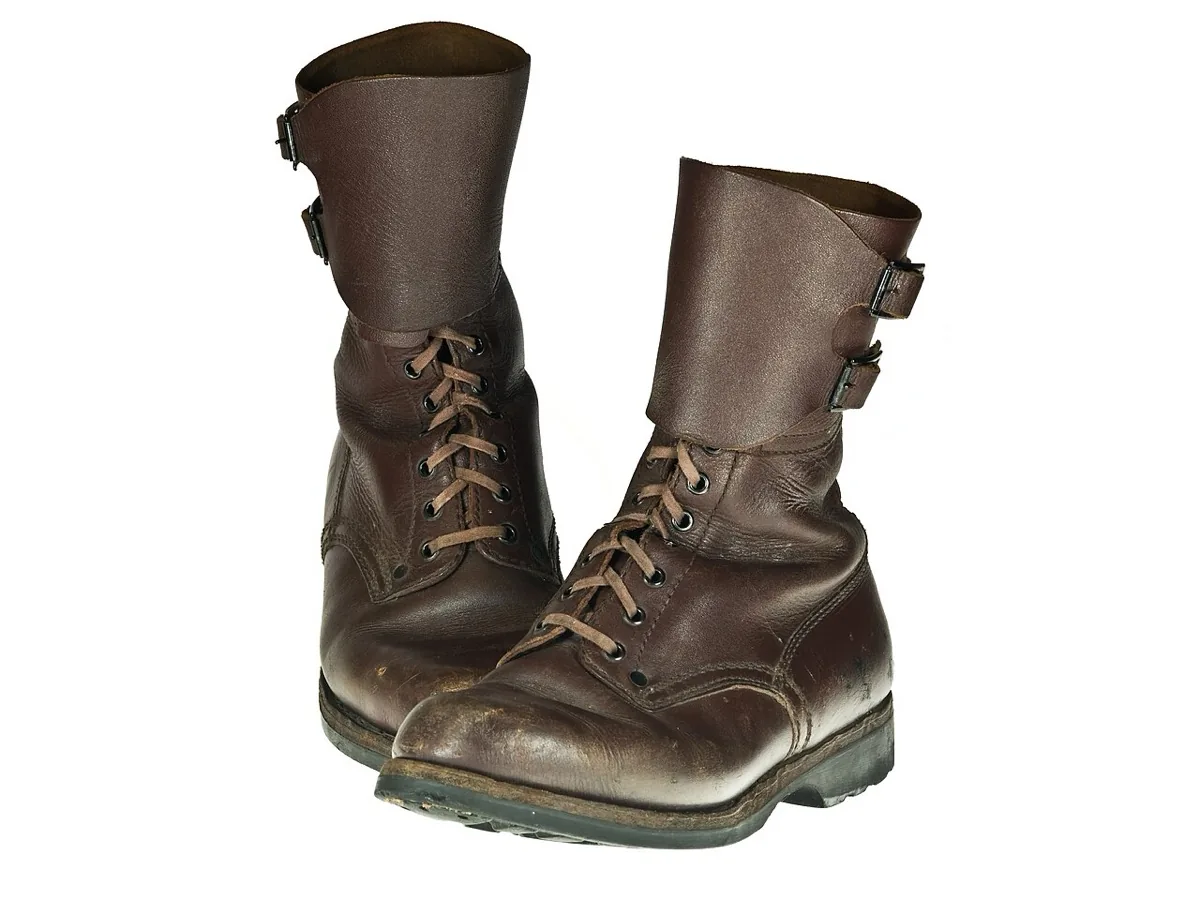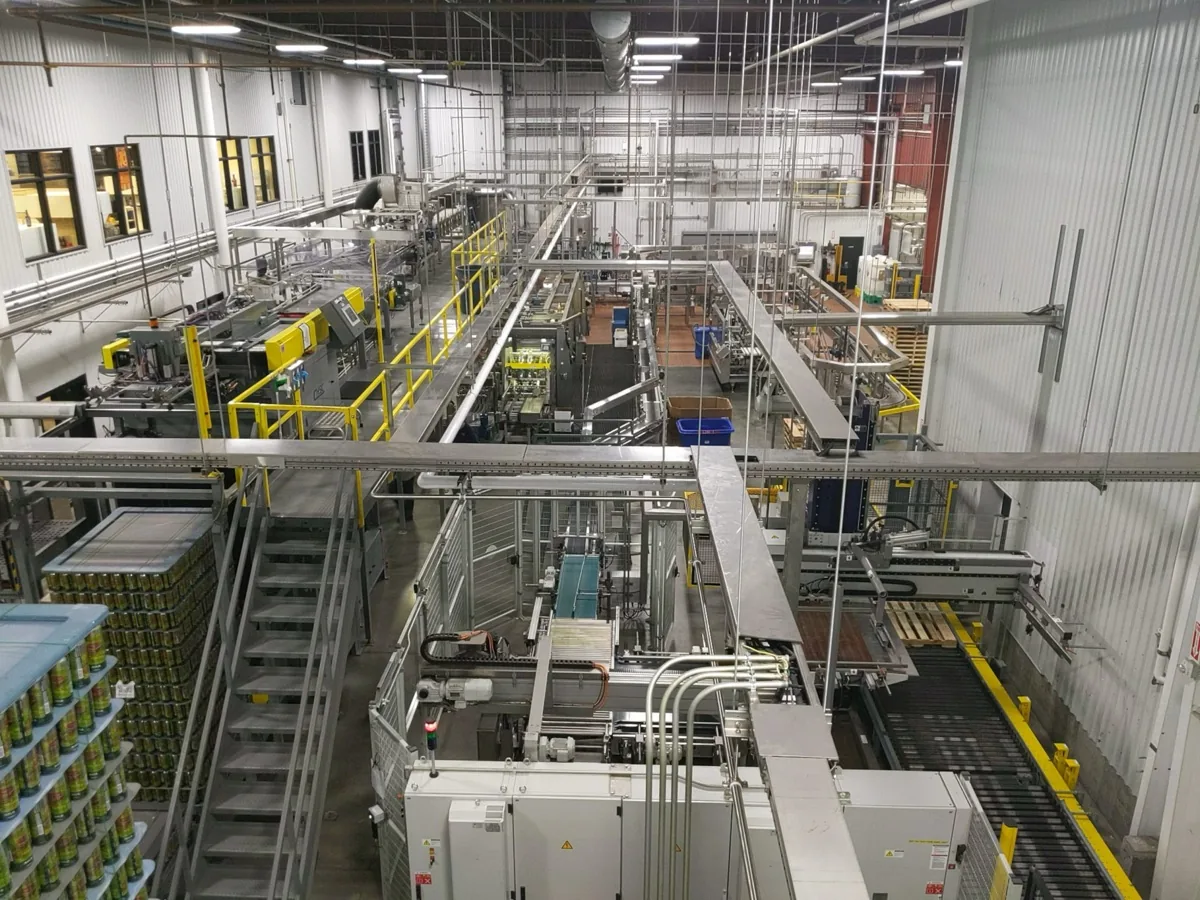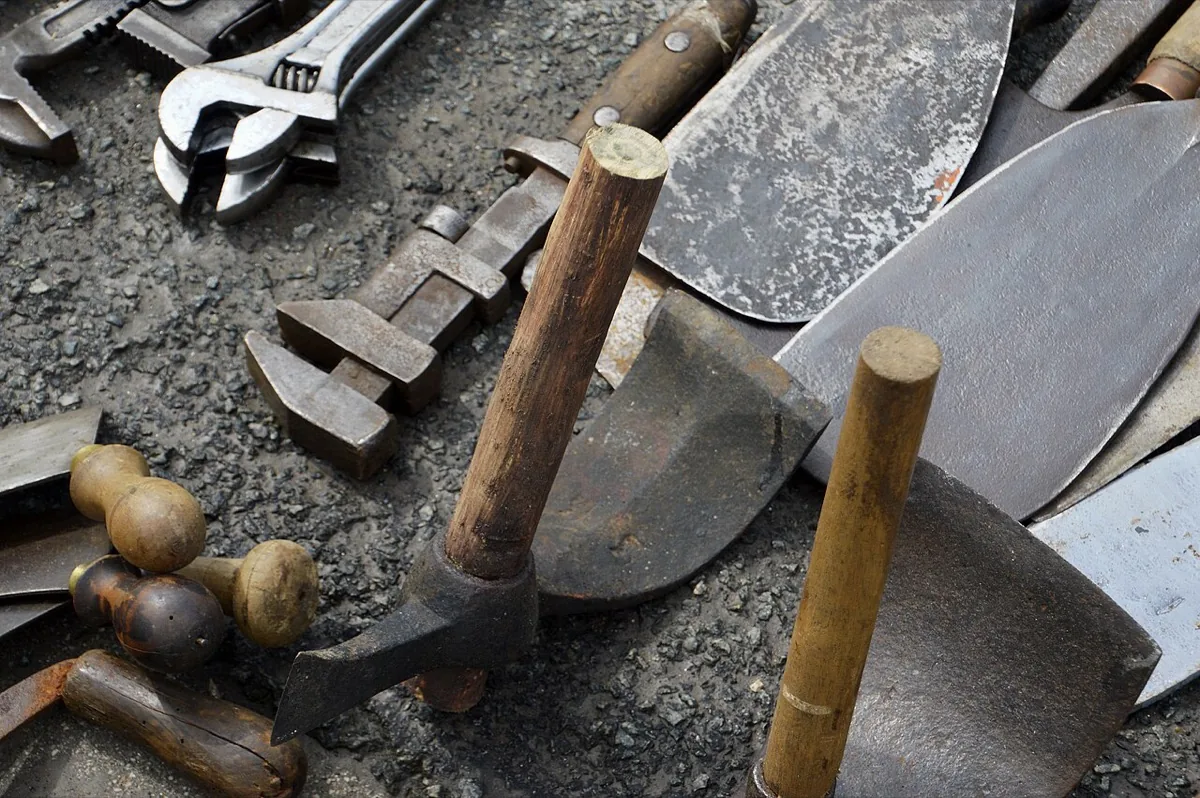
Construction tools are a broad category held together by the job site, not the factory: an electric drill, angle grinder and saw; a hammer, spirit level and levelling instrument; scaffolding and concrete formwork; a small mixer, concrete vibrator and compactor; a ladder; and a helmet and safety harness. Each has its own governing standard and its own risk, but they share one thing: they are used in a harsh environment, so a cheap tool that burns out in its first week, or a scaffold that buckles under load, costs far more than its price.
This page does not cover heavy equipment such as excavators, loaders and large rollers, which have their own Heavy Equipment page, nor reinforcing bar, which has its own Iron and Steel page. Hand tools for household use are on the Housewares page.
Where are construction tools made in China?
Power tool and hardware manufacturing is concentrated in Yongkang, part of Jinhua in Zhejiang, and in Qidong, part of Nantong in Jiangsu, while cast scaffold coupler manufacturing is concentrated in Xian County, part of Cangzhou in Hebei. Each hub has its own character: Yongkang is a hardware city with thousands of factories and complete supply chains, Qidong is a centre for power tools and for selling them in China and abroad, and Hebei is close to the steel industry from which scaffolding and metal formwork are made.
| Hub | Known for | Note for importers |
|---|---|---|
| Yongkang (Jinhua — Zhejiang) | A hardware city whose industrial cluster has been rated world-class, with a power tool cluster rated at provincial level | Enormous variety and widely differing quality levels; tell the factory that makes the motor and assembles the tool apart from the assembler that buys ready-made components |
| Qidong (Nantong — Jiangsu) | Hundreds of power tool factories, and a sales network covering a large share of power tool sales within China | Suits common tools such as drills, with well-known local brands and factories that produce under the importer's brand |
| Xian County — Cangzhou, Hebei | Awarded the title “home of cast scaffold couplers” in 2006: couplers for tube scaffolding and scaffolding, later aluminium formwork | Ask how the coupler is made, what it weighs and what its load test results are; do not rely on the price per piece alone |
| Nanpi (Cangzhou — Hebei) | A hardware and machinery cluster of more than two thousand businesses, whose products include construction hardware | Suits small fixing and construction hardware in large quantities |
Measuring and levelling tools, ladders and safety equipment are made in scattered hubs, and comparing offers from several factories before a visit saves a lot of time. We have explained the limits of platforms and trade fairs in Alibaba, 1688 and the Canton Fair, and the final test is visiting the factory and seeing the motor winding line or the scaffold welding line with your own eyes.
How do you read power tool specifications: power, motor and battery?
By figures tested on the sample, not read off the carton: actual input power in watts at rated voltage, the motor winding material and motor type, rotation speed and torque or impact energy, and the battery's nominal voltage, capacity and platform. Price competition in this category pushes the printed figures up and what cannot be seen down.
| Specification | What goes into the contract | Common manipulation |
|---|---|---|
| Power | Rated input power in watts, measured on the sample with a power meter at rated voltage and under load | A label figure higher than the measured one, or momentary peak power presented as rated power |
| Motor windings | Copper, the motor type (brushed or brushless) and the insulation class | Aluminium or copper-clad aluminium windings that heat up faster and wear out sooner under continuous load |
| Gears and chuck | Gear material, chuck type (keyed, keyless or SDS) and gear housing material | Soft metal gears or a plastic gear housing on a tool marketed for professional use |
| Battery | Nominal voltage, capacity in ampere-hours, cell manufacturer and grade, and protection system | A declared capacity higher than the measured one, or lower-grade cells |
| Platform and compatibility | The battery works across the whole tool range, and batteries and chargers remain available as spare parts for years | A battery specific to one model that is discontinued after the first shipment |
| Cable and plug | Cable length and conductor cross-section, a plug that matches the country of sale, and strain relief at the cable entry | A thin cable that overheats, or another country's plug that needs an adaptor |
| Vibration and noise | The values declared in the user manual, with their test report | Values copied from another model without testing |
The calculation that exposes battery exaggerations is simple: battery energy in watt-hours = nominal voltage × capacity in ampere-hours. So an 18 V, 5 Ah battery holds 90 Wh, and an 18 V, 6 Ah battery holds 108 Wh — and that small difference crosses the 100 Wh threshold that changes the conditions for shipping it by air, as explained below. The label “20V Max” on some tools usually describes a platform with a nominal voltage of 18 V, so the difference lies in the naming, not the power, and does not justify a price difference. On the sample, ask for a discharge test that measures the real battery capacity, continuous running under load for several minutes while measuring the temperature of the tool body, and one tool opened up so you can see the motor windings and gears with your own eyes.
Which voltage and plug suit the country of sale?
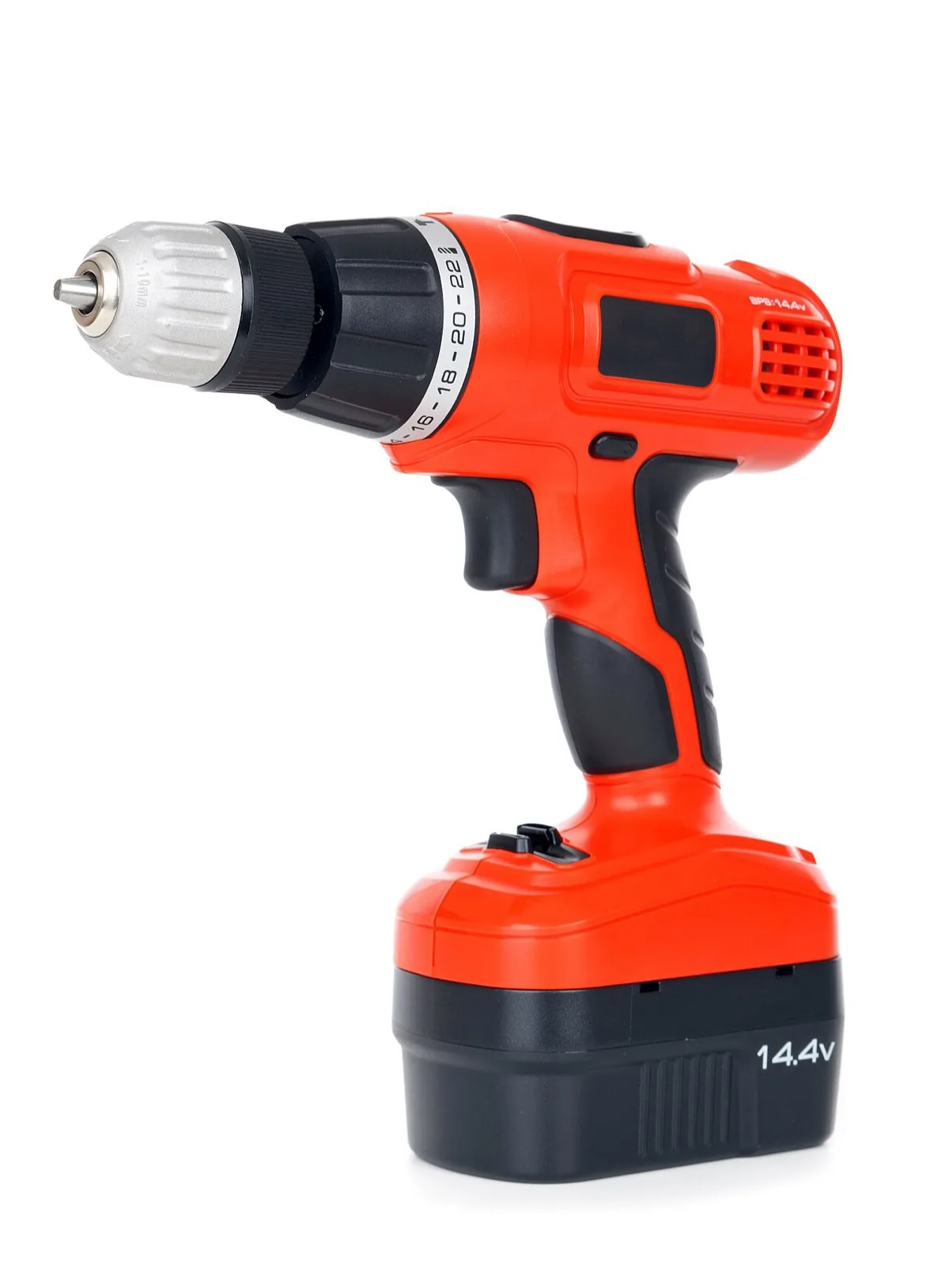
Corded tools are ordered for the mains voltage and plug type of the country of sale, and so are chargers; these details go into the purchase order before production, because by default a factory produces for its own market or for its largest customers. A mistake here cannot be fixed with a plug adaptor: in a tool that draws a high current, such as an angle grinder or a saw, an adaptor is a source of heat and danger, and it makes the product non-compliant with safety requirements in many markets.
- Voltage: a tool designed for a higher voltage than your country's grid runs with less power, and one designed for a lower voltage burns out.
- Plug type: the countries of the region do not use a single plug, and some use more than one type, so specify it for the market where you sell, and confirm the requirement with the competent authority in your country before production.
- Frequency: its effect is limited on most hand-held tools, but it changes the speed of machines with induction motors, such as some mixers and stationary saws; we explain this on the Machinery and Production Lines page.
- Charger: its input voltage, plug and safety certificate, because it is a separate electrical product that may be inspected on its own. For extension leads and industrial sockets on site, see the Electrical and Lighting page.
- Rating label and user manual: with the correct voltage, frequency and power, not copied from another model, and in the language of the country of sale where required. See Packaging, labelling and barcodes.
Which safety standards apply to power tools, scaffolding and ladders?
For hand-held power tools, the IEC 62841 series; for facade scaffolds and working scaffolds, the European standards EN 12810 and EN 12811; for portable ladders, EN 131; and for industrial safety helmets, EN 397. These are the references against which many contracts request test reports, but what is actually mandatory is set by the rules of the destination country.
| Category | Standard and current edition | What it covers | Source |
|---|---|---|---|
| Hand-held power tools (general) | IEC 62841-1:2014 and its Amendment 1 of 2025 | General safety requirements for hand-held tools, transportable tools and lawn and garden machinery, for a rated voltage of up to 250 V single-phase and 480 V three-phase, and a rated input of up to 3,700 W | IEC 62841-1 |
| Drills | IEC 62841-2-1:2017 and its Amendment 1 of 2021 | Hand-held drills and impact drills, including diamond core drills | IEC 62841-2-1 |
| Angle grinders | IEC 62841-2-3:2020 and its Amendment 1 of 2024 | Hand-held grinders, polishers and disc-type sanders with a rated diameter not exceeding 230 mm | IEC 62841-2-3 |
| Circular saws | IEC 62841-2-5:2014 and its Amendment 1 of 2025 | Hand-held circular saws; does not cover cutting machines with abrasive wheels | IEC 62841-2-5 |
| Hand-held cut-off machines | IEC 62841-2-22:2025 | Hand-held cut-off machines for metal, concrete, stone, glass and tile with reinforced or diamond wheels, with a rated diameter of up to 430 mm | IEC 62841-2-22 |
| Facade scaffolds | EN 12810-1:2003 | Product specifications for facade scaffolds made of prefabricated steel or aluminium alloy components, anchored to the facade with ties | BS EN 12810-1:2003 |
| Access and working scaffolds | EN 12811-1:2003 | Performance requirements and general and structural design methods for access and working scaffolds | BS EN 12811-1:2003 |
| Portable ladders | EN 131-1:2015+A1:2019 and EN 131-2:2010+A3:2025 | Part 1: terms, types and functional sizes of portable ladders for professional and non-professional use. Part 2: design requirements, test methods and marking | EN 131-1 EN 131-2 |
| Industrial safety helmets | EN 397:2025 | Design and performance requirements, test methods and marking for industrial protective helmets for general use | BS EN 397:2025 |
| Saudi Arabia | Technical Regulation for Machinery Safety, Part One: Portable and/or Hand-Guided Machines; and Part Four: Sawing and Cutting Machines | Part Four was approved on 5 January 2023 and published in the Official Gazette on 17 February 2023, and refers to Part One for the requirements of portable and hand-guided machines. Whether either applies to a specific tool is checked by its customs code on SABER, Saudi Arabia's product conformity platform | Part One (Arabic) Part Four (Arabic) |
The table is for guidance, not for contracts: standards receive amendments and new editions. Its figures were reviewed against their official sources in September 2026.
In practice, what matters is not the name of the standard on the carton but the test report itself: in the model's name, with the report number, the laboratory's name and the date, and verifiable with the laboratory. EN 131 covers portable ladders for professional and non-professional use, so ask for the use category to be marked on the ladder, and do not sell a ladder designed for the home as a site ladder. In Gulf markets, products subject to technical regulations are registered on SABER in Saudi Arabia, and the Emirates Conformity Assessment Scheme (ECAS) is checked in the United Arab Emirates; the requirement depends on the product's classification and the destination country, and should be checked before production. For details, see Import conformity certificates: SASO/SABER, ECAS and CE.
What goes into the specification for scaffolding, formwork and ladders?
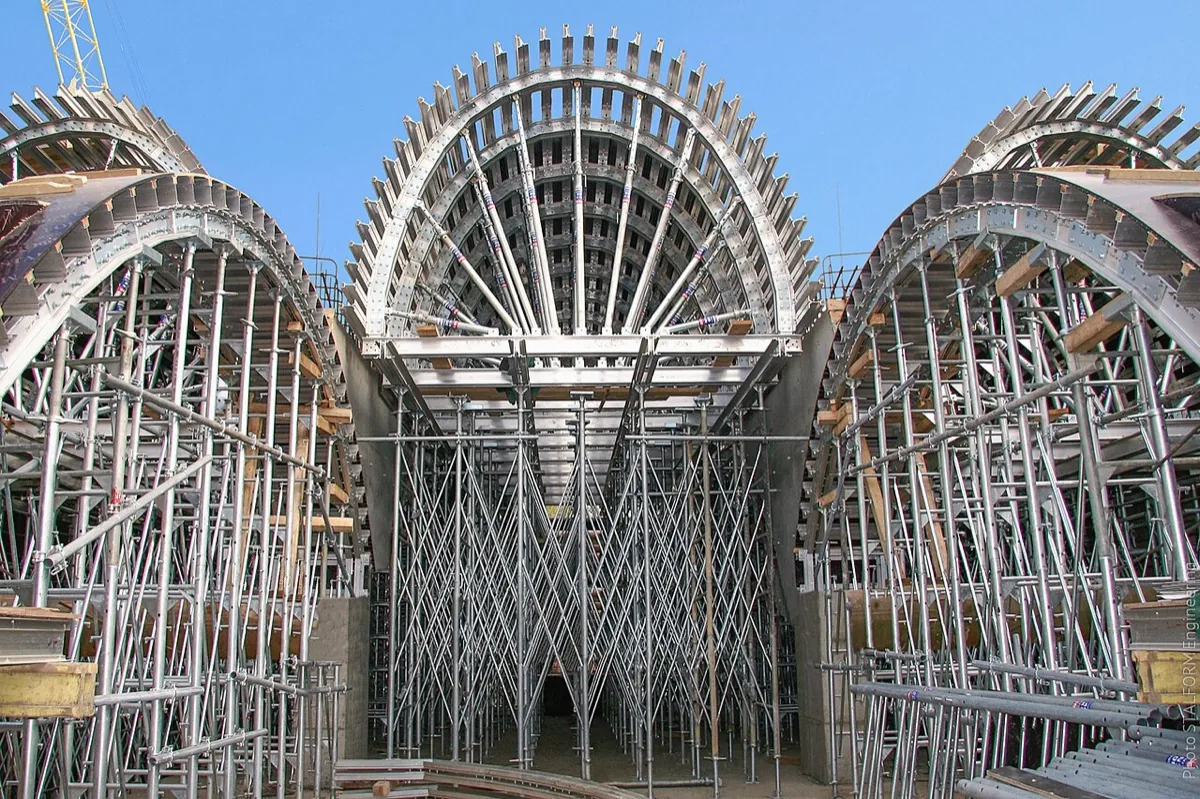
The material and its thickness as a figure, the rust protection and how it is applied, the connection system and its compatibility with what you already have, the design load, and marking on every piece — because scaffolding and formwork carry both loads and lives, and their weaknesses only show under load.
- Scaffold tubes: outside diameter, wall thickness and steel grade written as figures and measured during inspection, with a mill certificate matching the batch numbers. Reducing wall thickness is the most common way of cutting the price, and the most dangerous.
- Rust protection: hot-dip galvanising after fabrication, pre-galvanised tubes or paint — with the coating thickness and where it is measured. For tubes and galvanised steel in general, see the Iron and Steel page.
- Scaffold system: tube and coupler, ringlock, cuplock or frame systems — with the dimensions of new components compatible with your existing stock if you are adding to it.
- Couplers (clamps): the manufacturing method — cast, forged or pressed — the weight per piece and its load test results, because a light, cheap coupler is the first point to fail.
- Formwork: the material — steel, aluminium, film-faced plywood or plastic — the expected number of reuses in writing, the type of plywood glue and its water resistance, and steel props with their length and load capacity.
- Ladders: the aluminium alloy and the thickness of stiles and rungs, the maximum load marked on the ladder, anti-slip feet, and the use category, professional or domestic.
- Small mixers, vibrators and compactors: engine or motor type (electric, petrol or diesel) and its power, mixer capacity, vibrator poker diameter and hose length, compactor impact force, and guards on rotating parts.
- Site safety equipment: helmets, safety harnesses and lanyards, goggles and gloves, each with its declared standard, test report and date of manufacture, because helmets and harnesses have a service life set by the manufacturer.
How do you avoid counterfeit brands and fake conformity marks?
Buy under your own brand, under the real factory's brand or unbranded; do not accept tools carrying a well-known brand's name or distinctive colours without written authorisation from the brand owner; and ask for test reports, not photos of certificates. Power tools are among the categories most exposed to counterfeiting, and counterfeiting here is not limited to the name.
- Brand and appearance: copying the name or logo, or the colours and distinctive design of a well-known brand, is an infringement that can end with the shipment seized in the destination country and with liability for the importer.
- “Compatible” batteries: a battery carrying the logo of the original tool brand when it is not made by that brand is outright counterfeiting. Whether a battery under a different brand with a compatibility statement is allowed is a question to check in your country before ordering.
- Printed conformity marks: a conformity mark on the carton does not mean a test was carried out; ask for the report with the model name, report number and laboratory name, and verify it with the laboratory itself.
- The tested model is not the model produced: a genuine report for a sample with a copper motor, then production with a different motor. This is exposed during inspection by comparing production units with the photos and specifications in the report.
For private label and how to protect it, see Private label, OEM and ODM and Protecting your brand and intellectual property when manufacturing in China.
How are construction tools shipped, and why do lithium batteries need special care?
Tools ship in their retail boxes inside outer cartons, and scaffolding and formwork as strapped bundles on pallets; scaffolding and hand tools reach the weight limit before volume, while lithium batteries in cordless tools are Class 9 dangerous goods with their own classification and documents.
| Item | Limit reached first | Usual shipping | What to watch for |
|---|---|---|---|
| Corded power tools | Usually volume | 40-foot high cube container, or groupage for small quantities | Retail cartons protected from crushing and moisture |
| Cordless tools with batteries | Volume, plus dangerous goods restrictions | Usually a full container with a correct declaration | Many consolidators refuse batteries or impose conditions that wipe out the savings |
| Metal hand tools | Usually weight | 20-foot container for large quantities | Rust-inhibiting packaging and moisture-absorbing materials |
| Scaffolding and metal formwork | Weight first, by a wide margin | Usually a 20-foot container, and a 40-foot container for long lengths, within the payload limit | Bundles strapped with steel bands, and galvanising protected from white rust by preventing condensation |
| Ladders | Volume | 40-foot high cube container | Ladder length determines the loading plan and the number of units |
| Small mixers and compactors | Volume for mixers, weight for compactors | Depends on the product mix | An engine with fuel left in it may be treated as dangerous goods, so it is drained and declared according to the freight forwarder's instructions |
The containers in the table are for guidance and depend on the quantity and on carton and bundle dimensions. Batteries, however, are classified according to how they are packed: batteries installed in the tool or packed with it in the carton are classified UN3481, and batteries shipped on their own as spare parts are classified UN3480, the strictest case. In air freight, two thresholds separate the lighter conditions from shipping under the full Class 9 requirements: 20 Wh per cell and 100 Wh per battery — which is why an 18 V, 5 Ah battery falls below the threshold and an 18 V, 6 Ah battery above it. Since 1 January 2026, lithium-ion batteries packed with equipment must be shipped by air at a state of charge not exceeding 30% of their rated capacity (for batteries above 2.7 Wh), this is recommended for batteries contained in equipment, and battery manufacturers and distributors must make a UN 38.3 test summary available. The source is the IATA Lithium Battery Guidance Document, 2026 edition, which is based on the Technical Instructions of the International Civil Aviation Organization; its figures were reviewed against their official sources in September 2026.
In sea freight, batteries are declared under the rules for carrying dangerous goods by sea, and a specialist freight forwarder settles the classification of the shipment. A full container is the natural route because many consolidators refuse batteries, as we explain in the guide to LCL groupage shipping. To weigh a full container against groupage for corded tools and scaffolding, see the FCL vs LCL guide, and for large lithium batteries in energy storage systems, see the Solar Equipment page.
Hand-held tools with a built-in electric motor are classified for customs under heading 8467 — including drills at 8467.21 and saws at 8467.22 — hand tools under 8205, and scaffolding, formwork and shoring equipment of iron or steel under 7308.40. The exact national code and its duty are determined by your customs broker in the destination country.
What are the most common risks in importing construction tools, and how do you avoid them?
The most serious are, for power tools, exaggerated power, cheap motors and under-capacity batteries; for scaffolding and ladders, thickness and load; and across the whole category, counterfeiting. This is a list of what actually happens again and again:
- Printed power higher than the real power: measure input power on the sample and on production units, and open a tool to see the motor windings.
- Battery capacity lower than declared: a discharge test on a sample of batteries before shipping, and the cell manufacturer's name written into the contract.
- Batteries and chargers with no spare parts: order a stock of them with the first shipment, together with carbon brushes, switches and chucks.
- A plug or voltage that does not match the market: write it into the purchase order, and check it during inspection on the carton, the label and the tool together.
- Scaffold tubes thinner than specified, or weak galvanising: measure thickness and coating during inspection, and reject a non-compliant batch before loading.
- Ladders without load or use category marking: the marking is part of conformity, not a cosmetic detail.
- Minimum order quantity per model, plug and colour: negotiate the range before the price. See Minimum order quantity and how to negotiate it.
To read inspection results and decide whether to accept or reject, see How to read an inspection report.
How do you import construction tools from China?
- Start with the requirements of the country of sale: voltage and plug type, the regulations and certificates that apply to each item, and battery shipping restrictions.
- Define the range and specification: tools by power, motor and battery platform; scaffolding and formwork by material, thickness and system.
- Find factories in their hubs and verify them, and tell the factory that makes the motor or welds the scaffolding apart from the trader. See factory audit.
- Evaluate samples: power measurement, battery discharge test, continuous running under load, opening a tool, and measuring tube and coating thickness.
- Ask for test reports with the model name, report number and laboratory name, and complete any registration required in the destination country before production.
- Write the specification into the purchase order: power and winding material, cell manufacturer, plug, brand, packaging and accompanying spare parts.
- Follow production and inspect before shipping with a statistical sample and actual measurements, not by eye alone. See Pre-shipment inspection and AQL standards.
- Book the right shipping: a container chosen by weight or volume, and a dangerous goods declaration if batteries are included.
- Review the documents before sailing: the invoice, packing list, goods description and battery declaration must all match.
Alshumul's role in importing construction tools
Alshumul Commercial Services is an import and export company based in Guangzhou. The value of working from inside China in this category is that most of its problems do not show in photos: aluminium motor windings, a battery with less capacity than its label, and a scaffold tube that is millimetres thinner. What we handle:
- Finding and verifying factories in their specialist hubs, and telling the factory apart from the middleman.
- Auditing and visiting factories: the motor winding and tool assembly line, or the scaffold welding and galvanising line.
- Requesting and following up samples, and arranging measurement of their power, battery capacity and tube thickness.
- Negotiating directly with the factory in Chinese on the specification — real power, winding material, cell manufacturer, plug and brand — and on price and accompanying spare parts.
- Following production and inspecting before shipping: comparing production units with the approved sample, measurements, labels and packaging.
- Arranging shipping through shipping lines and consolidators — full container or groupage — and collecting battery documents from the factory before booking when batteries are in the shipment.
- Reviewing documents before sailing, and following up until the port of discharge.
What we do not offer, we say clearly: we do not handle customs clearance inside the destination country, and we do not give a legal opinion on trademarks or on the regulations that apply to your product, which is for the competent authority or a legal adviser in your country to decide. To calculate your full landed cost, see The real cost of importing from China.