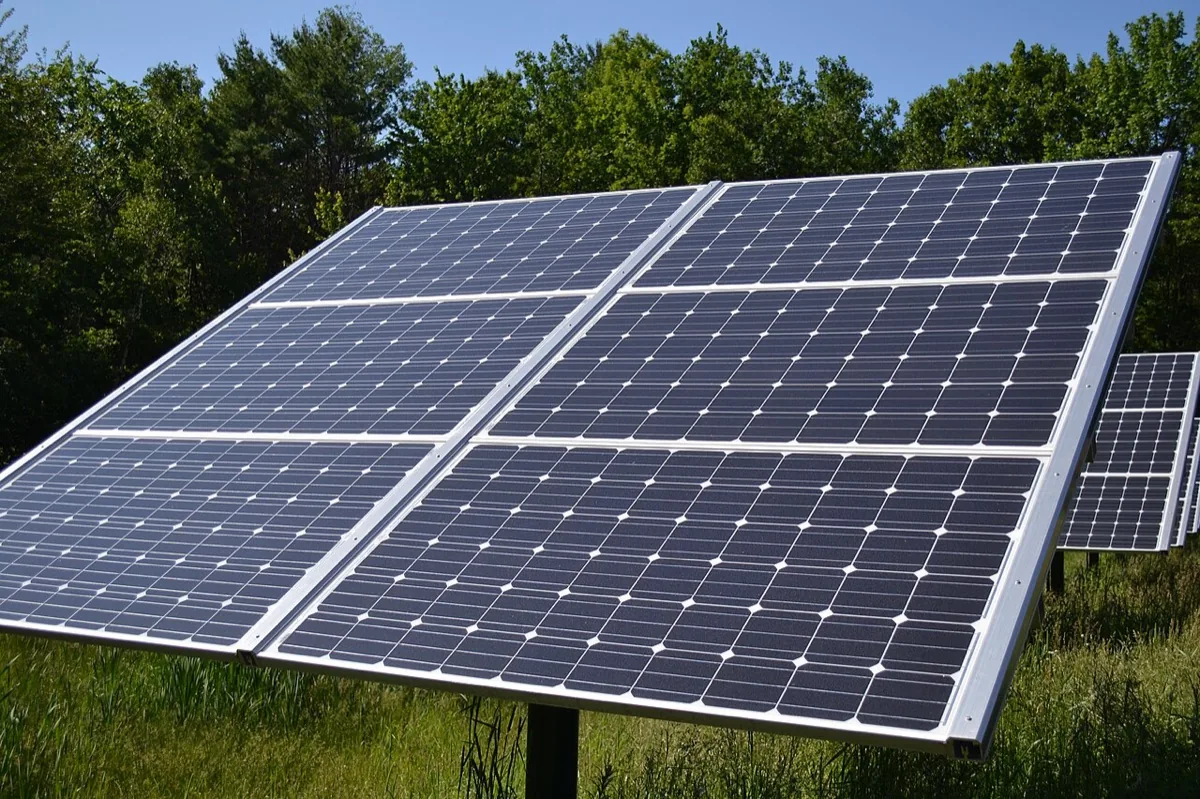
Solar equipment is a system, not a single product: panels generate direct current, the inverter converts it to alternating current or manages it together with the grid and the battery, storage batteries hold the surplus, mounting structures hold the panels against the wind, and charge controllers and solar cables and connectors tie it all together. This page also covers solar lighting and solar pumps.
The costliest mistakes in this category do not show on the day the goods arrive. A panel that delivers less power than its label loses output every day for twenty-five years; an inverter the utility does not accept cannot be connected at all; and a battery built from recycled cells loses its capacity within months. General electrical products such as household cables, circuit breakers and ordinary lighting have their own Electrical and Lighting page, and portable batteries and consumer electronics have their own Electronics page.
Where is solar equipment made in China?
Jiangsu Province leads China's solar cell and panel industry, particularly Changzhou, Wuxi and Yancheng, while inverter and storage battery manufacturing is spread across Guangdong, Zhejiang, Anhui and Fujian. According to an official article republished by the Fujian Provincial Department of Commerce, Jiangsu's output of cells and panels exceeds 40% of China's total, and the annual output value of the solar industry in each of Changzhou, Wuxi and Yancheng has passed 100 billion yuan (source, 2023).
| Product | Main manufacturing areas | Note for importers |
|---|---|---|
| Cells and panels | Jiangsu (Changzhou, Wuxi, Suzhou and Yancheng), along with Zhejiang, Anhui and Jiangxi | Large manufacturers selling under their own brands, and smaller factories assembling panels from bought-in cells; ask where the cells come from |
| Inverters and charge controllers | Guangdong (Shenzhen), Zhejiang (Ningbo and Hangzhou), Anhui (Hefei) and Jiangsu | Whether the utility in your country has approved the model matters more than the name of the city |
| Lithium iron phosphate storage batteries | Fujian, Guangdong, Jiangsu and elsewhere | Many battery assemblers buy in their cells; write the cell manufacturer and cell grade into the contract |
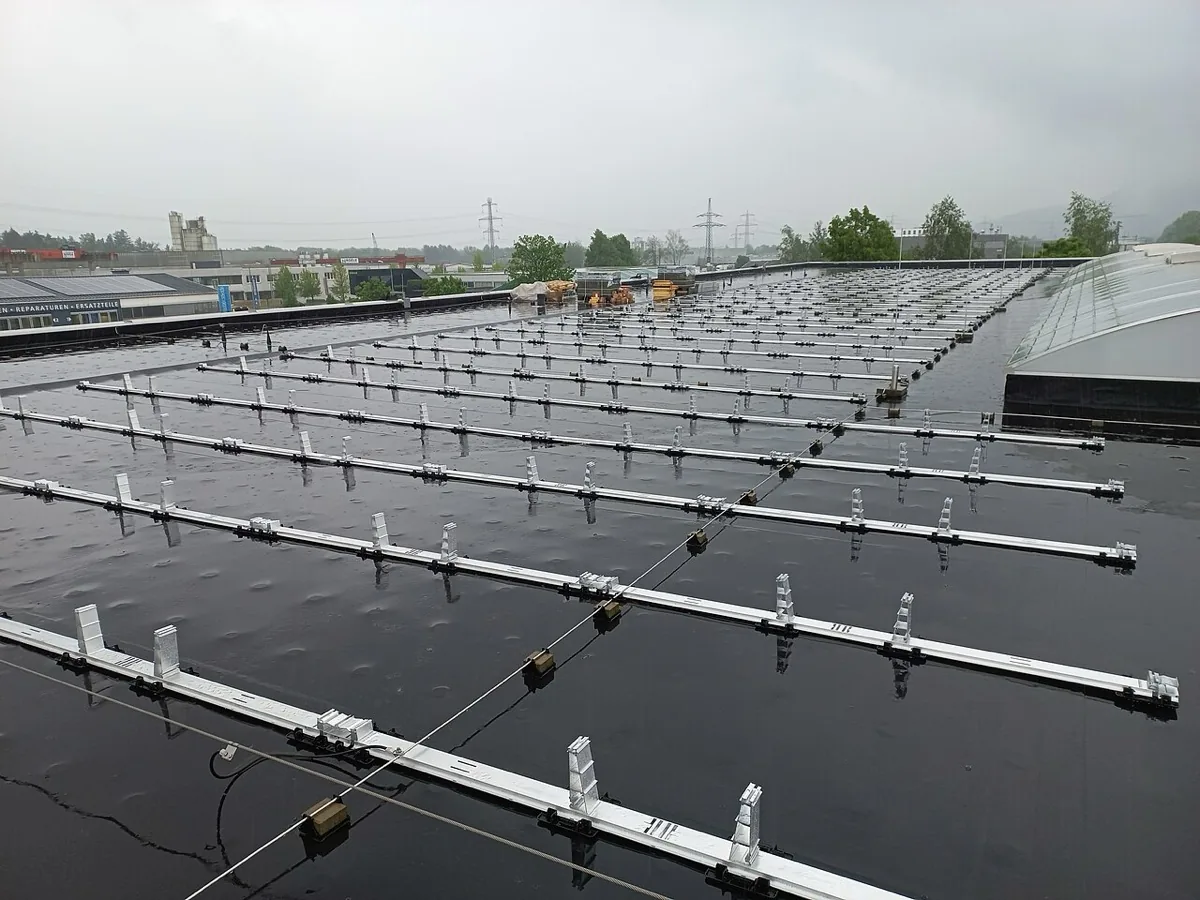
| Mounting structures | Galvanised steel and aluminium factories in many provinces | Heavy goods where weight is the limit; see the Iron and Steel page |
How do you read a solar panel datasheet?
Read it for the maximum power at standard test conditions (STC), the power tolerance, the efficiency, the temperature coefficient, and the dimensions, weight and mechanical load — then match it against the individual test report for each panel. Standard test conditions are an irradiance of 1,000 W/m², a cell temperature of 25 °C and an air mass of AM1.5. These are laboratory conditions, not a rooftop in summer, so in the heat a panel gives less than its printed power.
- Positive tolerance: require a positive-only tolerance, meaning the measured power of any panel must not be lower than its printed power. One published datasheet from a TOPCon panel manufacturer, for example, gives a tolerance of 0 to 4.99 W (datasheet).
- Flash test report for every panel: a file listing each serial number with its measured power, matched against the panel labels during inspection. This is what exposes lower-power panels sorted into a higher power class.
- Power temperature coefficient: the smaller its negative figure, the less output is lost in the heat, which matters in the Gulf climate.
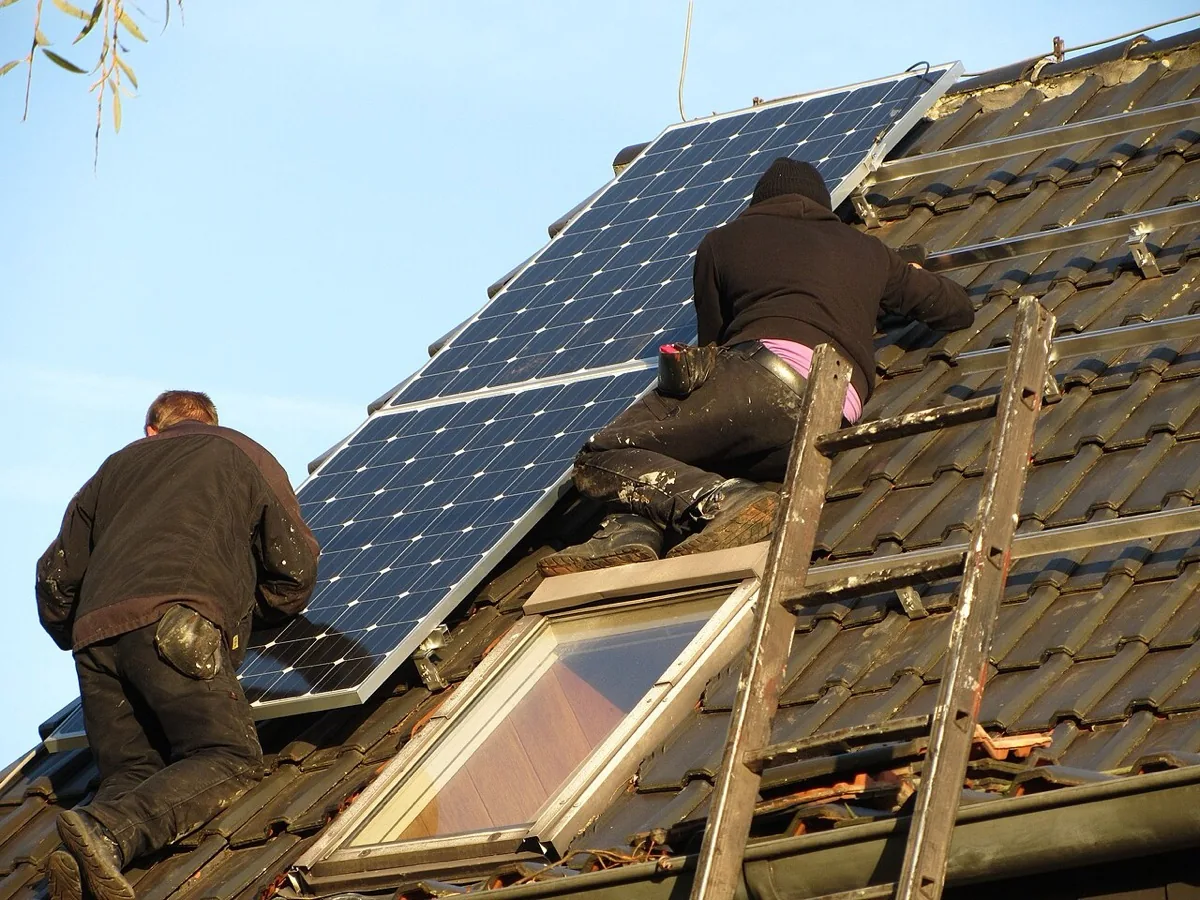
- Dimensions, weight and mechanical load: these determine the mounting structure and the number of panels per container. The same datasheet gives 2382 × 1134 × 30 mm, 33.7 kg, a front load of 5,400 Pa and a rear load of 2,400 Pa.
- Maximum system voltage and connector type: require connectors of a tested, compatible type, not ones that merely look compatible with another brand's connectors.
- Warranty: get the product warranty and the linear power warranty in writing, together with the party that honours them in your country, because a warranty that can only be enforced in China is of little practical value.
What is the difference between PERC, TOPCon and bifacial panels?
PERC is a P-type monocrystalline cell technology that dominated for years; TOPCon is a higher-efficiency N-type cell technology that has replaced it on most new production lines; and “bifacial” is not a cell technology but a panel design that also captures light reflected onto its rear side. A panel can therefore be both TOPCon and bifacial, which is common today.
| Type | What it is | Suits | What to check |
|---|---|---|---|
| Mono PERC | P-type cells with a rear reflective layer | Price-sensitive projects and existing stock | The cell production date; some cheap offers are old stock |
| TOPCon | N-type cells with a thin passivation layer | Most new residential and commercial projects | That the cells really are TOPCon and not PERC with a new label; the temperature coefficient and bifaciality factor on the datasheet |
| Bifacial (usually glass-glass) | A panel that captures light on both sides | Light-coloured roofs and ground-mounted plants raised above the ground | That the rear-side gain is calculated for your site, not taken from the datasheet; and the extra weight of the panel on the structure |
The international design qualification standard for panels, IEC 61215-1:2021, added qualification instructions for bifacial panels in its second edition, so ask for a test report to this edition for the same model.
How do you choose an inverter: grid-connected, off-grid or hybrid?
Choose it by system type: a grid-connected inverter supplies the building and the grid without a battery, an off-grid inverter works with a battery and no grid, and a hybrid combines grid and battery — and in every case the model must be accepted by the body responsible for grid connection in the country of installation. The common mistake is to buy an inverter on power and price, then discover that the utility will not allow it to be connected.
| Type | How it works | Suits | What to check |
|---|---|---|---|
| Grid-connected (on-grid) | Converts the panels' output and synchronises it with the grid, and disconnects when the grid goes down | Buildings in areas with a stable grid, and net metering systems | The model's listing with the utility, interconnection protection, and voltage and frequency compatibility |
| Off-grid | Works with the battery and charge controller without a grid | Farms, remote sites and water pumps | Surge power for motors, supported battery types, and the inverter's own power consumption |
| Hybrid | Manages the panels, battery and grid together, and supplies loads during outages | Areas with frequent outages, and anyone who wants storage alongside the grid | The communication protocol with the battery, grid connection approval, and transfer time during an outage |
One example of an approval requirement: the Dubai Electricity and Water Authority keeps a list of eligible equipment, to which panels and inverters that meet its minimum eligibility criteria are added. It requires conformity certificates to be issued by laboratories accredited to ISO/IEC 17025, and it has warned that its old PDF list is no longer a reference for installations (DEWA: PV equipment eligibility). Every market has a similar body or grid connection conditions to check before ordering.
Why are energy storage batteries treated as dangerous goods in shipping?
Because lithium batteries — including the lithium iron phosphate (LiFePO4) batteries common in home storage — are classified as Class 9 dangerous goods, batteries shipped on their own carry the UN number UN3480, and no carrier accepts them without a UN38.3 test report, proper packaging and marking, and a correct declaration. LiFePO4 chemistry is more thermally stable than other lithium chemistries, but that does not change its classification under transport rules.
- UN38.3 report: the result of the tests set out in Part III, sub-section 38.3, of the UN Manual of Tests and Criteria (eighth revised edition). Ask for it in the name of the specific battery model, with the test summary, together with the safety data sheet (MSDS).
- Air freight: lithium-ion batteries shipped on their own are forbidden on passenger aircraft. On cargo aircraft they travel at a state of charge not exceeding 30% of their rated capacity unless an exceptional approval is granted. Storage batteries are heavy and high-capacity, so air freight is rarely practical for them anyway.
- Sea freight: they are declared as dangerous goods at booking under the IMDG Code and need the shipping line's prior approval. Many shipping lines charge a surcharge for them, and many groupage consolidators refuse them, so a full container load is the usual route.
- Safety of the battery itself: the international safety standard for lithium cells and batteries in industrial applications, including stationary energy storage systems, is IEC 62619:2022. Ask for its report for the model, along with the cell manufacturer's name, the cell grade and the batch code.
Hiding batteries in the shipment description to avoid all this is the worst decision you can make: it brings fines, and full liability if a fire breaks out. We have set out how lithium batteries are classified on the Electronics page, and how this affects shipping large batteries on the Bicycles and E-bikes page.
Which international standards apply to panels, inverters and batteries?
For panels, the design qualification and safety standards IEC 61215 and IEC 61730; for inverters, the safety standard IEC 62109; for storage batteries, IEC 62619 plus a UN38.3 report for transport; and for solar cables and connectors, IEC 62930 and IEC 62852. Ask for the reports to the current edition and in the model's name, then add the requirements of the country of installation and the utility's conditions on top.
| Product or requirement | Reference and edition | Scope or figure | Note | Source |
|---|---|---|---|---|
| Panels: design qualification | IEC 61215-1:2021 (second edition) | Requirements for qualifying terrestrial panels for long-term outdoor operation | Replaced the 2016 edition and added instructions for bifacial panels | IEC Webstore: IEC 61215-1:2021 |
| Panels: safety | IEC 61730-1:2023 and IEC 61730-2:2023 (third edition) | Construction requirements (Part 1) and testing requirements (Part 2) for protection against electric shock, fire and mechanical hazards | For panels whose operating temperature does not exceed 70 °C at the 98th percentile, with guidance for higher temperatures in IEC TS 63126 — a point to ask about in hot climates | IEC 61730-1:2023 IEC 61730-2:2023 |
| Inverters: safety | IEC 62109-1:2010 and IEC 62109-2:2011 | Part 1 is general for power conversion equipment; Part 2 is specific to grid-connected, off-grid and multi-mode inverters | Part 2 is used together with Part 1; grid connection approval is a separate requirement | IEC 62109-1:2010 IEC 62109-2:2011 |
| Storage batteries: safety | IEC 62619:2022 (second edition) | Secondary lithium cells and batteries for industrial applications, including stationary electrical energy storage systems | Replaced the 2017 edition | IEC Webstore: IEC 62619:2022 |
| Solar cables | IEC 62930:2017 | Single-core cables for the DC side with a rated voltage of up to 1.5 kV DC | Different from household cables; do not substitute one for the other | IEC Webstore: IEC 62930:2017 |
| Solar connectors | IEC 62852:2014 and its amendment AMD1:2020 | Rated voltage up to 1,500 V DC, and current up to 125 A per contact | Connectors without breaking capacity; do not disconnect them under load | IEC 62852:2014 AMD1:2020 |
| Transport of lithium batteries | UN38.3, Class 9, UN3480 for batteries on their own and UN3481 for batteries packed with or contained in equipment | By air: UN3480 is forbidden on passenger aircraft, and the state of charge must not exceed 30% of rated capacity | Air rules are updated every year; sea freight follows the IMDG Code | IATA: lithium battery guidance document, revised for the 2026 regulations |
The table is for guidance, not for contracts: standards are revised and replaced, and the exact requirement depends on the country of installation and its utility. Its figures were reviewed against their official sources in September 2026. In Gulf markets, product registration and conformity requirements also need checking; see Import conformity certificates: SASO/SABER, ECAS and CE.
Are anti-dumping duties imposed on Chinese solar panels?
Yes, in some markets — notably the United States, which has imposed anti-dumping and countervailing duties on Chinese cells and panels since 2012, and India, whose trade remedies authority recommended anti-dumping duties on them in 2025. These duties follow the country of origin and are reviewed periodically, so anyone re-exporting Chinese panels from their own country to these markets should check them before signing a contract.
| Market | Measure | What the official body states | Source |
|---|---|---|---|
| United States | Anti-dumping and countervailing duties | Imposed by the Department of Commerce in 2012 on crystalline silicon cells and panels from China | US Department of Energy: trade measures in solar manufacturing |
| United States | Section 301 tariffs | Raised to 50% on Chinese cells and panels in 2024, and on wafers and polysilicon on 1 January 2025 | Same source, Office of the US Trade Representative |
| United States | Investigation into cells from Cambodia, Malaysia, Thailand and Vietnam | On 21 April 2025 the Department of Commerce announced its final determinations of dumping and subsidies, including subsidies originating from the Chinese government, and referred the injury determination to the International Trade Commission | US International Trade Administration (ITA) |
| India | Recommendation for anti-dumping duties | In its final findings dated 29 September 2025, the Directorate General of Trade Remedies recommended definitive duties on Chinese cells and panels for three years from the date of a notification issued by the Central Government; the duties are actually imposed by that notification | DGTR: investigation file Final findings, paragraph 214 |
The table is for guidance, not for contracts, and does not cover every market; its figures were reviewed against their official sources in September 2026. For the Gulf, the wider Arab region and Africa, this page does not rely on any duty figure for panels; the reference is the trade remedies authority or customs in your country, checked before you order.
What about charge controllers, solar lighting and solar pumps?
A charge controller is chosen by its technology (MPPT or PWM), its current and the battery voltage; solar lighting by its battery capacity and panel power, not the lumens in the advert; and a solar pump by its pumping curve at the required depth. These are products where marketing with big numbers is common:
- Charge controllers: MPPT is more efficient and more expensive, while PWM is simpler and cheaper for small systems. Specify the maximum input voltage from the panels, the charging current and the supported battery types.
- Solar floodlights and street lights: “1,000 W” on a floodlight with a small panel and a small battery is a figure it cannot reach. Ask for the panel power in watts and the battery capacity in watt-hours, and work out realistic lighting hours from the two. For lighting in general, see the Electrical and Lighting page.
- Solar pumps: the pump type (submersible or surface), motor power, flow-versus-head curve, operating voltage, and the material of the pump body and impellers to suit the water quality.
How are solar panels and inverters shipped from China?
Panels ship standing upright on pallets in 40-foot high cube containers, as fragile goods where packing and volume are the limit; inverters ship in padded cartons, batteries as dangerous goods, and mounting structures as heavy goods. In the datasheet cited above, for a 2382 × 1134 mm panel: 36 panels per pallet and 20 pallets in a 40-foot high cube container, or about 720 panels. The number changes with the panel dimensions and each factory's packing, so it is for guidance, not for contracts, and is calculated from the factory's packing list before booking.
- Hidden cell cracks: microcracks in cells cannot be seen with the naked eye and show up in electroluminescence (EL) test images. Ask for EL images before shipping, and inspect a sample on arrival.
- Loading and unloading: pallets are lifted carefully by forklift, panels are never laid face down, and no other goods are stacked on top of them.
- Mixed shipments: panels, inverters and structures in one container are possible with a well-planned loading sequence, but adding batteries turns the whole container into a dangerous goods shipment, with all the requirements that brings.
- Mounting structures: they are heavy, so they are calculated by weight, and their galvanised or anodised surfaces are protected from abrasion and moisture.
To weigh a full container against groupage, see the FCL vs LCL guide, and for consolidators' limits on batteries, see groupage shipping (LCL): advantages and drawbacks.
What are the most common risks in importing solar equipment, and how do you avoid them?
The most serious are panels with less power than their label or of a lower grade, inverters the utility does not accept, batteries with cells of unknown origin, and warranties that cannot be enforced. This is a list of what actually happens again and again:
- Lower-grade panels with an A-grade label: cells with colour defects or cracks. Ask for the flash test file and EL images for every panel, and match the serial numbers.
- A declared technology that is not the real one: PERC panels sold as TOPCon. Ask for the test report for the model, and the production date and origin of the cells.
- An unapproved inverter: check the utility's list or grid connection conditions before ordering, not after the container arrives.
- Recycled battery cells: lower capacity, shorter life and higher risk. Ask for the cell manufacturer's name and batch code, and test the capacity of a sample before shipping.
- A warranty on paper only: agree in writing on the claims procedure, spare parts, and who carries out the inspection in your country.
- Seasonality and price swings: panel prices change quickly, so tie the price to a written validity period, and plan around Chinese New Year and peak seasons.
How do you import solar equipment from China?
- Start with the requirements of the country of installation: the utility's list of accepted equipment, grid connection conditions, conformity certificates and any duties linked to origin.
- Design the system before buying: inverter type, panel power, battery capacity and mounting structure, based on consumption and site.
- Find and verify factories: tell a cell and panel manufacturer apart from an assembler that buys in cells, and a battery manufacturer from a pack assembler. See factory audit: what it is and why it matters.
- Evaluate datasheets and samples: positive tolerance, temperature coefficient, IEC reports for the model, and measured battery capacity.
- Write the purchase order: models with their model numbers, cell origin, flash test files and EL images, packaging and warranty.
- Complete the battery documents before booking: UN38.3 and MSDS in the model's name.
- Follow production and inspect before shipping: matching serial numbers and power ratings, EL images, and testing inverters and batteries on samples. See pre-shipment inspection and AQL standards.
- Book the right shipping: a 40-foot high cube container for panels, and a dangerous goods declaration if batteries are included.
- Review the documents before sailing: the invoice, packing list, dangerous goods declaration and conformity certificates must all match.
Alshumul's role in importing solar equipment
Alshumul Commercial Services is an import and export company based in Guangzhou that works with panel, inverter, battery and mounting structure factories in their hubs in China. The value of this work in this category is that the difference between two similar offers is hidden in the test files, the origin of the cells and the approval of the model. What we handle:
- Finding and verifying factories, and telling the manufacturer apart from the assembler and the middleman.
- Auditing and visiting factories: panel lines and their testing, battery pack assembly, and the origin of the cells.
- Requesting and following up samples, datasheets and test reports before approval.
- Negotiating directly with the factory in Chinese on specification, tolerance, warranty and price.
- Following production and inspecting before shipping: matching serial numbers and flash test files, EL images, and testing samples of inverters and batteries.
- Arranging shipping through shipping lines and consolidators that accept batteries with a correct declaration, and collecting UN38.3 reports and MSDS before booking.
- Reviewing documents before sailing, and following up until the port of discharge.
What we do not offer, we say clearly: we do not handle customs clearance inside the destination country, we do not design or install systems, we do not obtain grid connection approvals from the utility, and we do not give legal advice on anti-dumping duties or customs classification. To calculate your full landed cost, see The real cost of importing from China.