Women's accessories are a fast-moving, fashion-driven category that sells on first impressions: the shine of an earring, the colour of a scarf, the shape of a handbag. But what keeps or loses a customer shows up weeks later, not at the moment of purchase: plating that fades, an earring that causes an allergy, a stone that falls out, a scarf whose colour runs in the first wash. All of these are controlled through the specification before production, not through apologies after the sale.
This page covers non-precious costume jewellery (bijouterie), hair accessories, women's handbags, scarves and shaylas (rectangular headscarves), and women's watches. General accessories for men and women — watches and their technical specifications, sunglasses, belts, wallets and backpacks — are on the accessories page, and cosmetics are on the skincare products page and in the guide to importing cosmetics.
Where are women's accessories made in China?
Yiwu in Zhejiang is the largest hub for costume jewellery, hair accessories and scarves, Shiling in Guangzhou for handbags, and Shenzhen for watches, and each item also has supporting hubs beyond these.
| Item | Main production hubs | Common materials |
|---|---|---|
| Costume jewellery | Yiwu, Qingdao in Shandong, and Guangzhou and Shenzhen | Zinc alloy, brass, 316L steel, glass, cubic zirconia |
| Synthetic stones and crystal | Pujiang in Zhejiang | Crystal glass, synthetic stones |
| Hair accessories | Yiwu | Acetate, ABS plastic, spring metal, satin, velvet |
| Women's handbags | Shiling in Guangzhou, and Baigou in Hebei | PU, genuine leather, fabric |
| Scarves and shaylas | Yiwu, Hangzhou and Shaoxing, and Suzhou for silk | Polyester chiffon, georgette, viscose, modal, silk |
| Women's watches | Shenzhen and Guangzhou | Alloy or steel, sparkling stones, metal or leather straps |
A shop in the Yiwu market may display the output of several workshops, so what you see on its shelf is not necessarily what will come off the production line for your order. For the different purchasing channels and when each one suits, see Alibaba, 1688 and the Canton Fair.
Which metals and plating are used in costume jewellery?
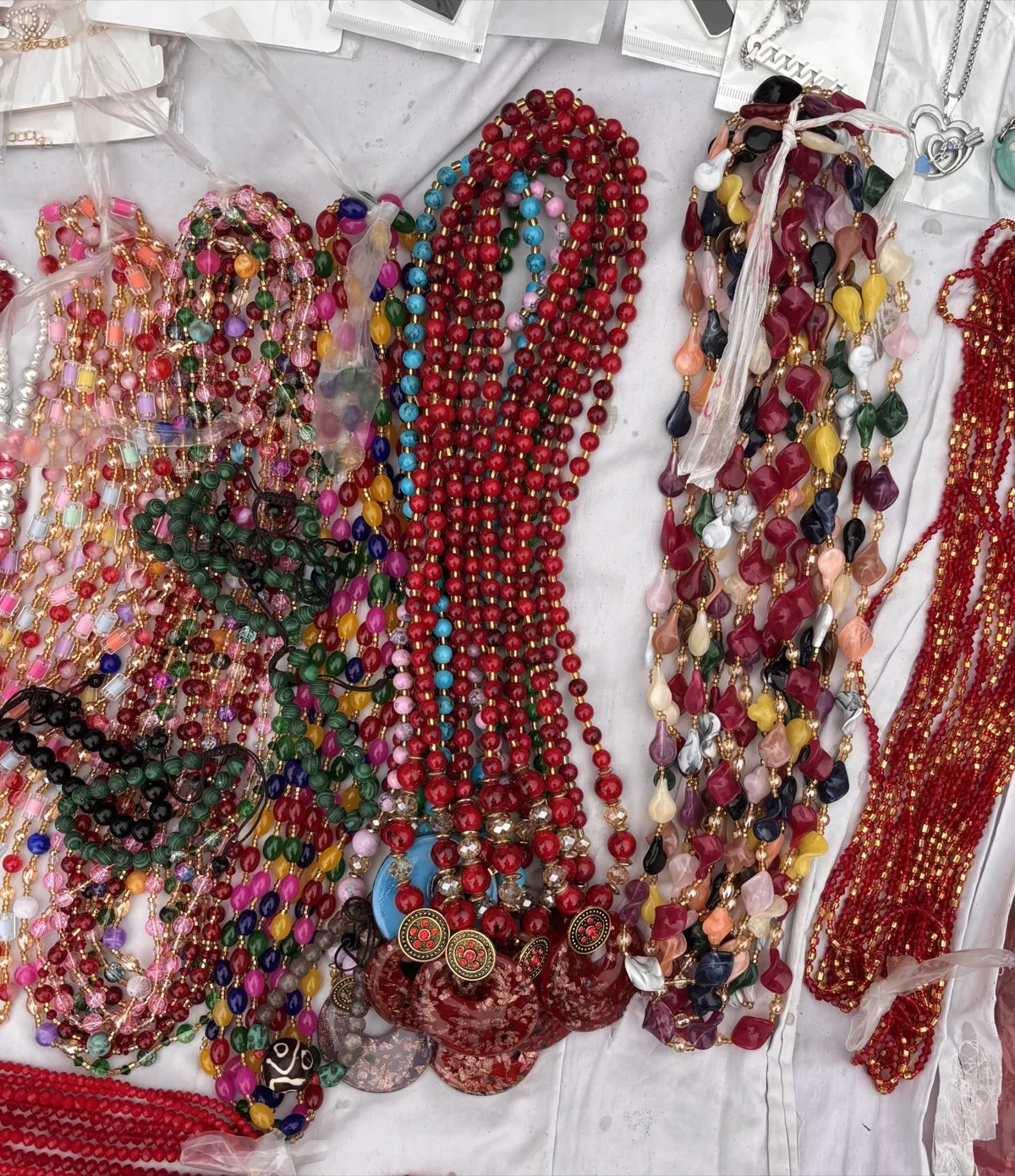
Two things decide a piece's price and lifespan: the base metal under the plating, and the plating type and thickness. The difference between a piece that fades in a week and one that lasts a year lies not in its looks but in these two items.
- Zinc alloy: cheap and easy to cast into complex shapes, but brittle; plating on it wears out sooner, and it turns black when the plating peels.
- Brass: holds plating well and is stronger than zinc, but it is more expensive, and it leaves green marks on the skin if the plating peels.
- 316L stainless steel: does not rust and withstands water and sweat. Its nickel release is usually low but still needs testing, and it is the basis of what is marketed today as waterproof jewellery.
As for plating, the types are:
- Flash plating: a very thin layer that gives colour on the day of sale and fades quickly with sweat, perfume and water.
- Thick plating: specified in microns, raising both price and lifespan. Write the thickness as a figure in the purchase order and ask for it to be measured.
- PVD: vapour deposition on steel, far more durable than electroplating in resisting scratches and fading.
- Clear protective coating: added over the plating to delay oxidation and colour fading.
Ask for artificial sweat and abrasion tests on production samples, and beware of "gold plated" without a figure, because it can describe a layer too thin to measure. Some markets give these terms a binding definition: in the United States, for example, "vermeil" may only describe a gold layer of at least 2.5 microns over sterling silver.
What are the nickel, lead and cadmium limits for jewellery?
Jewellery is one of the consumer products most subject to metal limits, because it touches the skin for long periods, goes into ear piercings, and can end up in a child's mouth. The main limits in the European Union serve as an example; other markets have their own:
- Nickel in earring posts and piercing items: 0.2 micrograms per square centimetre per week, stricter than the limit for items in general contact with the skin. Nickel allergy is one of the most common contact allergies, and a single earring that causes it can bring bad reviews for your whole shop.
- Lead: a limit of 0.05% of the weight of each part of the jewellery, and the United States has stricter limits for children's products.
- Cadmium: 0.01% of the weight of metal parts. Cadmium has been found in cheap jewellery alloys, so it is a real risk, not a theoretical one.
Verification is by an independent laboratory report on samples from the actual production, with a handheld X-ray fluorescence (XRF) analyser used for initial screening. If the pieces are explicitly aimed at children — bracelets, tiaras and hair clips for young girls — they come close to the requirements for toys and children's products and need separate verification. Requirements depend on the destination country and are updated, so check them before production; for the general framework of conformity certificates in different markets, see the guide to import conformity certificates.
What are the specifications for hair accessories?
A hair accessory is judged by its material, the strength of its spring or elastic, and edges that neither pull the hair nor scratch the scalp.
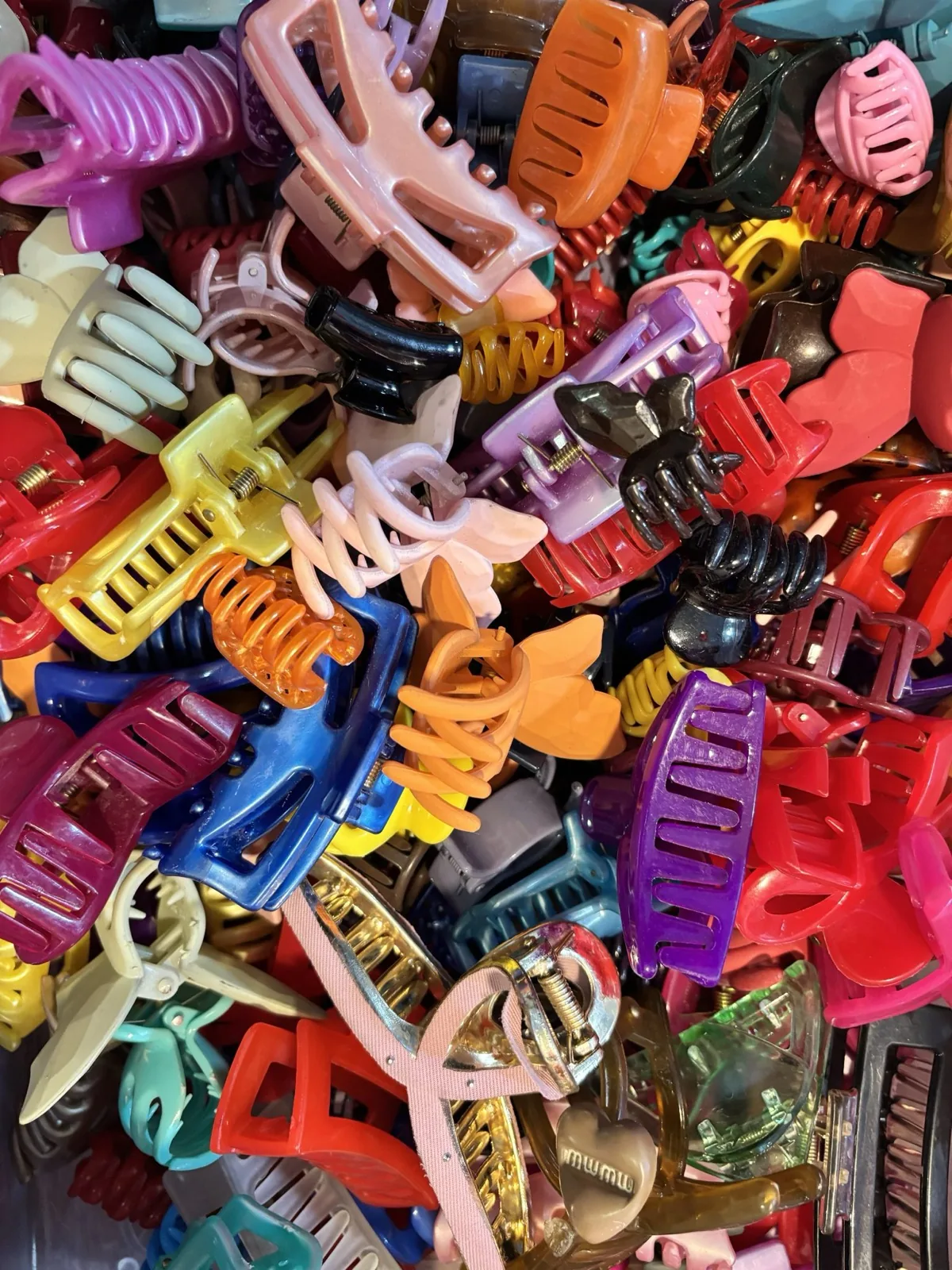
- Large claw clips: acetate is more expensive and stronger, with the colour running through the material rather than sitting on its surface, while ABS plastic is cheaper and usually breaks at the spring. Ask for a repeated opening and closing test and a drop test.
- Metal hair pins and clips: plated spring metal, whose weak points are rust where the plating peels and unpolished edges.
- Fabric hair ties: satin, velvet or cotton, with an inner elastic specified by size and by its elasticity after repeated stretching; poor elastic goes slack within a week.
- Stones and embellishments: the difference between a stone held by metal prongs and one stuck on with cheap glue is the difference between a piece that lasts and one that loses its stones in the carton before it even arrives.
- Headbands: the band should flex without breaking and should not press painfully behind the ears.
What should you know about women's handbags?
A woman's handbag is judged by its material, zips, stress points and metal fittings, and its biggest risk is counterfeiting. We cover this in detail — genuine leather and PU and how a cut sample reveals material quality, where handbags fail and how to inspect them, labelling, packaging and seasons — in the guide to importing women's handbags from China to Saudi Arabia, so we will not repeat it here. We add three points for anyone buying handbags as part of an accessories assortment:
- Metal fittings are part of the metals check: chains, clasps and rings touch the hand and shoulder for long periods, so the same questions about plating and nickel release apply to them as to jewellery.
- Minimum per colour, not per model: handbag factories usually set the minimum for each colour of material, so an assortment in six colours can mean six minimums; plan your colours carefully.
- Volume in shipping: a handbag stuffed to keep its shape takes up a lot of volume, and the choice between stuffing that holds the shape and lighter stuffing that saves on freight is settled by trialling a sample carton before production.
What are the specifications for scarves and shaylas?
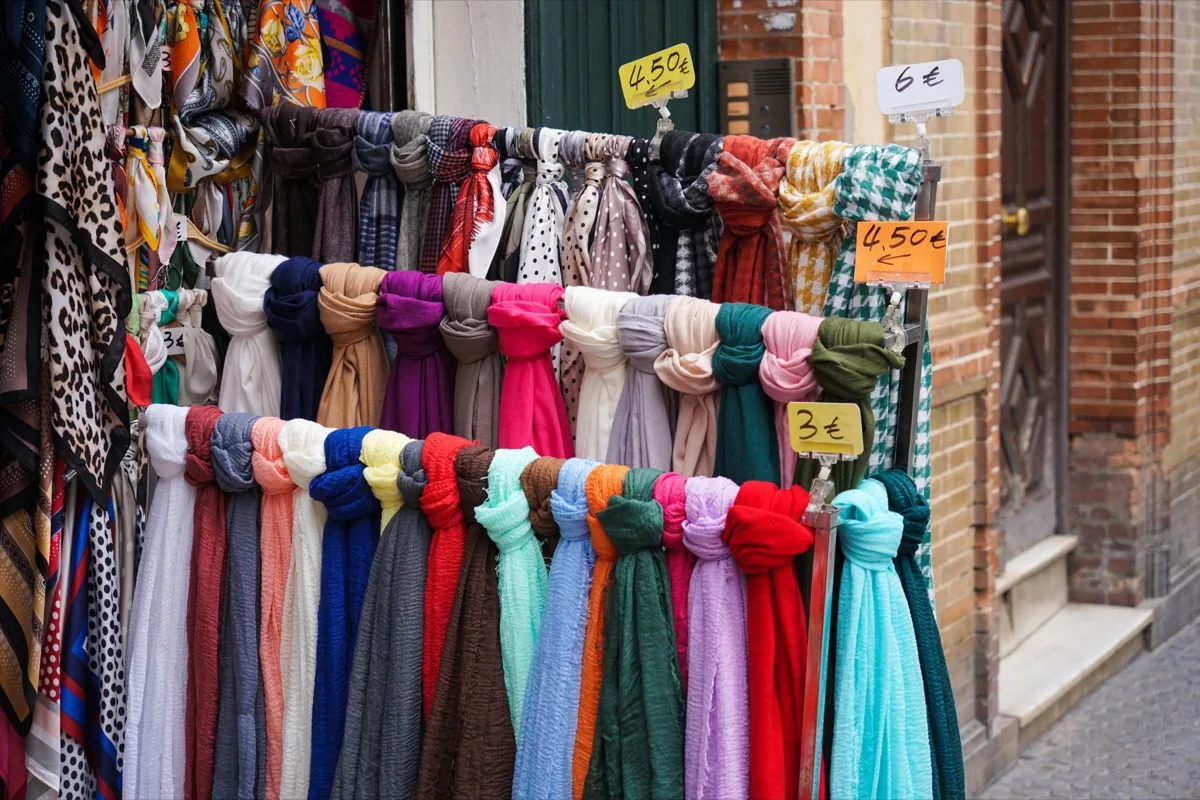
Scarves and shaylas are specified by fabric and composition, size in centimetres, fabric weight, edge finish and colour fastness, and, in Gulf markets, by their opacity.
- Fabric: polyester chiffon and georgette for light shaylas, cotton jersey, viscose or modal for comfortable everyday wrapping, natural silk for the top tier, and crepe for special occasions. Write down the composition, because a "silk" label on polyester is a labelling violation.
- Size: a rectangular shayla is usually around 70 by 180 centimetres, and a square scarf 90 by 90 or 110 by 110; the size is written as a figure with a permitted tolerance.
- Opacity: for shaylas and headscarves aimed at Gulf markets, this is a decisive selling specification, and very sheer chiffon is rejected however beautiful its colour. Approve it with a sample and a written fabric weight.
- Edges: a machine-sewn hem for the budget tier, or hand-rolled edges for luxury silk, and the difference in price and appearance is clear.
- Colour fastness: black, navy and burgundy are the colours most likely to run onto clothes and skin, so ask for a written fastness grade for washing, perspiration and rubbing.
- Pilling and snagging: cheap jersey pills, and poor chiffon snags at the first catch on a pin.
Scarves are textiles, so the rules on fibre content and care labelling, and the colour fastness tests, that we cover on the clothing page apply to them.
What sets women's watches apart?
A woman's watch sells more on its looks than on its movement — a smaller case, a slim strap, sparkling stones and plating colours such as rose gold — so its risks are concentrated in the plating, the stones and the strap. The specifications for the movement, water resistance and crystal are the same for men's and women's watches, and we cover them on the accessories page.
- Case diameter: usually between 26 and 36 millimetres, and written as a figure, because a difference of two millimetres changes the whole impression.
- Stones: set with prongs or metal channels, or glued; drop and vibration tests expose poor gluing.
- Strap: how the size is adjusted — removable links or a sliding clasp — and a length suited to a slimmer wrist.
- Gift sets: a watch with a bracelet or earrings in one box is popular in online shops and during seasons, and the box is part of the product, specified like the piece itself.
Which mistakes ruin a women's accessories order?
The most serious is protected designs, followed by plating that fades, restricted metals, stones that fall out, and colour differences between the sample and production.
- Iconic designs: some pieces by global jewellery and handbag houses are protected by design registration, not just by their logo, so a bracelet or necklace that copies a famous shape without any logo can be treated as counterfeit. See protecting trademarks and intellectual property.
- Precious metals: pieces made of gold or silver fall under precious metals regulations, and in many countries they have separate hallmarking and fineness requirements, so they are not treated like costume jewellery; check the rules that apply before ordering.
- Colour differences: yellow gold, rose gold and silver tones vary between plating batches, so approve a reference sample for each plating colour.
- Damage in transit: jewellery pieces rub against each other and get scratched, and plating oxidises in humidity. The prevention is an individual bag for each piece, preferably anti-tarnish, and a display card that holds the piece in place.
How are women's accessories shipped?
Jewellery and watches are small and high in value, so they suit small groupage shipments or air freight with insurance, while handbags and scarves use up volume and are charged by the cubic metre. Most assortments come from several suppliers in Yiwu and Guangzhou, so each workshop's output is inspected separately and then consolidated with a specialist consolidator into a single shipment — the details of this type of shipping and its hidden charges are in the groupage shipping guide. Scarves are folded and compressed without creasing permanently, and handbags are packed in calculated carton dimensions. For the information and barcode that go on each piece's bag and display card, see packaging, labelling and barcode requirements.
How do you import women's accessories from China?
- Write a specification sheet for each item: base metal, plating and thickness for jewellery, material for hair accessories, fabric, size and opacity for shaylas, and case diameter for watches.
- Set the restricted metal limits for the destination country — nickel, lead and cadmium — and write them into the purchase order.
- Choose a supplier from the hub that specialises in the item and make sure it makes the piece itself; the steps are in the guide to verifying a Chinese supplier.
- Request samples and test them: plating with sweat and abrasion tests, and shaylas by washing them and holding them up to the light.
- Approve colour samples — plating colour and fabric colour — as a signed, written reference.
- Ask for independent laboratory reports on production samples for restricted metals.
- Follow production and inspect each batch before it is handed to the consolidator, with a written acceptance level, as in pre-shipment inspection and AQL standards.
- Arrange consolidation and shipping, and review the packing list and HS codes for each item before sailing.
Alshumul's role in importing women's accessories
In this category, quality is decided in the workshop, not in the catalogue: on the plating line, in the way a stone is set, and in the fabric's dye batch. That is why Alshumul Commercial Services — based in Guangzhou, close to the handbag factories of Shiling — works directly from the factory side, and extends its follow-up to suppliers in Yiwu and the other hubs where each specialisation lies:
- Reaching the workshop that makes the goods, not the storefront: we find the supplier and verify that it makes the jewellery, handbags or scarves itself, rather than buying them from others and reselling them.
- Factory visits and audits: with particular attention to the plating line, because that is what decides whether a piece fades in a week or lasts a year.
- Samples: we request and follow them up, and compare them with what the specification says — plating thickness, stone setting, colour shade and fabric opacity.
- Negotiating in Chinese directly with the factory: on specification and price, and on the minimum for each plating or fabric colour.
- Production follow-up and pre-shipment inspection: batch by batch, with a photo report for each supplier.
- Shipping: we arrange for the suppliers' batches to be consolidated with a specialist consolidator, arrange the right shipping through shipping lines — groupage, air or container — review documents before sailing, and follow the shipment until it reaches the port of discharge.
Our service does not include customs clearance in the destination country, or legal opinions on designs and trademarks: the first is for a customs broker, and the second for a lawyer specialising in intellectual property.