Professional cleaning equipment is bought to work for years in hotels, hospitals, shopping centres, factories and fuel stations, not to be used up and replaced. That is why mistakes with it do not show on arrival but months later: a motor that overheats because it was designed for a different grid frequency, a battery that cannot last a single shift, or a machine standing idle because a rubber squeegee blade is only sold in China. The low price in the factory's quotation says nothing about any of this.
A necessary distinction in scope: this page is about machines and tools — floor cleaning machines, wet and dry industrial vacuum cleaners, pressure washers, cleaning trolleys, and professional tools such as mops and window cleaning kits. Cleaning chemicals — detergents, disinfectants and air fresheners — are chemical substances with entirely different shipping and safety requirements, and have their own page, detergents. If you import both together, do not assume they ship on the same terms.
Where is cleaning equipment made in China?
Cleaning equipment manufacturing is spread across three main clusters: Jiangsu, around Suzhou, together with neighbouring Shanghai, for floor machines and industrial vacuum cleaners; Zhejiang, around Ningbo, Taizhou and Yongkang, for pressure washers and their pumps; and Guangdong for cleaning trolleys and professional tools. The table below brings together the main items and what to ask about each:
| Item | Specifications to set | Common risk |
|---|---|---|
| Floor scrubber-dryer (walk-behind or ride-on) | Cleaning path width, solution and recovery tank capacity, productivity in square metres per hour, battery type and run time | Actual run time shorter than stated, and squeegee blades that wear out quickly |
| Wet and dry industrial vacuum cleaner | Motor power, suction pressure, tank capacity, filter type | Motors with short-lived carbon brushes, and filters not available locally |
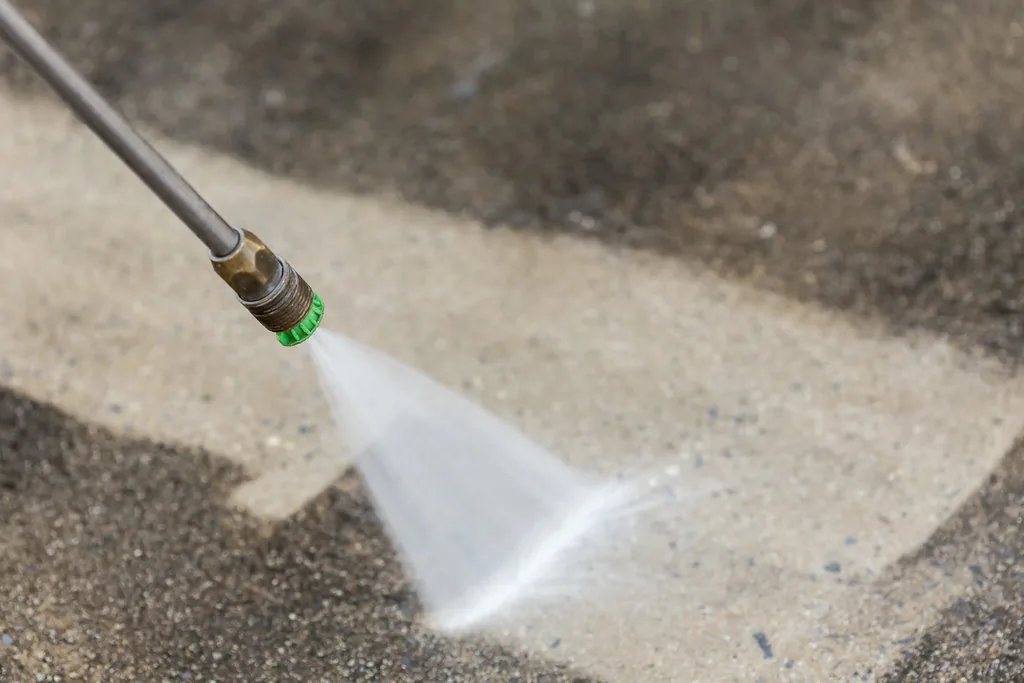
| Pressure washer | Working pressure, not maximum pressure; flow in litres per minute; pump type; cold or hot water | Exaggerated pressure figures, and aluminium pumps instead of brass |
| Polishing and scrubbing machine (single-disc) | Disc diameter, rotation speed, machine weight | Excessive vibration and weak operating switches |
| Cleaning trolleys and wringer buckets | Material, plastic thickness, wheels, load capacity | Brittle recycled plastic and wheels that break |
| Professional tools (mops, window kits, handles) | Material, length, fixing method | Thin aluminium handles and plastic joints that snap |
Small household cleaning tools, such as mops and hand brooms for homes, sit closer to the housewares page; this page is for professional and commercial equipment.
What voltage and frequency should cleaning machines be ordered with?
They should be ordered with the destination country's grid voltage and frequency stated explicitly in the contract, because China's grid runs at 220 volts and 50 Hz, while other grids, such as Saudi Arabia's, run at 60 Hz, and markets in the Americas run at 110–120 volts. The motor is the heart of almost every cleaning machine, and a motor designed for a different frequency runs at a different speed, heats up more and has a shorter life.
- Large machines — such as some hot-water pressure washers and industrial machines — may run on three-phase power at 380 or 400 volts, so check that it is available at the operating site before buying.
- The plug, cable cross-section and cable length are part of the specification: a machine moving along hotel corridors needs a long, flexible, pull-resistant cable.
- The ingress protection (IP) rating is essential for machines that work around water; ask for it to be stated on the rating plate.
- Ask for a photo of the rating plate on the machine itself before full production, not in the catalogue.
We cover the frequency and plug question in the context of the Saudi market in importing electrical home appliances to Saudi Arabia, and the same principle applies to cleaning machines.
What should you know about batteries in cordless cleaning machines?
The battery determines three things at once: actual run time, operating cost over the years, and how the machine is shipped from China — so its type, capacity and voltage are set in the contract, not left to the factory. Cordless floor machines usually use one of two types:
- Deep-cycle lead-acid batteries (flooded, or sealed AGM and gel): cheaper to buy, heavier, and shorter-lived in terms of charge cycles. Flooded lead-acid batteries may be classed as dangerous goods for transport, while sealed non-spillable batteries may be exempt if they meet specific conditions.
- Lithium batteries: lighter, longer-lasting, faster to charge and more expensive to buy. They need a UN38.3 test report and a safety document, and are classed for transport as Class 9 dangerous goods whether shipped installed in the machine or separately, with much stricter restrictions on air freight.
An important caveat: the run time stated in the catalogue is usually measured under ideal conditions. Ask for the run time with the brush and pump working together, ask for the charger's specification and voltage, and make sure the charger itself is designed for the destination country's grid. Declaring the batteries correctly to the shipping line before booking is a requirement, not an option.
How do you secure spare parts and after-sales maintenance?
By buying a stock of consumable parts with the first order, obtaining exploded diagrams with part numbers, and agreeing in writing how long parts will be available and how quickly they will be shipped. A cleaning machine wears out parts by the nature of its work, and a machine standing idle at a client's site while it waits for a part from China can cost you that client.
- Consumable parts: brushes and pads, rubber squeegee blades, filters, belts, motor carbon brushes, seals and pump repair kits, and wheels.
- An exploded diagram for each model with fixed part numbers, because ordering a part "like the one in the photo" a year later usually means a part that does not fit.
- An operating and maintenance manual in the operator's language, and training videos for technicians if possible.
- Warranty: what it covers and for how long, whether it covers the motor, pump and circuit board, and how a fault is proven remotely.
Small urgent parts can be sent by air or express courier while the machines go by sea; we explain the trade-off in sea freight vs air freight.
Which certificates are required for electrical cleaning equipment?
Electrical cleaning machines are usually subject to electrical safety and electromagnetic compatibility requirements, based on specific parts of the international IEC 60335 series for commercial appliances. The series has parts dedicated to commercial floor treatment machines, to commercial wet and dry vacuum cleaners, and to high-pressure cleaners. In the European Union, these machines carry CE marking under the Low Voltage, Electromagnetic Compatibility and Machinery Directives; in Saudi Arabia, electrical products go through SABER, the Saudi product conformity platform; and in the United Arab Emirates, through the approved conformity requirements.
The wording here is deliberately cautious: the requirement depends on how the machine is classified and on the destination country, and verification comes before production. For the general framework, see SASO/SABER, ECAS and CE conformity certificates.
How is cleaning equipment shipped from China?
Large machines are shipped in wooden crates or on pallets and usually reach the volume limit before the weight limit, while trolleys and vacuum cleaners take up space quickly, so most of this equipment is charged by the cubic metre. Heavy ride-on machines need a forklift for loading and unloading, and must be secured in the container so they cannot move.
- Wooden crates must be treated under ISPM 15, with the stamp clearly visible.
- Trolleys and buckets are shipped nested or knocked down to reduce volume, if their design allows.
- Batteries are declared by type before booking, because they can change the terms of the whole shipment.
- Shipping with detergents in one container is possible when the chemicals are not dangerous goods, but if they are, the whole container becomes subject to dangerous goods rules.
To choose according to volume, see full container load (FCL) vs groupage (LCL).
How do you import cleaning equipment from China?
- Define the operating environment: the area, floor type and working hours, and then the machine that suits them, not the cheapest one.
- Define the grid voltage and frequency and the battery type for the country of operation.
- Search in the right industrial cluster, tell the factory from the middleman, and audit the factory when the order is large. See factory audit.
- Request a sample and test it under real operating conditions: battery run time, suction quality and noise.
- Write the full specification, including the rating plate, battery, charger and warranty.
- Agree on the list of consumable parts, their diagrams and the quantity to ship with the first order.
- Complete the conformity requirements in the destination country before full production.
- Follow production and inspect before shipping, actually operating a sample of the machines. See pre-shipment inspection.
- Arrange shipping with a correct battery declaration, and review the documents before sailing.
Alshumul's role in importing cleaning equipment
Alshumul Commercial Services is an import and export company based in Guangzhou. With cleaning equipment, we look at a machine the way its operator will see it a year from now, not the way it looks in the catalogue. What we handle:
- Finding and verifying cleaning equipment factories in the right cluster for the item, telling factories from middlemen, and visiting and auditing the factory.
- Requesting and following up samples, and reviewing the rating plate, voltage, frequency, battery type and charger before the order is approved.
- Negotiating directly with the factory in Chinese on the specification, price, list of consumable parts, diagrams and warranty terms.
- Production follow-up and pre-shipment inspection with actual operation and a photo report, and checking that parts and manuals are complete.
- Arranging shipping as a full container load or groupage through shipping lines and consolidators, with a correct battery declaration, reviewing documents before sailing, and following up until the port of discharge.
We do not provide maintenance or installation in the destination country, or customs clearance there; after-sales service is the responsibility of the importer or their local agent. But we work to make sure the machine arrives with what that agent needs to maintain it: the parts, the diagrams and the manuals.