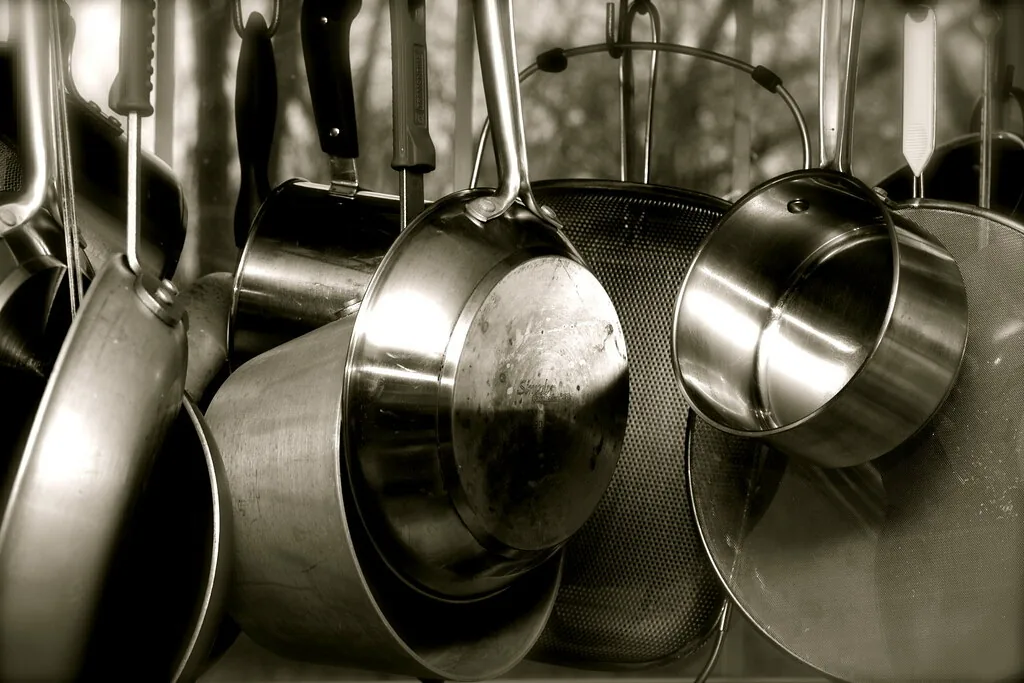
Housewares look like an easy category: pots, pans, spoons, containers and small appliances, all on display in thousands of models at tempting prices. But that apparent ease is exactly what makes them fertile ground for the best-known fraud in the consumer metals trade: 201 steel sold as 304. A fake pot looks no different in a photo, in the hand or under a magnet, and then rust spots appear on it after months of washing — at your customer's home, not at yours.
This page is a reference for importing housewares in general: stainless steel grades and how fraud is detected, non-stick coatings, food contact certificates, small appliances and their voltage, manufacturing hubs, and shipping. Large electrical home appliances for the Saudi market — the 60 Hz frequency, the energy efficiency label and after-sales service — are covered in detail in importing electrical home appliances to Saudi Arabia.
Which housewares are imported from China?
Five families: kitchen and cooking tools, dishes and tableware, storage and organisation products, household hand tools, and small home appliances. Each family has its own governing material and its own risks:
- Kitchen and cooking tools: stockpots, saucepans and frying pans in stainless steel or coated aluminium, knives, turners and colanders.
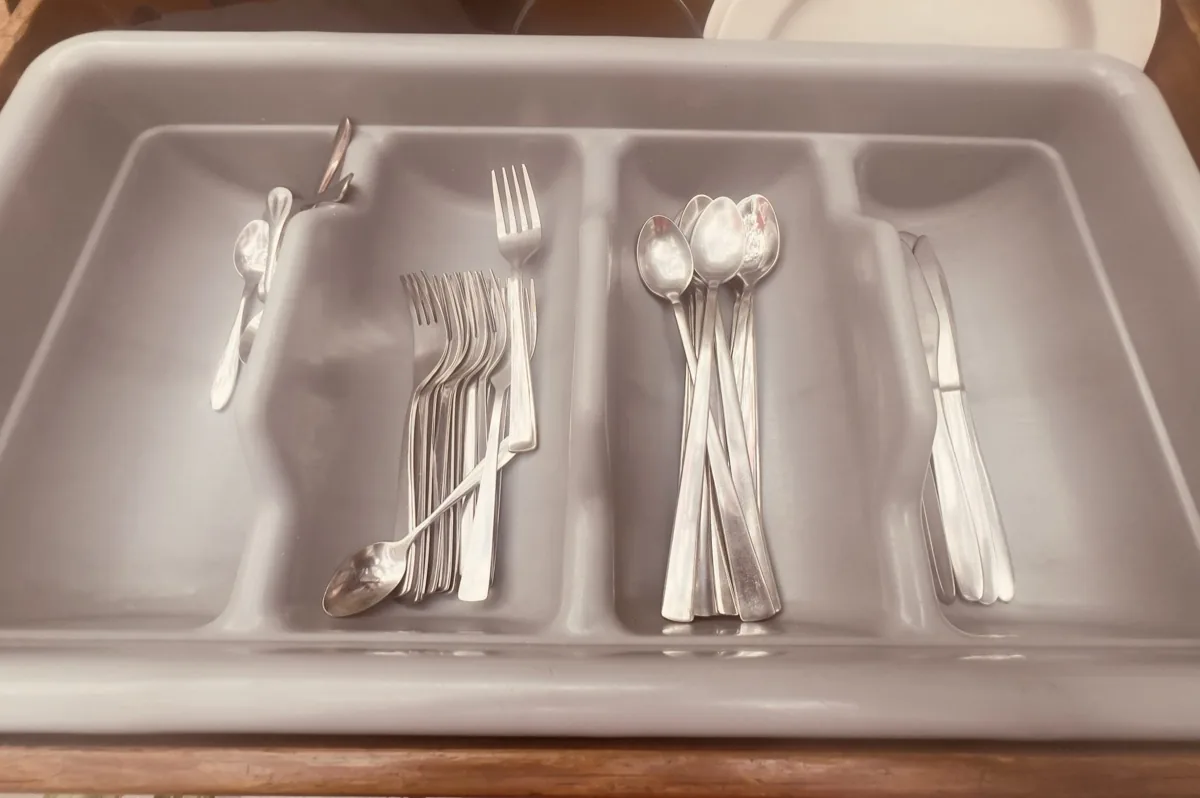
- Dishes and tableware: spoons and forks, plates and cups in ceramic, glass or melamine, and vacuum flasks and insulated mugs.
- Storage and organisation: food storage containers, shelves and organisers, and baskets. Plastic items follow the standards on the plastic products page.
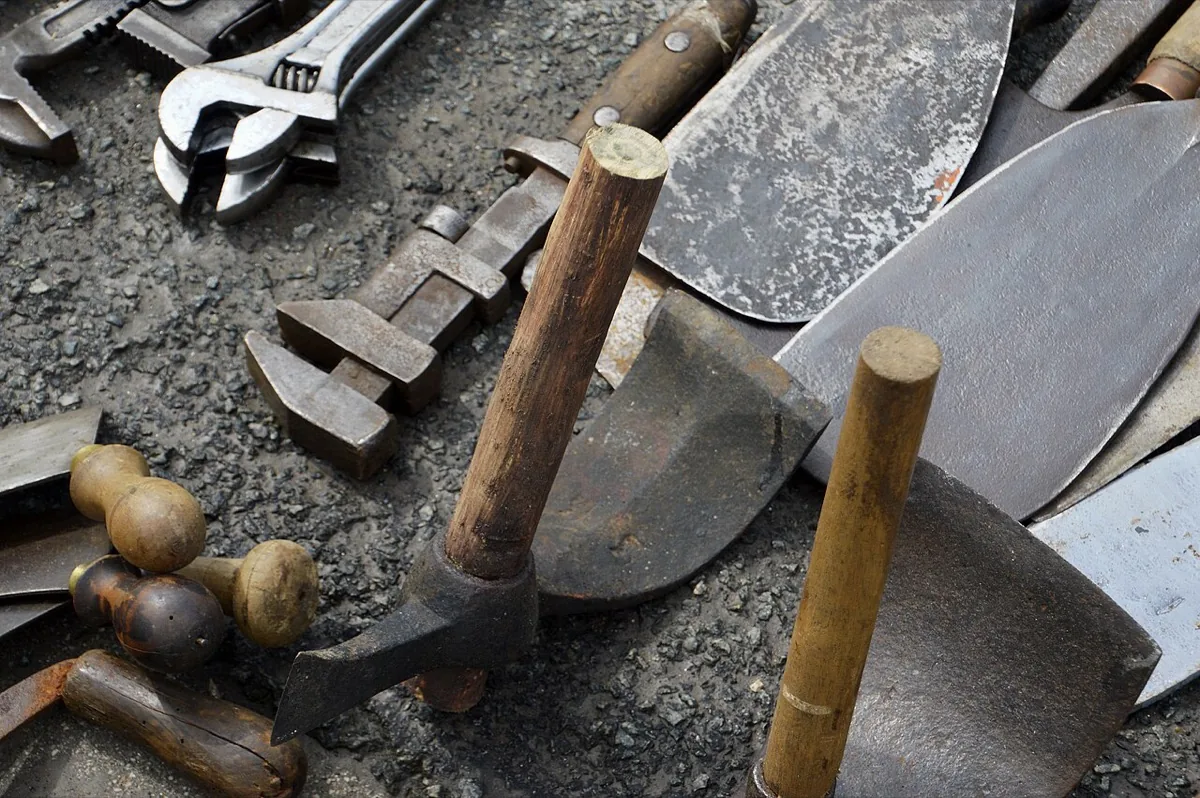
- Household hand tools: screwdrivers, hammers, measuring tools and home maintenance kits.
- Small home appliances: kettles, blenders, food processors, irons and air fryers.
What is the difference between 201, 304 and 430 stainless steel?
The difference is mainly nickel: 304 contains about 8% nickel or more, so it resists rust well; 201 contains about 3.5 to 5.5% and makes up for it with manganese, so it is cheaper and less resistant; and 430 is almost nickel-free and magnetic. Nickel is the most expensive component of the alloy, which is why substituting it is tempting. This table shows the common grades under ASTM A240:
| Grade | Chromium | Nickel | Manganese | Magnetic? | Rust resistance | Common use |
|---|---|---|---|---|---|---|
| 304 (also called 18/8) | 18 to 20% | 8 to 10.5% | up to 2% | Not in the annealed state, slightly after forming | Good | Pots, kitchen tools and utensils that touch food |
| 316 | 16 to 18% | 10 to 14%, with molybdenum | up to 2% | Usually not | Higher, especially against salts | Premium tools and items exposed to salt |
| 201 | 16 to 18% | 3.5 to 5.5% | 5.5 to 7.5% | Not in the annealed state, slightly after forming | Lower; rusts with acids and salt | Budget tools and parts that do not touch food |
| 430 | 16 to 18% | less than 0.75% | up to 1% | Yes | Moderate | Induction bases for pots, budget spoons |
The Chinese market also has grades cheaper than 201 itself, with even less nickel, known commercially by names such as J1 and J4. The figures above come from the standard and are for guidance, not for contracts. None of this means 201 is always unacceptable: it is a legitimate choice for a budget tool at a budget price. The problem is when it is sold as 304, at the price of 304.
How do you detect 201 steel being passed off as 304?
With a handheld XRF analyser, which reads the nickel, chromium and manganese content in seconds without damaging the piece — not with a magnet, and not by the stamp printed on the product. These are the common mistakes in detection:
- A magnet cannot tell 201 from 304. Both grades are non-magnetic in the annealed state, and both can become slightly magnetic after drawing and forming. A magnet only detects 430.
- An "18/8" or "304" stamp on the piece proves nothing. It is pressed with the same die whatever the material.
- Chemical test solutions give a quick indication that nickel is present, but they are less accurate than XRF and are no substitute for it in a dispute.
- Partial substitution is the most insidious. The pot body is 304, but the lid, handle or rivets are 201. So state the material of each part separately in the contract, and inspect each part.
In practice: require the grade for each part in the purchase order, with a minimum nickel content, make XRF testing of a random production sample an item in the pre-shipment inspection, and keep the report. The high manganese in 201 is not only a rust issue: some European guidelines set limits on how much manganese, nickel and chromium may be released into food, so it is a food contact issue as well.
What should you require for non-stick coatings?
The coating type, the number of layers, an abrasion resistance test, the thickness of the metal body underneath, and a base suited to the type of hob — because "non-stick" on its own covers coatings whose life ranges from months to years.
- Coating type: PTFE coatings are the most common and keep their non-stick property the longest. Sol-gel "ceramic" coatings contain no PTFE but usually lose their non-stick property faster. "PFOA-free" has become a given now that PFOA is banned in many markets, so on its own it is no evidence of quality; and check the rules on PFAS compounds in your market, because they are expanding.
- Number and thickness of layers: two or three layers, with a total thickness written in microns and, if possible, the coating supplier named.
- Abrasion test: the number of scouring pad cycles before the metal shows through, using a standard method such as EN 12983-1, written down as an acceptable figure.
- Body: pressed, cast or forged aluminium, with its thickness in millimetres; a thin body warps, heats unevenly and makes the coating peel.
- Base: induction hobs need a magnetic base of 430 steel bonded into the body; an aluminium pot without this base will not work on them.
Which food contact certificates do housewares need?
A test report from a third-party laboratory on the finished product under your market's standard: LFGB in Germany, EC 1935/2004 as the framework in Europe, FDA in the United States, and GB 4806.9 for metals and GB 4806.10 for coatings in China. In the Gulf states, check the requirements of the competent authorities, such as the Saudi Food and Drug Authority (SFDA) and the Saudi Standards, Metrology and Quality Organization (SASO) in Saudi Arabia. The requirement depends on how the product is classified and on the destination country, so verify it before production.
- Metals: a test for the release of heavy elements, paying attention to nickel, manganese and chromium in steel.
- Non-stick coatings: overall and specific migration tests at cooking temperatures, not room temperature.
- Ceramics and coloured glass: a test for lead and cadmium release, especially in decoration on the drinking rim.
- Melamine: a test for melamine and formaldehyde release; melamine is not used in the microwave.
- Plastic and silicone: the standards for their material. We explain the logic of migration testing in importing paper cups.
Ask for the report in the name of the factory that produces for you, for the same model, and do not accept the words "Food Grade" printed on the box in its place. For Gulf conformity systems in general, see import conformity certificates.
What should you look out for with small home appliances?
Three things are settled before ordering: a voltage and frequency that match the destination country, the plug approved there, and the required electrical safety certificates — an appliance that fails on any of them cannot be sold, whatever its price.
- Voltage and frequency: most Arab countries run on 220 to 240 volts, with 50 Hz in most of them and 60 Hz in Saudi Arabia. Appliances with motors are affected by frequency; the details are in our home appliances article.
- Plug: the three-pin Type G is common in most Gulf states, and Types C and F in many North African countries. Have it fitted at the factory, not supplied with an adapter.
- Electrical safety: test reports under the IEC 60335 series for household appliance safety, and an electromagnetic compatibility test. In Saudi Arabia, registration through SABER, the Saudi product conformity platform; in the Gulf states, the Gulf conformity mark (G-Mark) may be required for certain categories of low-voltage appliances — depending on the category and the destination country.
- Batteries: rechargeable appliances such as portable blenders contain lithium batteries, which are shipped as dangerous goods with special documents and share their requirements with the electronics page.
- Manual and label: a user manual and label in the destination country's language, and voltage and power data on the appliance's own rating plate.
Where is housewares manufacturing concentrated in China?
In Zhejiang and Guangdong: Yongkang, the hardware capital, in Zhejiang; Chaozhou, Jiangmen, Yangjiang and Jieyang for stainless steel and knives in Guangdong; and Shunde, Zhongshan and Cixi for small appliances.
- Yongkang (Zhejiang): known as China's hardware capital, and a major hub for cookware, vacuum flasks, insulated mugs and hand tools.
- Chaozhou (Guangdong): Caitang town has a large cluster of stainless steel kitchenware factories, and the city is also a hub for ceramic tableware.
- Jiangmen — Xinhui (Guangdong): export factories for stainless steel tableware and kitchenware.
- Yangjiang (Guangdong): the hub for knives and scissors.
- Jieyang (Guangdong): hardware and stainless steel products at budget prices.
- Shunde and Zhongshan (Guangdong) and Cixi (Zhejiang): small home appliance factories.
- Yiwu (Zhejiang): the market for small ready-made items in small quantities.
How are housewares shipped?
Most reach the volume limit before the weight limit — pots, appliances and storage containers — with the exception of dense metal tableware, so they are usually shipped in 40-foot high-cube containers, and quantities are calculated from the actual carton dimensions.
- Nesting: pot sets are packed nested, while colourful gift boxes add noticeable volume; if you sell wholesale, compare the cost with simpler packaging.
- Many items and suppliers: a typical order in this category is dozens of items from several factories, so consolidation is arranged at origin with a specialist consolidator and the goods are shipped as one consignment. For small quantities, see groupage shipping (LCL): advantages and drawbacks.
- Batteries: appliances with lithium batteries need a dangerous goods declaration, and many consolidators impose conditions on them or refuse them, so declare them before booking.
- Breakage and rust: ceramics and glass need a carton drop test, and low-quality steel can show rust spots from humidity in the container.
What are the common risks in importing housewares, and how do you avoid them?
The most common are a substituted steel grade, peeling coatings, thin metal, a non-compliant voltage or plug, and "food safe" claims without a report.
- 201 instead of 304: XRF testing of every part in a production sample.
- Thinner metal: measure the body thickness in millimetres and compare the weight with the approved sample.
- Peeling coating: a written abrasion test, and a cross-hatch adhesion test during inspection.
- Rust spots: these can appear even on 304 through poor passivation or surface contamination with iron from manufacturing tools; ask for proper cleaning and passivation, and a salt spray test if needed.
- Handles and rivets: a torque and secureness test, because a loose handle is the most common complaint about cheap pots.
- Appliances: voltage, plug and rating plate data that match the order, and an operating test on a sample of each model.
How do you import housewares from China?
In nine steps, the most important being that the material of each part is written down before pricing, and that inspection includes material analysis, not just the product's appearance.
- Define the items and the market: the required material for each item, the voltage and plug for appliances, and the food contact and conformity requirements in the destination country.
- Look for factories according to their cities' specialisations, and tell the factory from the middleman using how to find a verified Chinese supplier.
- Write the specification: the steel grade for each part with the minimum nickel content, thicknesses, coating type and layers, and packaging.
- Compare quotations against the same specification, not against the photo: the price gap between 201 and 304 explains most "cheap" quotations.
- Approve samples after analysing them with XRF, and keep a reference sample.
- Carry out food contact and electrical safety tests in a third-party laboratory before full production.
- Follow production, especially when items are spread over several factories.
- Inspect before shipping: material analysis, thickness, coating, operation and packaging. See pre-shipment inspection and acceptance levels.
- Arrange shipping and review the documents: consolidation at origin when there are several suppliers, the battery declaration where relevant, and matching the invoice and packing list for each item.
Alshumul's role in importing housewares
Alshumul Commercial Services is an import and export company based in Guangzhou, Guangdong, the province that is home to Chaozhou, Jiangmen, Yangjiang and Shunde, and it works on the Chinese side of the deal, where the material of a pot is exposed before it reaches your customer's shelf:
- Finding and verifying factories: shortlisting the specialist factories for each item and telling them apart from middlemen.
- Factory audits and visits: inspecting the drawing, polishing, coating and assembly lines. See factory audit: what it is and why it matters.
- Negotiating directly in Chinese on the steel grade for each part, thickness, coating and price.
- Requesting and following up samples until they are approved as the reference for inspection.
- Production follow-up for multiple items from multiple factories.
- Pre-shipment inspection: XRF analysis of the steel, thickness measurement, coating tests, appliance operation and packaging checks, with a photo report.
- Arranging shipping: full container load or groupage through shipping lines, and arranging consolidation with a specialist consolidator when several factories are involved.
- Reviewing documents before sailing and following up until the port of discharge.
Alshumul does not handle customs clearance in the destination country and does not provide legal advice. To calculate the landed cost of each item before pricing, see the real cost of importing from China.