Electrical and lighting products are a broad category held together by one thing: they are installed in the walls of homes and buildings and stay there for years. So a mistake here does not show up as a quick return; it shows up as a fire, an electric shock or a distribution board that trips for no reason. This page covers wires and cables, switches and sockets, circuit breakers and distribution boards, LED lamps, floodlights and street lighting, and wiring accessories and extension leads.
It does not cover consumer electronics such as chargers, small cables and displays, which have their own Electronics page, nor solar panels, inverters and storage batteries, which have their own Solar Equipment page. The page is built around three questions an importer asks before paying: Is the product what its box says it is? Does it meet the standards and the electricity grid of the country of sale? And how can it be shipped without the cost eating into the margin?
Where are electrical and lighting products made in China?
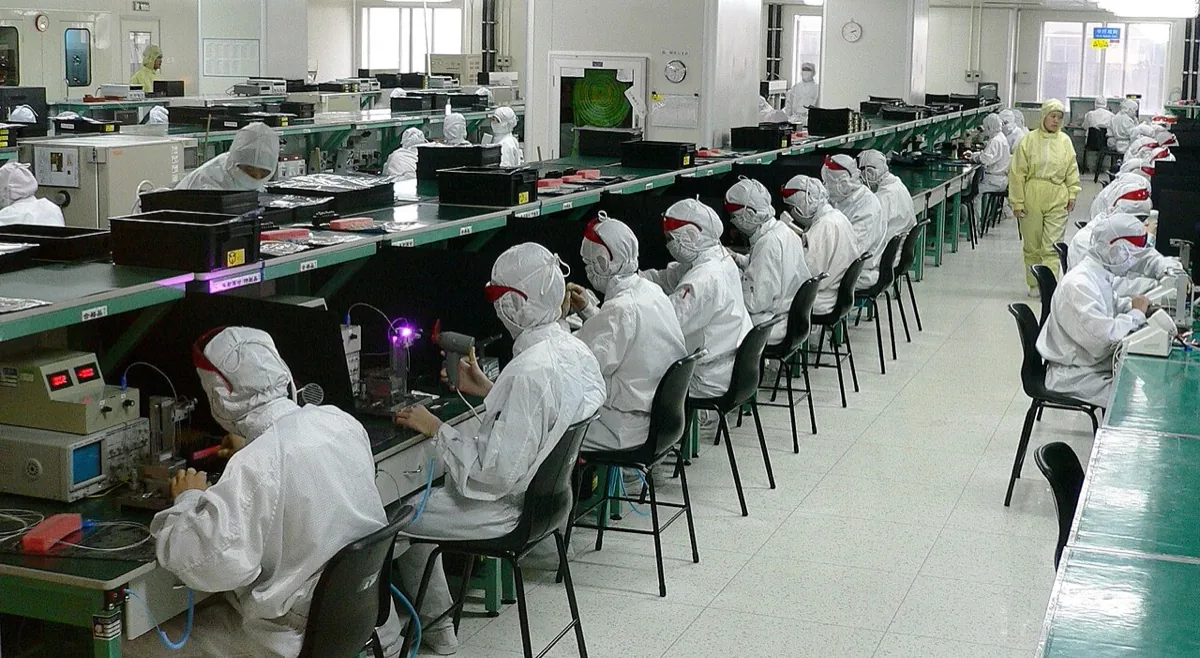
Circuit breakers and low-voltage devices are concentrated in Yueqing, in Wenzhou, Zhejiang; sockets and extension leads in Cixi, in Ningbo; lighting in the town of Guzhen, in Zhongshan, Guangdong; and cables in the town of Guanlin, in Yixing, Jiangsu. Each hub has its own reputation and history, but a city's reputation does not mean every factory in it is good. The same hub has factories that supply international brands and workshops that sell at the lowest possible price.
| Hub | Main specialisation | Note for importers |
|---|---|---|
| Yueqing (Wenzhou, Zhejiang) | Miniature circuit breakers and residual current devices, contactors, distribution boards and low-voltage devices | Official Zhejiang sources describe it as the “capital of electrical appliances” and a “circuit breaker manufacturing base”, with an integrated component supply chain; quality varies widely between factories |
| Cixi (Ningbo, Zhejiang) | Sockets, extension leads and plug adaptors | Awarded the title “China Electrical Socket Manufacturing Base” in 2011, and produces European-style sockets in large volumes; so state your own country's type explicitly |
| Guzhen (Zhongshan, Guangdong) | Decorative and commercial luminaires, chandeliers, floodlights and LED lamps | Carries the title “Lighting Capital of China” on the Zhongshan government website, with permanent showrooms that make comparison easy; most showrooms are traders, not factories |
| Guanlin (Yixing, Jiangsu) | Power cables and insulated wires of all types | Known as “China's cable city”, with large factories supplying grid projects; ask for conductor and insulation test reports for each cross-section |
The Yueqing and Guzhen titles are taken from official Chinese sources: the Zhejiang Federation of Social Sciences on Yueqing's industry and Guzhen town's page on the Zhongshan government portal. The Cixi and Guanlin titles come from local Chinese media. To tell a factory from a middleman in these hubs, see How to find a verified supplier or factory in China.
How do you detect copper fraud in cables?
With three simple checks: scrape the conductor to see its colour inside, weigh a coil of known length and compare it with the weight of pure copper, and measure the conductor's electrical resistance and compare it with the maximum in the tables of IEC 60228. The best-known fraud in this category is cable whose conductor is aluminium with a thin copper coating (CCA). It looks like copper when cut quickly and is sold at a price close to that of copper.
The danger is not only in the price. Aluminium has a higher resistance than copper, so if the cable's cross-section was sized as copper, it runs hotter under load than it was designed to, and its connections weaken over time in the terminals of breakers and sockets designed for copper. The international standard for conductors of insulated cables, IEC 60228:2023, specifies conductors of copper, aluminium or aluminium alloy, and flexible conductors of copper, and it does not list copper-clad aluminium among its types. So a CCA cable should not be described as a copper conductor that complies with this standard.
- Scraping: scrape the end of the conductor with a knife. Pure copper is copper-coloured right through to its core; CCA shows a silvery core under the skin.
- Weight: copper is about three times as heavy as aluminium for the same volume, so a CCA coil is clearly lighter than a copper coil of the same cross-section and length. Ask the factory to state the conductor weight per kilometre on the specification sheet, and compare it with the sample.
- Resistance: measure the conductor's DC resistance corrected to 20 °C, and compare it with the maximum for that cross-section and conductor class in the IEC 60228 tables. This check also exposes an undersized cross-section: a “2.5 mm²” cable whose real conductor is thinner.
- Counting and measuring: the number and diameter of the strands in a stranded conductor, the thickness of the insulation and sheath, and clear printing on the cable (cross-section, voltage, standard and manufacturer's name) at regular intervals.
Write an explicit clause into the purchase order: “Pure annealed copper conductor, conductor class [specify] to IEC 60228; any aluminium or clad conductor will be rejected.” Then make resistance and weight measurements part of the pre-shipment inspection, on coils drawn at random rather than the coil the factory hands you. For the sampling method, see Pre-shipment inspection and AQL explained.
Which international and Gulf standards apply to electrical and lighting products?
Every product in this category has an international standard that should be written into the contract by name and current edition, and on top of it come the requirements of the country of sale: the Gulf technical regulation for low-voltage equipment and the Gulf conformity mark (G-Mark), Saudi Arabia's energy efficiency regulations for lighting, and others depending on the market. A standard defines its scope in figures — voltage, current and breaking capacity — so a product outside those figures is not covered by it at all, and a test report against an old edition may not be accepted. These are the main references with their scope figures:
| Product or requirement | Reference and edition | Scope or figure | Note | Source |
|---|---|---|---|---|
| Conductors of insulated cables | IEC 60228:2023 (edition 4) | Nominal cross-sections from 0.5 to 3,500 mm², with numbers of strands and resistance limits | Covers copper, aluminium and aluminium alloy; does not list copper-clad aluminium | IEC Webstore: IEC 60228:2023 |
| Household plugs and socket-outlets | IEC 60884-1:2022 (edition 4) | AC with a rated voltage above 50 V and up to 440 V, and a rated current up to 32 A | The general standard; national plug and socket systems have their own specifications (see the next section) | IEC Webstore: IEC 60884-1:2022 |
| Miniature circuit breakers (MCBs) | IEC 60898-1:2015 and its amendment AMD1:2019 | Up to 440 V between phases, rated current up to 125 A and rated short-circuit capacity up to 25,000 A, for 50, 60 or 50/60 Hz | Breaking capacity is a figure that is tested, not just printed | IEC 60898-1:2015 AMD1:2019 |
| Residual current circuit breakers without overcurrent protection (RCCBs) | IEC 61008-1:2024 (edition 4) | Operating voltage up to 440 V AC and rated current up to 125 A | Replaced the 2010 edition and its two amendments | IEC Webstore: IEC 61008-1:2024 |
| Residual current circuit breakers with overcurrent protection (RCBOs) | IEC 61009-1:2024 (edition 4) | Up to 440 V AC and 125 A, with breaking capacity up to 25,000 A | Replaced the 2010 edition and its two amendments | IEC Webstore: IEC 61009-1:2024 |
| Luminaires | IEC 60598-1:2024 (edition 10) | General safety requirements for luminaires with supply voltages up to 1,000 V | Replaced edition 9 (2020); a report against an older edition should be queried | IEC Webstore: IEC 60598-1:2024 |
| Low-voltage electrical equipment in the Gulf states | Gulf Technical Regulation BD-142004-01 | Equipment with a rated voltage between 50 and 1,000 V AC or between 75 and 1,500 V DC, except the exclusions in its Annex 2 | Requires the Gulf conformity mark on covered equipment; whether it applies to your product is checked against its classification and destination country | GCC Standardization Organization (GSO): text of the regulation (unofficial translation), Articles 1 and 18 and Annex 2 |
| Lighting energy efficiency in Saudi Arabia | SASO 2870 (light sources), SASO 2902 and its amendment AMD2:2023, and SASO 2927 (street lighting) | According to a 2018 clarification by SASO (the Saudi Standards, Metrology and Quality Organization), SASO 2870 and SASO 2902 are applied as mandatory through the energy efficiency technical regulation, not as stand-alone standards; the 2023 amendment brought white-light lighting strips into the scope of SASO 2902 | Check the standard and timetable in force for your product before production | SASO clarification on the lighting standards SASO presentation on the amendment to SASO 2902 (2024) SASO presentation on SASO 2927 |
| EU energy label classes for light sources | Regulation (EU) 2019/2015, Annex II, Table 1 | Class A from 210 lm/W upwards; B from 185; C from 160; D from 135; E from 110; F from 85; G below 85 | The new A-to-G label has applied since 1 September 2021; a useful benchmark for testing whether efficiency claims are realistic, even outside Europe | Text of Regulation 2019/2015, Annex II European Commission: light sources label |
The table is for guidance, not for contracts: standards are revised and replaced, and each market's requirements depend on how the product is classified. Its figures were reviewed against their official sources in September 2026. Ask for the test report itself, showing the model name, report number, laboratory name and edition of the standard — not a picture of a generic certificate. For more detail on Gulf conformity schemes, see Import conformity certificates: SASO/SABER, ECAS and CE.
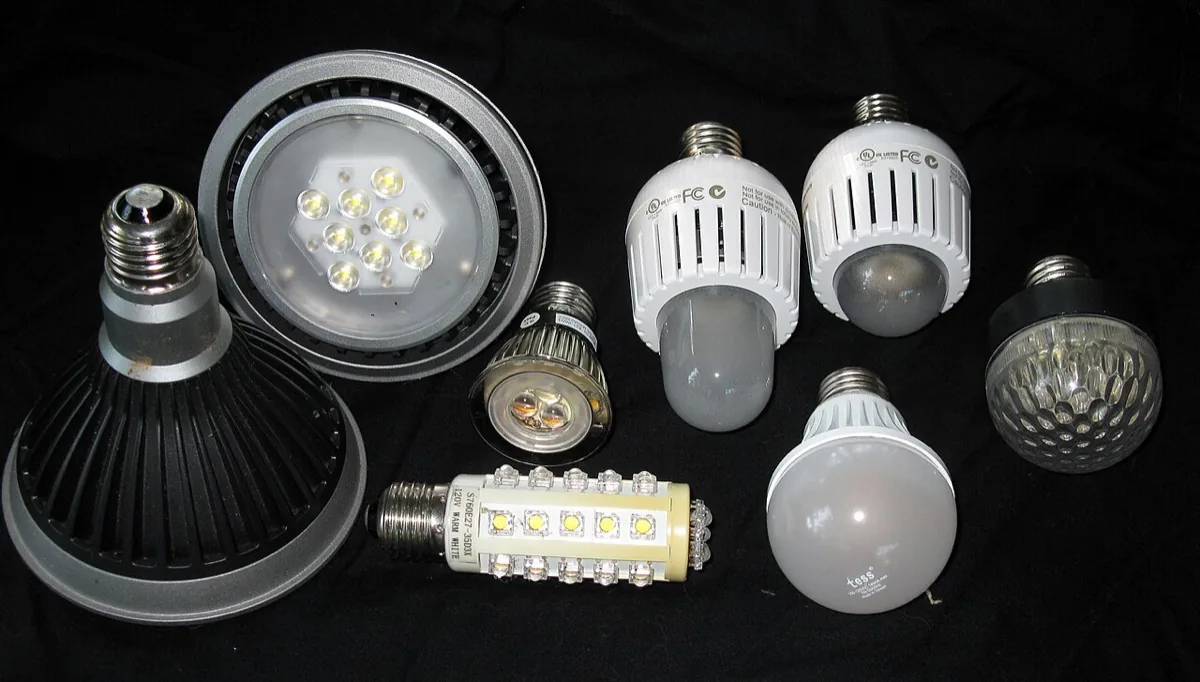
How do you read LED lamp specifications and spot exaggerated claims?
By luminous flux in lumens rather than watts, by efficacy in lumens per watt calculated from the actual measured power, and then by comparing that figure with what is realistic: on the EU energy label, light sources reach class A only from 210 lm/W upwards. So if you are offered a cheap lamp with an efficacy above that figure, the lumens are most likely exaggerated, or the stated power is lower than the real power.
- “Equivalent to 100 W”: a marketing phrase, not a specification. Write the luminous flux in lumens and the rated power in watts into the contract, and ask for both to be measured in an integrating sphere on a production sample, not with a handheld lux meter.
- The driver: the cheapest part of the lamp and the one that fails most often. Ask what type it is (constant current or a simple resistor), its power factor, its flicker level and the input voltage range it was designed for.
- Heat: the life of an LED chip is determined by its temperature. An aluminium heat sink of sufficient weight and surface area is not the same as a painted plastic housing that looks like one in the photo; so weigh the sample and open one up.
- Claimed lifetime: “50,000 hours” with no measurement method and no lumen maintenance percentage is a meaningless figure. Ask for a lumen maintenance test report from a recognised laboratory.
- Colour rendering index and colour temperature: state them as figures (such as Ra and kelvin) and measure them on the sample, because a colour difference between two batches shows immediately on a single ceiling.
- Floodlights and street lighting: ask for a report on the IP rating and IK impact rating, a photometric file for the beam angle and light distribution, and surge protection for the driver. In Saudi Arabia, street lighting is subject to its own efficiency standard (SASO 2927), as shown in the table above.
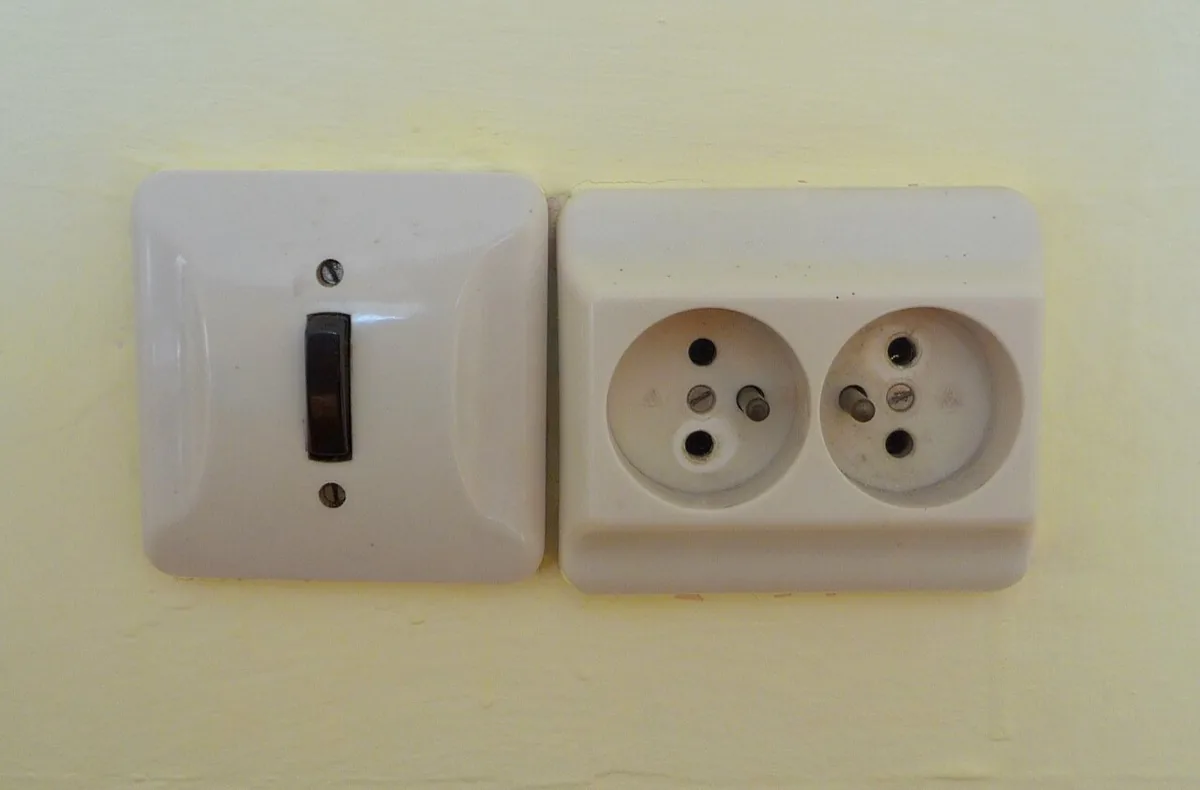
Why do the voltage, frequency and socket type of the country of sale matter?
Because circuit breakers, timers, lighting drivers and sockets are designed for a specific voltage, frequency and socket system, and a product that suits the factory's home market may not suit yours. Socket systems differ between countries in ways an adaptor cannot solve in fixed installations, and frequency differs too. In Saudi Arabia, for example, the draft update of SASO 2203 published on SASO's website describes a 13 A plug and socket system based on the British standard BS 1363, for circuits not exceeding 250 V at 60 Hz.
In practice this means three things. First, write the required socket system into the purchase order by its national specification, not as a “British” or “European” socket, because a socket that looks like the right type may not match its dimensions or safety shutters. Second, before full production, ask for a photo of the rating plate on the product itself showing the rated voltage and frequency for your country. Third, do not rely on voltage figures from market memory: some countries are in transition between two voltages, so the reference is the standards body or the electricity company in the country of sale. We cover the effect of frequency and plug type on motor-driven appliances in our guide to importing electrical home appliances to Saudi Arabia.
What specifications go into a contract for circuit breakers, switches and distribution boards?
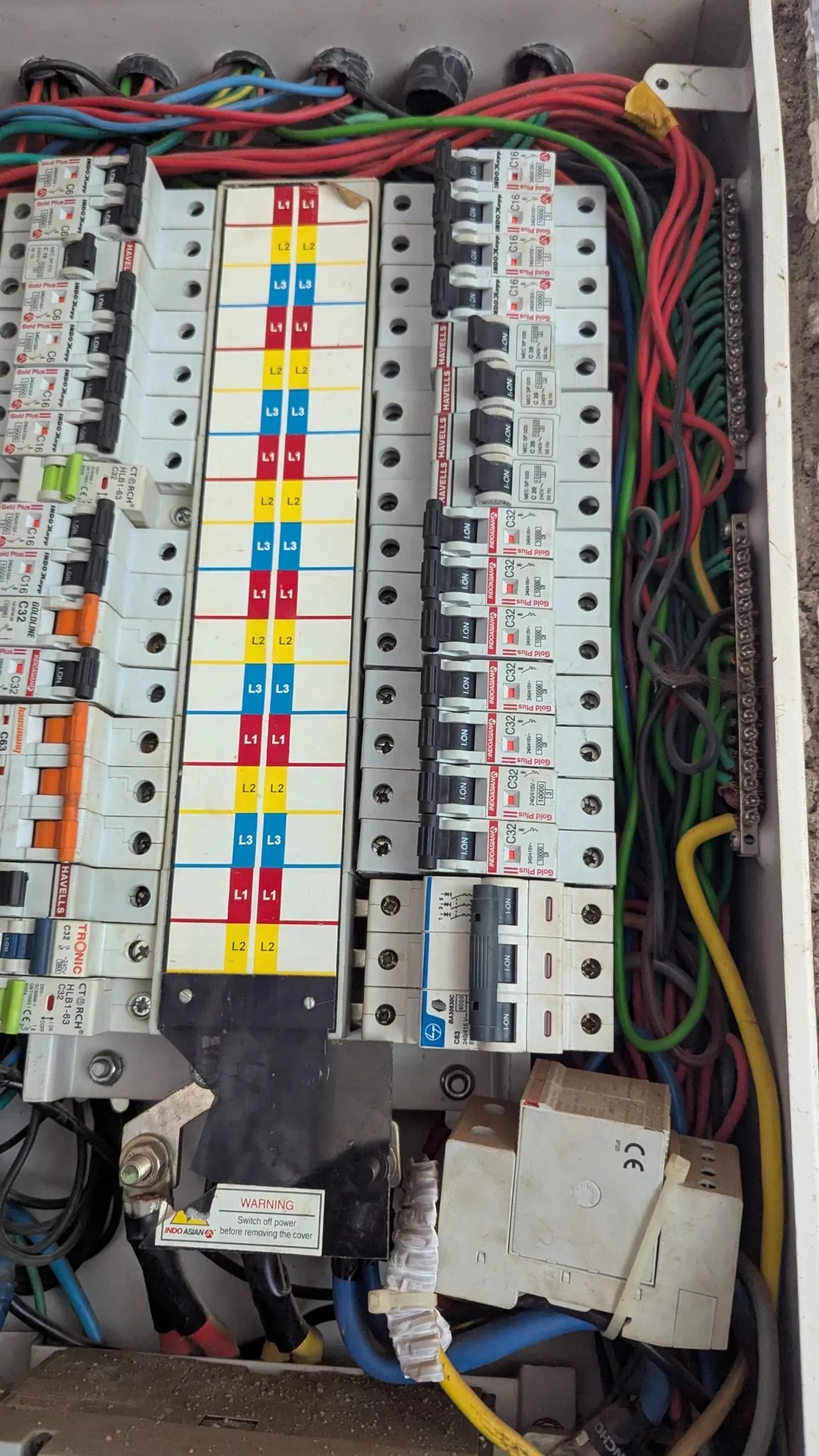
Rated current, rated breaking capacity, tripping curve, number of poles, voltage and frequency, and the standard with its edition — written as figures and confirmed by a test report in the model's name. A poor breaker looks compliant; the difference shows only at the moment of a short circuit.
- Miniature circuit breakers: rated current, tripping curve (B, C or D), rated breaking capacity in amperes, number of poles, and the material of the contacts and terminals.
- Residual current devices: residual current sensitivity in milliamperes, type according to the current waveform it detects, tripping time, and the standard it was tested against.
- Distribution boards: enclosure material and thickness, IP rating, busbars with their cross-section and material, wiring space, and earthing points.
- Switches and sockets: rated current, contact material (copper or brass of a specified thickness, not plated iron strips), cover material and its resistance to heat and flame, and whether safety shutters are fitted.
- Extension leads: the actual wire cross-section and length, the printed rated current and whether it matches the wire, whether a protective breaker is fitted, and the socket type for the country of sale.
How are cables and lighting shipped from China?
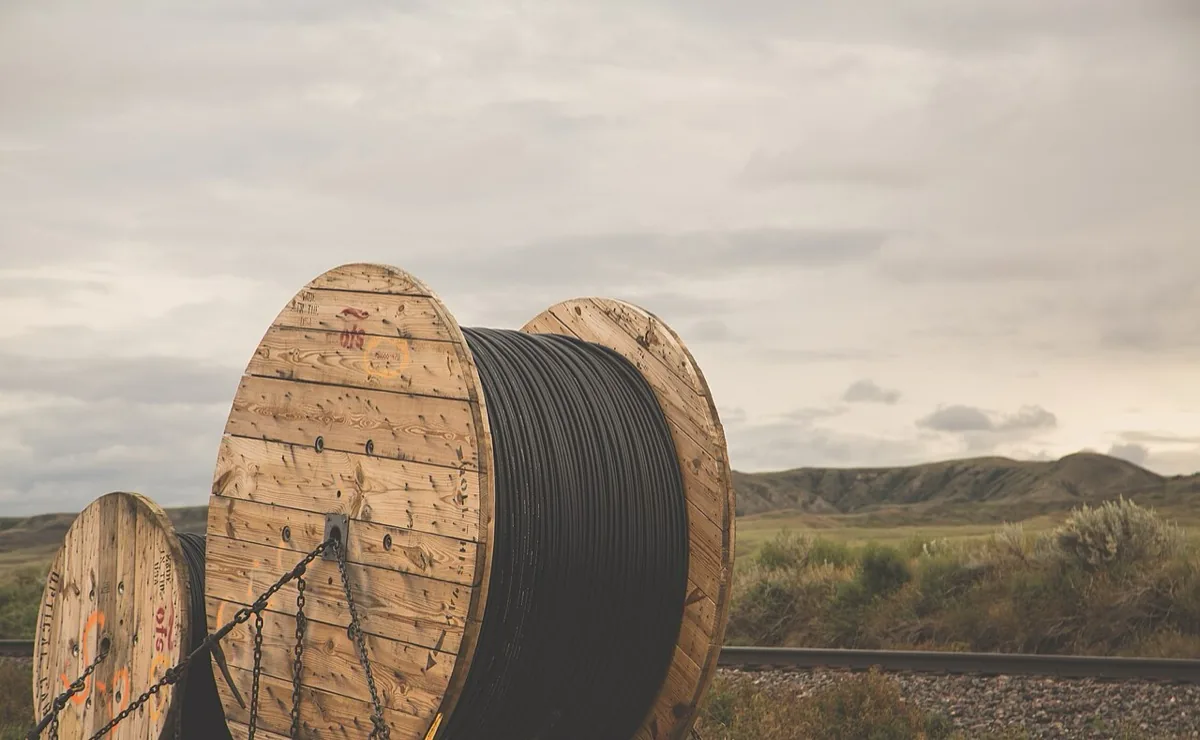
Cables are cargo that hits its weight limit before its volume limit, and lighting is cargo that hits its volume limit before its weight limit — which is why each suits a different container. Heavy copper cable drums reach a 20-foot container's payload before its space is full, so the shipment is calculated by weight and the drums are spread safely across the container floor. Floodlights, luminaires and chandeliers, on the other hand, come in large, light cartons, so they fill a 40-foot high cube by volume and stay well below the weight limit.
- Cable drums: state each drum's weight and dimensions in the packing list, secure the drums inside the container so they cannot roll, and protect the cable ends from moisture with sealed caps. Wooden drums count as wood packaging material, which is subject to treatment and marking requirements in many destination countries, so ask about them before packing.
- Lighting and glass: inner packaging that stops parts from moving, a stacking limit printed on the cartons and never exceeded, and special protection for glass covers and diffusers.
- Small, mixed quantities: switches, sockets and breakers are small and high in value, so they suit a full container load shared across several product lines, or groupage (LCL) when the quantity is limited.
To weigh a full container load against groupage, see FCL vs LCL: the container guide and Groupage shipping (LCL): advantages and drawbacks. Weights and quantities depend on cross-sections and on drum and carton dimensions, so they are calculated for each shipment and not carried over from a previous one.
What are the most common risks in importing electrical and lighting products, and how do you avoid them?
The most serious are substitutions made inside the product after the sample has been approved: a thinner or clad conductor, thinner contacts, a cheaper lighting driver, and a test report for a model other than the one being shipped. Here is a list of what actually recurs:
- An excellent sample and a different production run: lock in a sealed “reference sample”, write down the internal components as figures, and inspect production against it, not against photos.
- Test reports that do not match the model: a report in another model's name, against an old edition of the standard, or from an unknown laboratory. Verify the report number with the laboratory.
- Counterfeit brands: breakers and sockets bearing the logos of well-known international brands without permission. Importing them is unlawful and ends in seizure; the legitimate route is the factory's brand or your own private label.
- Short cable lengths: a “100-metre” coil that is actually shorter. Include length and weight measurements in the pre-shipment inspection.
- Lamps that fail early: a weak driver or excess heat. Ask for a continuous operation test on a production sample before shipping, and write an acceptable defect rate into the contract.
- Minimum order per colour or style: switch and lighting factories set it for each variant. See Minimum order quantity and how to negotiate it.
How do you import electrical and lighting products from China?
- Start with the requirements of the country of sale: socket system, voltage and frequency, technical regulations and conformity certificates, and energy efficiency regulations for lighting.
- Define the specification by standard and edition: conductor material and cross-section, current and breaking capacity, lumens and power, and IP rating.
- Find the factory in the specialist hub and verify it: tell the factory that draws copper and assembles breakers apart from the showroom that resells. See Factory audit explained.
- Test the sample technically: scrape the conductor, weigh it and measure its resistance; open the lamp and weigh its heat sink; and measure lumens and power in a laboratory.
- Ask for test reports in the model's name and verify them with the laboratory, then complete any conformity registration your country requires before production.
- Write the purchase order: the specification in figures, a ban on changing components, marking and packaging, and the acceptable defect rate.
- Follow production and inspect before shipping: resistance, length and weight for cables; tripping tests for breakers; operation and lumen tests for lighting.
- Book the right shipping: a 20-foot container for heavy cables, a 40-foot high cube for lighting, or groupage for small quantities.
- Review the documents before sailing: the invoice, packing list, conformity certificates and goods description must all match. See Import documents and customs clearance.
Alshumul's role in importing electrical and lighting products
Alshumul Commercial Services is an import and export company based in Guangzhou, in the same province of Guangdong that is home to the Guzhen lighting hub, and it also works with cable, circuit breaker and socket factories in Zhejiang and Jiangsu. The value of this work in this category is that most of its problems lie inside the product, not on its surface. What we handle:
- Finding and verifying factories in the right hub for each product, and telling a factory apart from a showroom or middleman.
- Factory audits and visits: conductor drawing and insulation lines, breaker assembly and testing, and lighting driver assembly.
- Requesting and following up samples, and testing them technically before approving them as the reference.
- Negotiating directly in Chinese with the factory on the specification by standard and edition, conductor material and cross-section, price, and a written ban on changing components.
- Production follow-up and pre-shipment inspection: measuring resistance, length and weight; operation and lumen tests; and checking that the marking and socket type match the country of sale.
- Arranging shipping — full container load or groupage — through shipping lines and consolidators.
- Reviewing documents before sailing, and following up until the port of discharge.
We are clear about what we do not offer: we do not handle customs clearance inside the destination country; we do not issue conformity certificates ourselves, since those are issued by accredited bodies and laboratories; and we do not give legal advice on product classification or trademarks. To calculate your full landed cost, see The real cost of importing from China.